
|
|---|
Category Archives: WBG News & Reports

Annual Meetings 2021! Tune in.

The World Bank Group/IMF Annual Meetings run from October 11, 2021 through October 17, 2021 and feature events on: Growth in a Time of Crisis (Oct. 11); Ending the Pandemic (Oct. 12); Making Climate Action Count (Oct. 14); and Trade to the Rescue (Oct. 15). The meetings will also feature a Civil Society Town Hall (Oct. 12) and an Opening Press Conference (Oct. 13). Join us on World Bank Live to watch live events, view event recaps, ask questions, vote in polls, and have your voice heard!
At your service? Developing economies bet on service industries for growth
Manufacturing has been the surest way for low- and middle-income economies to reduce  poverty and create good jobs. But developing nations have increasingly been redirecting their focus to the services sector to catch up with their developed counterparts.
Will the shift work?
Development in a Time of Upheaval: Speech by World Bank Group President David Malpass
Ahead of the World Bank Group-IMF Annual Meetings, President Malpass delivers a speech in Khartoum, Sudan, entitled “Development in a Time of Upheaval. ” President Malpass will set out the major challenges and opportunities in building a resilient and inclusive recovery for all. He will look at the dynamics of recent global economic growth that have contributed to inequality and a reversal in development progress. President Malpass will also explore how to remove or confront obstacles to development such as high debt, high trade costs, and the diminished capacity of many middle-income countries following COVID-19.
The speech will be followed by a moderated discussion.
The evolving labor market impacts of COVID-19 in developing countries
Even a year and a half after lockdowns started to go into effect, it’s difficult to get a clear  picture of the impact of the COVID-19 pandemic on the Global South. Face-to-face data collection has been suspended in most of the world due to health concerns, making it difficult to obtain reliable information. The little we do know, though, is very sobering.
Fixing food finance to heal the planet
The performance of the global food system over the last century has been extraordinary. 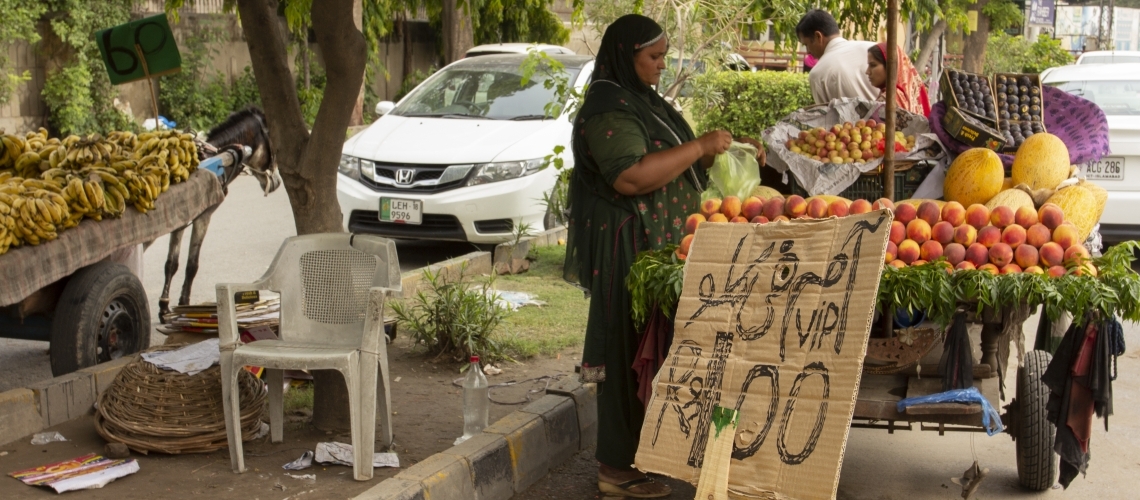 , while at the same time bringing down real food prices. Over that period, all four dimensions of food security improved – availability, access, reliability and nutrient adequacy.
Could investment in taps and toilets be the key to unlocking developing economies?
*This piece was originally published by the Financial Times as part of its Partner Content.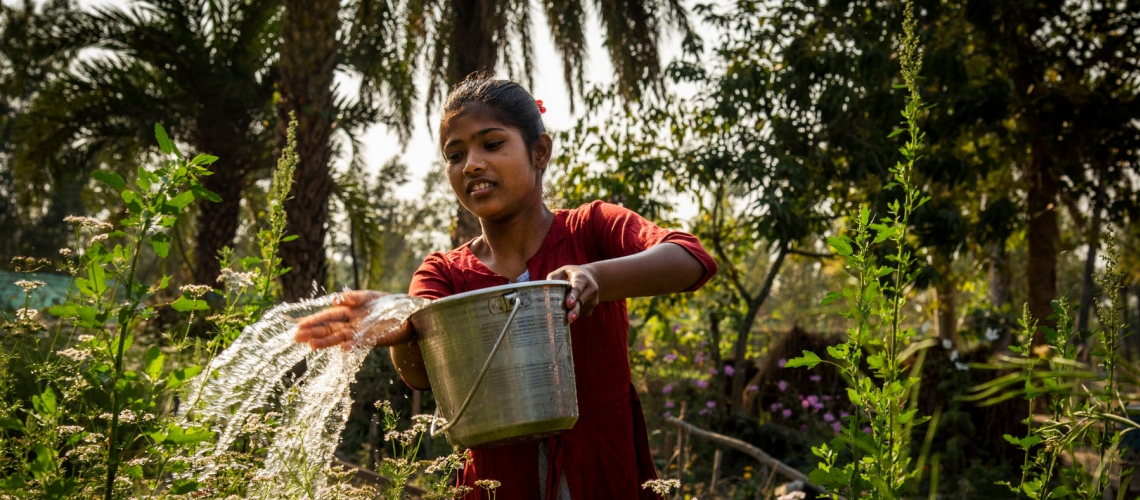
Investing in universal access to water, sanitation and hygiene could yield massive economic gains over the next two decades – but mobilizing finance is not easy
Global leaders seeking a way to rebuild battered economies could hold the key to prosperity in their bathrooms. Among the many infrastructure investments that could help create prosperity in the years to come, one of the most potent – and overlooked – is universal access to taps and toilets. Research by Vivid Economics for international NGO WaterAid has shown that each dollar invested in water, sanitation and hygiene (WASH) could generate up to a $21 return. The analysis showed that giving every home a toilet connected to a safely managed sewerage or off-mains system could generate $86bn in wealth a year.
Changing the Narrative – Trade is Part of the Solution to Climate Change
Climate discussions often focus on trade as a contributor to global warming. But with the right
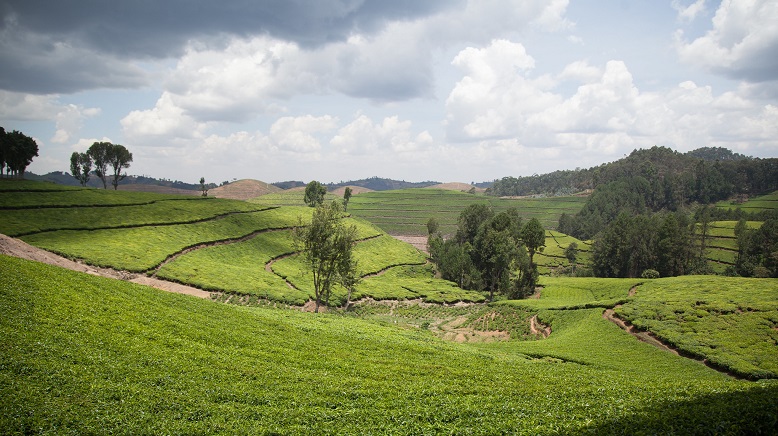
Kitabi Tea Processing Facility in Kitabi, Rwanda
policies to encourage cleaner production and trade in climate-friendly goods and services, it can be part of the solution. Join us for a discussion on expanding this positive role in facilitating climate change mitigation and adaptation. Panelists will discuss how policymakers from low- and middle-income countries can help shape trade to address climate change policy, including potential areas for collaboration and partnerships, as well as ideas for capacity-building and technical assistance.
This event will be LIVESTREAMED on Sept. 29 at 8:30am ET
Solving the vaccination gaps
Widespread access to COVID-19 vaccines is critical for development. The world is currently  faced with heavy COVID-19 caseloads, high death rates, and related reversals in development. Vaccinations appear to be the best single development investment available. Access is achievable, but urgent action is needed.
Groundswell Part 2 : Acting on Internal Climate Migration
This sequel to the Groundswell report includes projections and analysis of internal climate  migration for three new regions: East Asia and the Pacific, North Africa, and Eastern Europe and Central Asia. Qualitative analyses of climate-related mobility in countries of the Mashreq and in Small Island Developing States (SIDS) are also provided. This new report builds on the scenario-based modeling approach of the previous Groundswell report from 2018, which covered Sub-Saharan Africa, South Asia, and Latin America. The two reports’ combined findings provide, for the first time, a global picture of the potential scale of internal climate migration across the six regions, allowing for a better understanding of how slow-onset climate change impacts, population dynamics, and development contexts shape mobility trends. They also highlight the far-sighted planning needed to meet this challenge and ensure positive and sustainable development outcomes. The combined results across the six regions show that without early and concerted climate and development action, as many as 216 million people could move within their own countries due to slow-onset climate change impacts by 2050. They will migrate from areas with lower water availability and crop productivity and from areas affected by sea-level rise and storm surges. Hotspots of internal climate migration could emerge as early as 2030 and continue to spread and intensify by 2050. The reports also finds that rapid and concerted action to reduce global emissions, and support green, inclusive, and resilient development, could significantly reduce the scale of internal climate migration.
 migration for three new regions: East Asia and the Pacific, North Africa, and Eastern Europe and Central Asia. Qualitative analyses of climate-related mobility in countries of the Mashreq and in Small Island Developing States (SIDS) are also provided. This new report builds on the scenario-based modeling approach of the previous Groundswell report from 2018, which covered Sub-Saharan Africa, South Asia, and Latin America. The two reports’ combined findings provide, for the first time, a global picture of the potential scale of internal climate migration across the six regions, allowing for a better understanding of how slow-onset climate change impacts, population dynamics, and development contexts shape mobility trends. They also highlight the far-sighted planning needed to meet this challenge and ensure positive and sustainable development outcomes. The combined results across the six regions show that without early and concerted climate and development action, as many as 216 million people could move within their own countries due to slow-onset climate change impacts by 2050. They will migrate from areas with lower water availability and crop productivity and from areas affected by sea-level rise and storm surges. Hotspots of internal climate migration could emerge as early as 2030 and continue to spread and intensify by 2050. The reports also finds that rapid and concerted action to reduce global emissions, and support green, inclusive, and resilient development, could significantly reduce the scale of internal climate migration.
 Netherlands for the World Bank
You must be logged in to post a comment.