Reforms aim to deliver simplicity and access, supported by CEOs and G20 Expert Group
WASHINGTON, February 28, 2024 – The World Bank Group today announced a major overhaul to its guarantee business that will deliver simplicity, improved access, and faster execution through a new, convenient marketplace. The new reforms are critical to achieving the goal of tripling annual guarantee issuance to $20 billion by 2030.
In an era of overlapping and often intertwined crises, how well countries can prepare for and respond to shocks is crucial. The World Bank Group’s recently launched expanded Crisis Toolkit equips developing countries to do just that, whether they’re faced with natural disasters such as hurricanes or earthquakes, or public health emergencies like pandemics. This expanded Crisis Toolkit is designed to fill gaps based on lessons learned from previous crisis response, and substantially expands tools available to countries to protect them in times of crisis and enable faster and more effective recovery from disasters.
00:00 Introducing the topic and expert 01:50 World Bank’s Expanded Crisis Toolkit 03:03 How the toolkit helps client countries 05:38 Crisis preparedness 08:08 Closure
Digital technologies are ushering in a new era in development—by transforming economies, creating jobs, and improving the lives of even the most vulnerable and remote populations. They have dramatically changed the way we communicate with each other, how we conduct business, and our interaction with the environment. The international community has an unprecedented opportunity to help developing countries reap the benefits of digitalization while mitigating the risks and ensuring that, working together, through accelerated investments and policy reforms, we can close the digital divide.
Reforms aim to deliver simplicity and access, supported by CEOs and G20 Expert Group
WASHINGTON, February 28, 2024 – The World Bank Group today announced a major overhaul to its guarantee business that will deliver simplicity, improved access, and faster execution through a new, convenient marketplace. The new reforms are critical to achieving the goal of tripling annual guarantee issuance to $20 billion by 2030.
WASHINGTON, February 21, 2024 – The World Bank Group announced a $30 million grant to help ensure the continuity of crucial education for children. A sharp decline in economic activity, including trade, coupled with a lack of clearance revenues since October 2023, has worsened an already acute fiscal crisis, thus severely impacting the delivery of public services. This grant will contribute to the education sector to help ensure that learners don’t miss out on essential education.
Last month, Cameroon became the first country to start rolling out malaria vaccination as part of its routine immunization program, with Burkina Faso joining just yesterday. This follows successful malaria vaccine trials in Ghana, Kenya, and Malawi where over 2 million children participated in evaluating RTS, S – one of two WHO-recommended vaccines to fight malaria.
The World Trade Organization’s (WTO) top decision-making body will have every reason to fret when it meets on February 26. International trade—a key engine of global prosperity since the fall of the Berlin Wall— has ground nearly to a halt and is set to remain anemic in the coming years. In 2023, trade in goods and services expanded by the slenderest of argins, an estimated 0.2 percent, the slowest pace in 50 years outside of global recessions. It would have declined outright but for the growth of trade in services. Trade in goods shrank roughly 2 percent, the sharpest contraction during this century outside of a global recession. Trade growth will improve this year but it will still be half the average rate in the decade before the pandemic. In fact, by the end of 2024, global trade will register the slowest half-decade of growth since the 1990s.


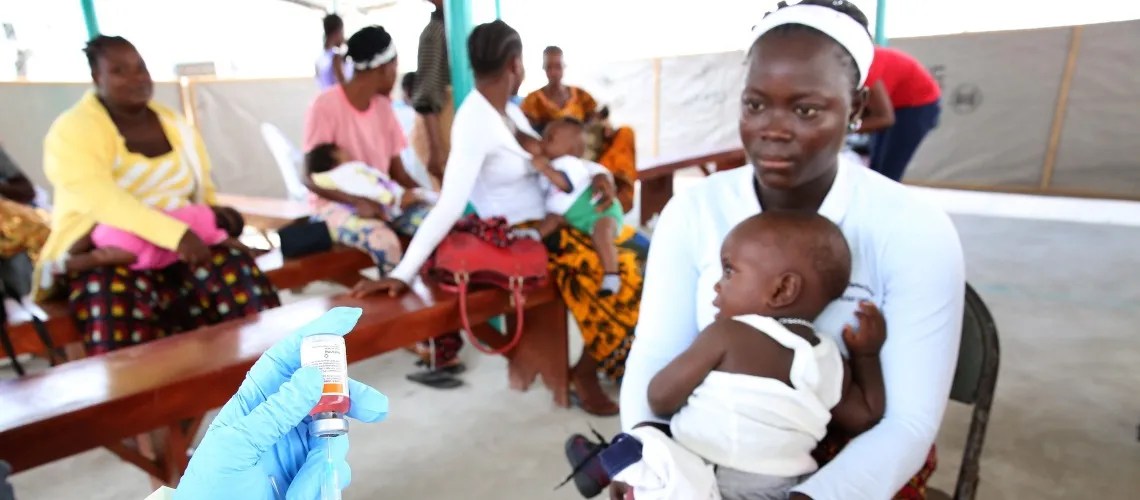 part of its routine immunization program, with
 Netherlands for the World Bank
You must be logged in to post a comment.