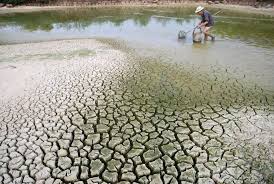
Water PPPs that work: The case of Armenia

Downtown Yerevan. Gusty winds, frosty air. Inside a hotel in the town square, cocktails and canapés, speeches and signatures. On this evening in November 2016, representatives of the State Committee for Water Economy (the Armenian water authority) and Veolia (a large international water operator) gathered to celebrate the signing of a new partnership: a 15-year national lease to provide water and wastewater services for the whole country. The lease began in January 2017, thus marking the start of a “second generation” of water PPPs in Armenia. Solid gains had already been made under the “first generation” between 2000 and 2016. At this crucial juncture, a World Bank study reviewed Armenia’s experience so far and analyzed the way forward under the new national lease.

Continue reading

Empowering Women Through Tourism

The Middle East and North Africa (MENA) region has some of the most important historical and cultural sites in the world, and stunning natural landscapes. Couple these incredible assets with the region’s famous hospitality and rich culinary traditions, MENA is an ideal destination to grow travel and tourism, and harness its power for development work. However, MENA is behind other regions in women’s agency, economic opportunities, workforce participation and more. This presents a unique opportunity to leverage tourism to bridge the gender gap in the region. Gender differences in unemployment rates are particularly exacerbated in the West Bank and Gaza, where the overall economic situation is bleak due to instability, and gender dynamics are and exacerbated by the conflict.

Continue reading

Innovation in the air: using cable cars for urban transport

1 NbKnQKS58pvtrmV7xrLbywInvented over a century ago for exploring mountainous regions, aerial cable cars have recently made an appearance in several big cities, where they are being used as an alternative to conventional urban transport modes. This technology uses electrically-propelled steel cables to move suspended cars (or cabins) between terminals at different elevation points.

The tipping point. The emergence of cable cars in urban transport is fairly new. Medellín, Colombia pioneered the use of cable cars for urban transport when it opened its first “Metrocable” line in 2004. Since then, urban cable cars have grown in popularity around the world, with recent projects in Latin America (Rio de Janeiro, Caracas, Guayaquil, Santo Domingo, La Paz, and Medellín), Asia (Yeosu, South Korea, Taiwan, Hong Kong), Africa (Lagos, Constantine), and Europe (London, Koblenz, Bolzano). Cable cars can be an attractive urban transport solution to connect communities together when geographical barriers such as hills and rivers make other modes infeasible.

Continue reading

Top 7 water blogs of 2017

As a new year of insightful and interesting blogs begins here, we celebrate some of the most popular entries on The Water Blog from 2017.  Thanks to our readers and bloggers, The Water Blog is growing every year. From global, to regional, to national, and local perspectives, and covering key themes that resonate with a diverse community, we strive to ensure our content makes an important contribution to the global dialogue on water issues, and offers readers fresh insights as well as vital resources they otherwise may have not known about.

Continue reading

Equality Means Business: Making the Business Case for Women

Despite women’s active role in Zimbabwe’s informal sector, they are underrepresented in its formal business sector.  When early December was upon us—heralding the start of the month of annual festivities—a group of women executives met to put forward strategies for equality in business. They met against a background of the harsh reality of women’s exclusion from leadership positions in Zimbabwe, brought to the fore in a recently released Confederation of Zimbabwe Industries (CZI) Manufacturing Survey for 2017.

Continue reading

Protecting Watersheds Through an Innovative Learning App

Watershed protection is a complex challenge that needs a multi-sectorial approach. Innovative and interactive tools, such as the new World Bank Spatial Agent app, is one solution, according to Nagaraja Rao Harshadeep, a Global Lead for Watersheds with the Bank’s Environment and Natural Resources Global Practice.Harshadeep, also the leader of the Spatial Agent app team, believes the app’s interactive maps and charts can help to us explore multi-sectoral synergies in a spatial development context. The data can promote collaborative efforts for sustainable and environmentally sound watershed management.

Continue reading

Cities: 12 big moments of building sustainable cities and communities (#7-#12)

At the World Bank, our teams working on social development, urban development, disaster risk management, and land issues have endeavored with countries and cities worldwide throughout the year to achieve a common goal: building inclusive, resilient, and sustainable cities and communities for all. How did they do? From our “Sustainable Communities” newsletter, we have captured 12 moments that mark the major accomplishments and lessons learned in 2017—and inspire our continued work to end extreme poverty and boost shared prosperity in 2018. Below the last 6 moments are described.

Continue reading

Cities: 12 big moments of building sustainable cities and communities (1-6)

At the World Bank, our teams working on social development, urban development, disaster risk management, and land issues have endeavored with countries and cities worldwide throughout the year to achieve a common goal: building inclusive, resilient, and sustainable cities and communities for all. How did they do? From our “Sustainable Communities” newsletter, we have captured 12 moments that mark the major accomplishments and lessons learned in 2017—and inspire our continued work to end extreme poverty and boost shared prosperity in 2018. Below the first 6 moments are described. Tomorrow will het other 6 moments follow.

Continue reading

When technology meets agriculture in Bhutan

Bhutan is a challenging environment in which to develop commercial agriculture. The country has limited areas for agriculture, and its geography and road conditions make logistics and market access costly. Therefore, commercial agriculture is critical to increase productivity, which will help create jobs and access to more and better food. This can be achieved not only through focusing on high-value products and investing in traditional infrastructure such as irrigation, but also through using information and communication technology (ICT). Based in eastern Bhutan, Mountain Hazelnuts has developed innovative uses of ICT for its commercial agriculture operations.

Continue reading

Climate change: Without urgent action, climate impacts could push an additional 100 million people into poverty by 2030

Countries and communities around the world are already experiencing stepped-up  climateclimate change impacts – including droughts, floods, more intense and frequent natural disasters, and sea-level rise – and the most vulnerable are being hit the hardest.

Continue reading