How can Indonesia achieve a more sustainable transport system?

Indonesia, a vast archipelago of more than 17,500 islands, is the fourth most populous id-street-scene-jakarta-un-women-flickrcountry in the world, with 261 million inhabitants, and the largest economy in Southeast Asia, with a nominal Gross Domestic Product of $933 billion.

Central government spending on transport increased by threefold between 2010-2016. This has enabled the country to extend its transport network capacity and improve access to some of the most remote areas across the archipelago.

Continue reading

Applications open for third round of funding for collaborative data innovation projects

The Global Partnership for Sustainable Development Data and the World Bank uganda-cncDevelopment Data Group are pleased to announce that applications are now open for a third round of support for innovative collaborations for data production, dissemination, and use. This follows two previous rounds of funding awarded in 2017 and earlier in 2018.
This initiative is supported by the World Bank’s Trust Fund for Statistical Capacity Building (TFSCB) with financing from the United Kingdom’s Department for International Development (DFID), the Government of Korea and the Department of Foreign Affairs and Trade of Ireland.

Continue reading

What will be the future of work?

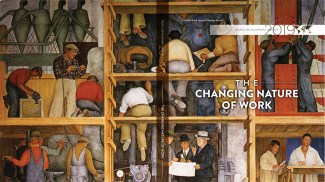
Do you wonder if the good fortune and opportunities that you’ve enjoyed in your wdr_2019_coverprofessional life will be available to your children, and to their children? At a time of strong global economic growth, it may seem paradoxical that we face an existential crisis around the future of work. But the pace of innovation is accelerating, and the jobs of the future – in a few months or a few years – will require specific, complex skills. Human capital will become an ever more valuable resource.

Continue reading

The Race for Universal Energy Access Speeds Up

STORY HIGHLIGHTS energy

  • A billion people still live without electricity, but certain countries are starting to adopt new approaches to expand electricity services – reaching millions of people in the past few years.
  • The number of people gaining access to electricity in Sub-Saharan Africa has begun to outstrip population growth for the first time. In South Asia, progress has been even faster.
  • Much more work will be needed to achieve universal electrification by 2030, as called for in SDG7. The World Bank is significantly ramping up financing for energy access programs, with support for mini-grid and off-grid projects growing the fastest.

Continue reading

Mogadishu’s first tech hub

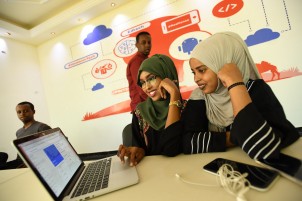
1_BkBrs2NfHlP53xw7ZfQ0PwSomalia’s capital city of Mogadishu is defined by a complex mix of challenges and opportunities. Despite political and economic struggles, Somalis are innovating to break the chronic cycle of vulnerability. Supported in many cases by the international Somali diaspora, people in Mogadishu are using technology to solve problems and tap into new markets.

Continue reading

New country classifications by income level: 2018-2019

World Bank buildingUpdated country income classifications for the World Bank’s 2019 fiscal year are available here.
The World Bank assigns the world’s economies into four income groups — high, upper-middle, lower-middle, and low. We base this assignment on GNI per capita calculated using the Atlas method. The units for this measure and for the thresholds is current US Dollars.

Continue reading

After disasters hit, how countries and communities can build back better

asset_3Disaster losses disproportionately affect poor people, according to the 2017 “Unbreakable” report. The Caribbean Hurricane season of 2017 was a tragic illustration of this.

Not one, but two Category 5 hurricanes wreaked destruction on numerous small islands, causing severe damages on islands like Barbuda, Dominica, and Saint Martin. The human cost of these disasters was immense, and the impact of this devastation was felt most strongly by poorer communities in the path of the storms.

Continue reading

Gains in Financial Inclusion, Gains for a Sustainable World

images.jpgMary Banda in Zambia runs a small restaurant in one of Lusaka’s oldest markets. Before she learned that financial services could make the way she did business easier, her profits were low. But today, her profits have increased, both because she banks her money and because she uses mobile money transfer services.

Using financial services has simplified managing her business and increased profits. And business proceeds now pay her children’s school fees.

Continue reading

Work or Family: Sri Lankan Women Shouldn’t Have to Choose

STORY HIGHLIGHTS

  • At just 36.6% percent, female labour force participation in Sri Lanka is low; further, having a child under age five at home makes women 7.4 percent less likely to join the labor force than women without young children.
  • Companies who provide childcare support have been able to retain experienced employees (both women and men), reduce absenteeism, and boost employee satisfaction and loyalty.
  • Corporate HR policies that pursue diversity can play a key role in supporting inclusive workplaces.

Continue reading