
For too long the narrative surrounding Africa’s agri-food sector has been one of limited  opportunity, flat yields and small farms. It’s true that Africa is still producing too little food and value-added products despite recent efforts to increase investment, and that agricultural productivity has been broadly stagnant since the 1980s as shown in the 2018 African Agriculture Status Report.
Category Archives: WBG News & Reports
Data for development impact: Why we need to invest in data, people and ideas
High quality development data is a must for development impact 

We know that high quality development data is the foundation for meaningful policy-making, efficient resource allocation, and effective public service delivery. Unfortunately, even as new technology makes more data and wider uses of data possible, there are still many blank spaces on the global data map. A paper by my colleague Umar Serajuddin et al. (2015) describes this phenomenon as “data deprivation”, finding that as of just a few years ago, 77 countries still lacked the data needed to adequately measure poverty. What’s worse, data is often most scarce in the areas where it is most desperately needed. For one, the scarcity of individual-level data on issues like assets and consumption severely curtails our ability to make decisions to reduce gender disparities. Similarly, despite the urgency of the need to manage climate risk, significant voids remain with regards to climate data, such as impacts on freshwater resources. Education, health, food security, and infrastructure are just a few of the many other areas where more and better data is needed to deliver progress.
Social media beyond entertainment
Social media has flourished with increasing digital connectivity. Internet users in the 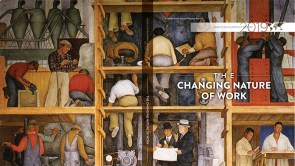 Philippines, Brazil, Mexico, Argentina and the United Arab Emirates spend more than 3 hours per day on social media. Global social media platforms such as YouTube and WhatsApp as well as local ones such as Mxit, an instant messaging application in South Africa, and Odnoklassniki, the Russian version of Facebook, are attracting people’s attention. The social interaction aspect of those communication initiatives redefines how individuals, business and government engage with each other.
How crowdsourcing can improve food safety
Unsafe foods cost developing economies over $110 billion in lost productivity and  medical expenses each year
 , according to the World Bank’s own figures. And yet in many cases surveillance is limited, and there are few effective ways for a consumer to report a case of food poisoning.
WDR 2020: Sneak preview
The next World Development Report (WDR) on Global Value Chains: Trading for  Development is well under way. Check out our website for a sneak preview.
Since the Bank’s last report more than thirty years ago on Industrialization and Foreign Trade, the world has been transformed, mostly in positive terms from a development perspective. Several low and middle income countries can now participate globally thanks to global value chains (GVCs).
Blockchain: How the Fourth Industrial Revolution can help accelerate progress towards development
Blockchain has been called a pillar of the Fourth Industrial Revolution, comparing it to technologies such as the steam engine and the internet that triggered previous industrial revolutions. It has the power to disrupt existing economic and business models and may prove particularly valuable in emerging market economies. According to experts, blockchain also holds great promise as a method of fighting corruption, especially in Latin America and the Caribbean, where more smartphone penetration can facilitate the adoption of new technology.
Measuring the statistical capacity of nations
Improving the capacity of national statistical systems (NSSs) has long been a part of the  global development agenda. The NSSs play an important role in modern economies. They provide stakeholders, ranging from policy makers to stock market analysts and the general public, with the data on the country’s socioeconomic developments. At the international level, monitoring global initiatives such as the Sustainable Development Goals (SDGs) requires high-quality data that are produced consistently across different national statistical systems.
Revolutionizing mobility through blockchain
As digital technology continues to transform and reshape the transportation industry  over the last few years, blockchain as a decentralized distributed technology has been embraced by other fields through various applications. It has found varied applications across banking, financial services, healthcare, e-governance, and voting.
Digital technologies allow people to take on risks and explore new opportunities
In the era of digital technology, the structure of production as well as the interaction  between humans and machines is being redefined. The diffusion and application of digital technology can increase productivity in an unprecedented manner, with potential to reshape the role of humans in the function of production. Jobs are the drivers of development and pillars of resilience for people. Five years ago, the World Development Report (WDR 2014), Risk and Opportunity – Managing Risk for Development, highlighted the role of enterprises in supporting people’s risk management by absorbing shocks and exploiting the opportunity side of risk. There have been heated debates on how technology may lead to risks, such as job loss and structural changes of employment. While the risks are real, the estimates of the impact of digital technology on employment vary widely, from substantial job loss for both skilled and the unskilled workers, to potential job gains thanks to the complementarity of humans and machines, as well as the income and wealth effect derived from higher productivity.
Our children’s planet: What does their education have to do with climate change?
Our world is very different than our grandparent’s. In 1950, there were about 2.5 billion  people; today, there are more than 7 billion. Overall, people are healthier, wealthier, and more secure.
But this has come at a cost. The stress on our planet has been immense. Human beings have dramatically altered the climate, changed the chemistry of the oceans, and triggered mass extinctions. The impact has been so great as to define an entirely new geological era — the Anthropocene, turbo charged by a “great acceleration” of population, economic growth and natural resource consumption since the 1950s.
 Netherlands for the World Bank
You must be logged in to post a comment.