
Is new technology “transformative” or “disruptive”? I’ve heard this topic hotly debated  at meetings both within the World Bank and more broadly. The issue is not just linguistic hair-splitting. Technology optimists prefer the first term and see new technologies, digitization in particular, as an opportunity for low-income developing countries to leapfrog into the 21st century. Moonshot Africa, an ambitious World Bank initiative to connect individuals, firms, and governments in Africa to fast internet is inspired by this vision. Technology pessimists on the other hand emphasize the disruptive effects digital technologies are expected to have on labor markets. Concerns about robots and algorithms replacing human labor increasingly dominate the public debate not only in advanced economies, but also in emerging and developing economies. Against this background, it is natural to ask how these two views are compatible. To be more specific: How will Moonshot Africa create jobs on a continent where job creation is needed more than anywhere else in the world with Africa’s working-age population projected to rise by 70% in the next twenty years?
Category Archives: WBG News & Reports
7 reasons for land and property rights to be at the top of the global agenda
This week, more than 1,500 development professionals from around the world are 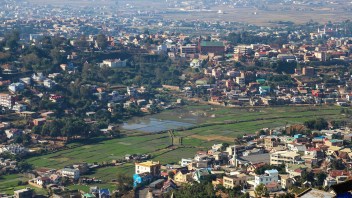 gathering at the World Bank’s annual Land and Poverty Conference, discussing the latest research and innovations in policies and good practice on land governance.
Secure property rights and efficient land registration institutions are a cornerstone of any modern economy. They give confidence to individuals and businesses to invest in land, allow private companies to borrow – using land as a collateral – to expand job opportunities, and enable governments to collect property taxes, which are necessary to finance the provision of infrastructure and services to citizens.
10 Years of Green Bonds: Creating the Blueprint for Sustainability Across Capital Markets
The phone call to the World Bank Treasury came out of the blue: in late 2007, a group of  Swedish pension funds wanted to invest in projects that help the climate, but they did not know how to find these projects. But they knew where to turn and called on the World Bank to help. Less than a year later, the World Bank issued the first green bond—and with it, created a new way to connect financing from investors to climate projects.
The World Bank’s Land and Poverty Conference: 20 years on
In 1999, when a few enthusiasts agreed to meet annually in an effort to base  interventions on land, on solid empirical evidence rather than ideology, few would have expected this effort to have such a lasting impact. Twenty years on, the small gathering has morphed into a conference, bringing together over 1,500 participants from governments, academics, civil society and the private sector to discuss the latest research and innovations in policies and good practice on land governance around the world.
Trees and forests are key to fighting climate change and poverty. So are women
According to IUCN’s ‘Global Forest Watch’, from 2001 to 2017, 337 million hectares of  tropical tree cover was lost globally – an area the size of India.
So, we appear to be losing the battle, if not the war, against tropical deforestation, and missing a key opportunity to tackle climate change (if tropical deforestation were a country, it would rank 3rd in emissions) and reduce poverty. A key question, then, is what can forest sector investors, governments and other actors do differently to reverse these alarming trends?
Feeling Ambivalent on International Women’s Day
On the eve of International Women’s Day, I was at a UN WOMEN side event in NYC when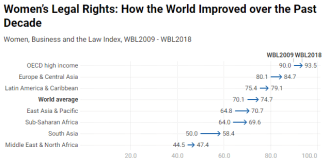 my phone started buzzing with well wishes for a happy women’s day from my friends in Asia, filling me with — ambivalence. To be honest, the day always leaves me with mixed feelings: despite the great strides that the world has made in women’s rights in various ways, for me, it’s also a reminder of how so many women still don’t enjoy our basic human rights.
As we’ve returned from women’s day to what in many ways is still a man’s world, I wanted to share three thoughts about the intersection of women’s rights with our data world today.
Newsletter March 2019: Looking Forward
NL4WorldBank March 2019 edition of the NL4WorldBank newsletter is out! 
Looking Forward which was published on the 14th of March.
Gender equality: Unleashing the real wealth of nations
Last week, we launched the Women, Business, and the Law report, which found that 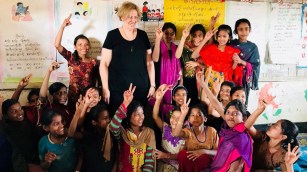 despite the considerable progress that many countries have made in improving women’s legal rights over the last decade, women are still only accorded 75 percent of the legal rights that men, on average, are given. As a result, they are less able to get jobs, start businesses and make economic decisions, with economic consequences that reverberate beyond their families and communities.
The gender gap in the disaster risk management sector: why it matters
Over the past decade, the practice of disaster risk management (DRM) has evolved and  matured. From mainly focusing on disaster response, local and international actors alike now emphasize the importance of preparedness and prevention – saving lives and avoiding losses even before disaster strikes.
Yet despite this progress, there’s much more work to be done to ensure that DRM efforts respond to the particular needs and vulnerabilities of women and girls. In no small part due to gender inequalities, women are both more vulnerable to natural hazards and less likely to benefit from relief and recovery efforts than men.
Every day is Women’s Day for IDA
At the World Bank, we believe no country, community, or economy can achieve its  potential or meet the challenges of the 21st century without the full and equal participation of women and men, girls and boys. This is particularly true in developing countries supported by the International Development Association (IDA), the arm of the World Bank that supports the poorest countries.
 Netherlands for the World Bank
You must be logged in to post a comment.