
WASHINGTON, April 5, 2019 – The Executive Directors of the World Bank today  unanimously selected David R. Malpass as President of the World Bank Group for a five-year term beginning on Tuesday, April 9, 2019. The Board expressed its deep gratitude to Interim President Kristalina Georgieva for her dedication and leadership in recent months.
The Executive Directors followed the selection process agreed in 2011. The process included an open, transparent nomination where any national of the Bank’s membership could be proposed by any Executive Director or Governor through an Executive Director. This was then followed by thorough due diligence and a comprehensive interview of Mr. Malpass by the Executive Directors.


 organized. Main stage speakers include representatives from top-notch institutions and organizations such as the United Nations, National Geographic, World Trade Organization, Bloomberg, Massachusetts Institute of Technology, among others.
 see a cluster of homes made of varying materials depending on the household income.
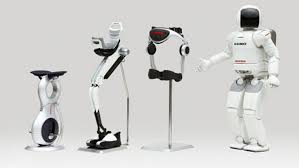 global production and trade. Global sales of industrial robots reached a new record of 387,000 units last year and robot adoption is projected to grow in the coming years. Techno-pessimists fear that developing countries might lose the opportunity to export themselves out of poverty by linking into Global Value Chains (GVCs), as firms in rich countries relocate robot-driven production closer to home.
 of global supply chains has made the logistics business more challenging than ever, with increasing pressure to deliver fast and flexible services at a lower cost. In that quickly-evolving context, freight rail is grappling with fierce competition from road transport—a trend that will only intensify under the effect of disruptive technologies like autonomous trucks and on-demand mobility services. In addition, railways around the world have been hit by significant government budget cuts, limiting their ability to invest in infrastructure or maintain high service standards. Stiff competition from roads, which have the door-to-door delivery advantage have offered added pain.
 suppose it wouldn’t be inaccurate to say that they can help you decide how to dress, whether or not to carry an umbrella, or water the garden. But their purpose is so much bigger than that.
 from the World Bank and the World Resources Institute (WRI) that aims to advance the integration of green and gray infrastructure solutions on the ground. It places a spotlight on the world’s growing infrastructure crisis, driven by climate change and growing populations. It proposes insights, solutions and examples for putting nature to work. It examines the technical, environmental, social and economic dimensions of a typical project assessment but also outlines, with new clarity and detail, the enabling conditions required to facilitate successful implementation of green-gray projects. Harnessing the collective analytical and technical expertise of the World Bank and WRI, it aims to build momentum in both policy and practice.
 Netherlands for the World Bank
You must be logged in to post a comment.