

In early June, the sky turned yellow throughout much of the northeastern United States. People woke up to smog, haze, and a red sun, and were warned to stay indoors to protect themselves from a toxic cocktail of air pollutants. In New York City, the levels of particulate matter with 2.5 microns or less in size (PM2.5) were registered at a record-breaking 400 micrograms per cubic meter. This reading exceeded the U.S. Environmental Protection Agency’s recommended 24-hour standard guidelines 11 times and was equivalent to every person in the city, including babies, smoking 5-10 cigarettes. Such unprecedented levels of air pollution made New York the most polluted of all big cities in the world on that day, displacing perennial record holders like New Delhi or Lahore.
The bad air in New York City and across the Northeast was carried by winds from Alberta, Nova Scotia, and Quebec – Canadian provinces experiencing record-high temperatures and droughts that have caused an unprecedented number of wildfires.
Interested in Doing Business with the World Bank Group? Please see selected opportunities below.
Procurement Framework and Regulations for Projects After July 1, 2016 (worldbank.org)
June 22, 2023—The World Bank Group today announced a suite of new and expanded actions to help countries respond quickly and effectively to an ever-growing onslaught of crises.
At the Summit for a New Global Financial Pact, Ajay Banga announced an expanded toolkit for crisis preparedness, response, and recovery that includes: (1) pausing debt repayments; (2) redirecting financing; (3) linking crisis preparedness and financing; (4); backstopping development projects with private sector support, and (5) building enhanced catastrophe insurance without debt.
Esther Smith – Embassy of the Kingdom of the Netherlands, U.S.A.
In June, the Anticorruption for Development (AC4D) Global Forum was held at the World Bank Group’s headquarters in Washington D.C. Aware of corruption’s high societal and environmental costs, the World Bank has reaffirmed its commitment to anticorruption as a development priority and seeks to foster partnerships with other stakeholders working towards better governance and integrity. Equally important to the Netherlands, the event was co-hosted by the Netherlands Ministry of Foreign Affairs, and well-attended by an audience from all over the world and various organizations.

In 2023, India experienced the hottest February since 1901, the first year the country’s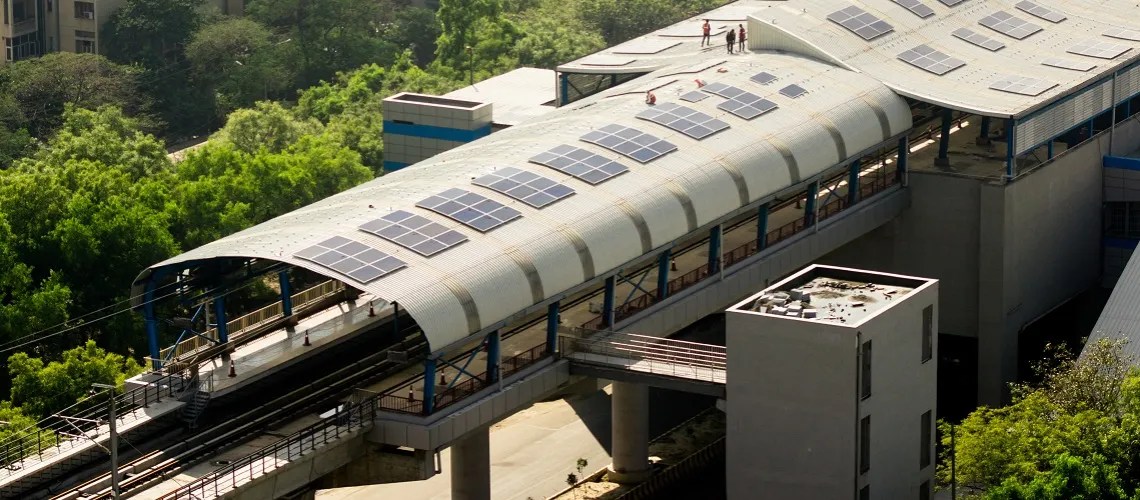 Meteorological Department started its weather records. Extreme weather events like this are becoming frequent and are expected to get worse due to climate change. India is among the countries most affected by the impacts of extreme weather events.
Russia’s invasion of Ukraine continues to inflict a devastating toll on the country and is causing serious global repercussions. Ukraine’s recovery, reconstruction, and operating needs are staggering. According to the recent Rapid Damage and Needs Assessment (RDNA2), the estimated cost of Ukraine’s recovery and reconstruction stands at $411 billion over the next decade. For 2023, Ukraine is facing an additional funding gap of $11 billion for critical economic and capital expenditures. The highest needs are in transport (22%), housing (17%), energy (11%), social protection and livelihoods (10%), explosive hazard management (9%) and agriculture (7%).
How do we address climate change, reduce poverty, and boost shared prosperity on a livable planet? Climate change is one of the defining issues of our time, and no country is immune.
On this episode of The Development Podcast, we hone in on voices across Africa about the experience of climate change and how it intersects with poverty, and we hear from the World Bank’s Chief Economist for Sustainable Development in Washington, DC. Tune in as we speak with Cathy Kamamu, a farmer from Kenya, Professor Denis Aheto, Director of the Centre for Coastal Management, World Bank Africa Centre of Excellence in Coastal Resilience, Roselyn Fosuah Adjei, Director of Climate Change for the Ghana Forestry Commission, and Richard Damania, Chief Economist for Sustainable Development at the World Bank.
Tell us what you think of our podcast here >>>. We would love to hear from you!
 Netherlands for the World Bank
You must be logged in to post a comment.