

RebelGroup (or “Rebel”)—the majority Dutch firm with offices in Rotterdam, Antwerp, Manila, Johannesburg, and Washington D.C.—has been advising governments on the development of infrastructure projects for 15 years. Over the past decades, Rebel has both experienced and shaped some of the major trends in the global infrastructure market—including a significant growth in the use of public-private partnerships (PPPs).
PPPs allow a government to engage a private company for the construction, maintenance, operations, and financing of an infrastructure project in a long-term contract that—through its focus on optimal risk allocation and performance incentives—maximizes value to society. PPPs have relieved many governments from the cost overruns and delays that traditionally plagued infrastructure projects, allowing more projects to be delivered on-time and on-budget.

 conducive PPP framework in Cameroon. Through a modernized PPP legal and institutional framework and enhanced capacity of PPP institutions, in particular CARPA, to identify and prepare PPP projects, the Government in Cameroon will be in a better position to attract private sector participation in infrastructure development.



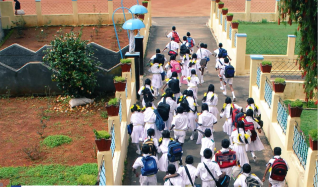 Imagine that you are an advisor to your country’s Minister of Education. A recent earthquake damaged hundreds of schools in several cities. The minister has called for a meeting with you and asked:
 improve the equity, efficiency and transparency of major safety nets to benefit the poorest households. Through this project, the World Bank is supporting the Bangladesh Bureau of Statistics, under the Statistics and Informatics Division (SID), carry out data collection activities nationwide. This will be carried out in three phases, with Phase 2 scheduled to be conducted in January 2018 in Dhaka and Chittagong Division.
  Pushpa drops her youngest son off at the day care centre at St. Theresa’s Church in Thimbirigasaya every day. The 37-year-old then heads to work as a maid. There are days when this routine becomes impossible. If her child is feverish, for instance, the day care won’t accept him because he may infect the other children.


You must be logged in to post a comment.