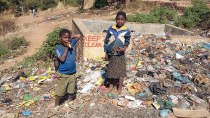
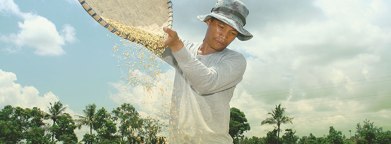
Comparing two middle-income countries is not unusual, but two that are geographically
far and are apparently different is less common. However, both Turkey and Peru have had the highest growth in their respective regions in recent years, aspire to become high-income economies in the next decade, depend on trade. Both countries face downside risks if structural changes—in the education and training system, and the economy more broadly—are not made to ensure that contributions to economic growth come from improvements in productivity. Both countries recognize there is a large gap between their productivity levels and the global productivity frontier, and both have growing populations that are not adequately equipped to meet labor market needs, with average productivity levels. Given these (similar) challenges, both countries have as their development goal, central to their development agenda, to improve productivity to continue growing in a sustainable manner.
Author Archives: NL4WorldBank
eC2: Supervision and knowledge transfer for the development of a river basin-wide flood management plan
Deadline: 09-Sep-2018 at 11:59:59 PM (Eastern Time – Washington D.C.)
Assignment Description: The main tasks of the firm to be selected through this procurement is to carry out supervision of activity (2) above, i.e. the development of the Integrated Flood Management Plan (IFMP) that will cover the three river basins, Ba, Cai Ninh Hoa and Cai Nha Trang. Three IFMP in three river basins will be developed. Upon request of VNDMA, it is necessary to scale up the experiences of, and lessons learnt from IFMP development in Vietnam. It is not the intention of this firm to be hired to develop the plan, but more to provide quality assurance during the management plan development process, and to ensure that adequate knowledge transfer is done to allow lessons learnt from other successful flood management plan development projects in Vietnam and other countries globally, are reflected through the development process and in the final plan. Integrated Flood Management Plans (IFMP) is a generic term that refers to flood risk management plans developed at the river basin level.
Identification as a centerpiece for development: What can other countries learn from Peru?
Peru has placed so much emphasis on the importance of identification that it has created
a museum dedicated to it. The “Museum of Identification” in Lima demonstrates to visitors the significance of identity in the country’s narrative. In fact, the Incas, centuries before the Europeans arrived, kept track of the population by using “quipus”, an accounting tool based on strings, with each node denoting a village or community.
Peru has continued to prioritize identification, and the uniqueness of each person—long before the Sustainable Development Goals made “legal identity for all and free birth registrations” a global priority (SDG 16.9).
Inclusion in water: breaking down barriers
In many countries, women walk over six kilometers to collect water. Between 2006 and
2012 in Niger, women traveled an hour, on average, to fetch water. Worldwide, 4.5 billion people lack access to safely managed sanitation services and 2.1 billion people lack access to safe drinking water services.
eC2: Water Resources Option Study for Karachi (Pakistan)
Deadline: 09-Sep-2018 at 11:59:59 PM (Eastern Time – Washington D.C.) 
Assignment Description:
This study will provide the Karachi Water and Sanitation Board (KWSB) with strategic guidance by comparing different approaches to augmenting water supply for the rapidly growing city of Karachi. A particular focus will be on attracting private sector participation in service provision.
The scope of the study will include: (i) reviewing existing research on future raw water supplies in Karachi and defining KWSBs service territory; (ii) developing options for sequencing future water supply sources, with a view to promoting private sector participation in the sector; and (iii) reviewing the enabling environment for Private Sector Participation (PSP).
What lessons for social protection from universal health coverage?
It’s not so long since the days when speaking of ‘universal health coverage’ used to
provoke shockwaves. Happily, the principle that “… everyone having access to the health care they need without suffering financial hardship” is now widely recognized and documented. And although few countries have achieved this goal in practice, it is clearly within reach, including in low-income countries like Rwanda.
Social protection seems to be on a similar trajectory, with universality now enshrined in commitments and declarations. Yet the provision of universal social protection (USP) is hotly contested — take the debates around Universal Basic Income and Employment Guarantee Programs.
eC2: Child Health Nutrition in four provinces of Lao PDR between August and mid-January 2019
Deadline: 30-Aug-2018 at 11:59:59 PM (Eastern Time – Washington D.C.)
Assignment Description:
Firm/Consortium to conduct a formative research on WASH in 4 provinces of Lao PDR Xiengkhouang, Houaphan, Phongsaly and Oudomxay. Eligible firms kindly submit their required documents through provided link no later than August 31, 2018.
eC2: Building Energy Resilient Power Systems in the Caribbean
Deadline: 04-Sep-2018 at 11:59:59 PM (Eastern Time – Washington D.C.)
Assignment Description:
The World Bank is currently working with Saint Lucia (SLU) and Saint Vincent and the Grenadines (SVG) in the Caribbean to help improve the resilience of the power systems of these two countries to extreme weather events that will become more severe due to climate change. The World Bank will offer similar support to three other OECS countries afterwards. These Terms of Reference (TOR) are for a Power System Engineering Consulting Firm to support the World Bank energy team by conducting an assessment of the impacts of past storms (2 -3) on the power systems of SLU, SVG, St. Kitts and Nevis (SKN), and Antigua and Barbuda (A&B), identifying key risks and vulnerabilities, and offering energy resilience enhancement recommendations associated with utility power generation assets as well as transmission and distribution systems. The consulting firm will also develop an investment plan with the estimated cost of these recommended measures.
From Parts to Products: Why Trade Logistics Matter
STORY HIGHLIGHTS
- The sixth edition of Connecting to Compete reveals a persistent gap between high-income and low-income countries on logistics performance. High-income countries score, on average, 48% better on logistics than low-income countries.
- Logistics relates to how efficiently countries can move physical goods across and within borders. A country’s performance in this area can determine how it participates in international markets.
- Emerging trends in logistics include eco-friendly logistics options, labor shortages in both developed and developing countries, and preparedness for cyber threats.
The ripple effects of war: How violence can persist after formal peace is declared
When I first visited the Democratic Republic of the Congo in 2007 as a public health
researcher, I was trying to understand the complex issue of how young men get recruited into rebel groups in war-torn regions of central Africa. What I learned was both surprising and heartbreaking: a person who experienced war violence as a child could be more likely to engage in conflict as a young adult. Young men who had experienced extreme war violence in their past would often state this as a reason to take up arms. Even more tragically, these same young men would often struggle to reintegrate peacefully into their communities when hostilities ended. The violence they had experienced their whole lives through war persisted within their homes and communities even when formal peace was declared.
You must be logged in to post a comment.