
Next week, I’ll attend the climate summit hosted by the United Nations as part of the 74th session of the General Assembly. A range of environmental challenges—including pollution, the degradation of forests and biodiversity, marine plastics, and extreme weather events—are putting sustainable economic growth and inclusive development at risk. While international discussions have a place in looking for results, one of the great strengths of the World Bank Group is in partnering with countries to find local solutions and deliver good outcomes.
Author Archives: NL4WorldBank

eC2: Update delineation and characterization of the groundwater bodies at risk, including pressure and risks, and perform status assessment
Deadline: 07-Oct-2019 at 11:59:59 PM (Eastern Time – Washington D.C.)

The assignment envisages the following activities with regard to the 93 Ground Water Bodies (GWBs)in Bulgaria identified in the River Basin Management Plans (2016-2021) as not being in good status (63) or to be at risk of not achieving good qualitative or good chemical status (30): the implementation of the updated methodologies/approaches and delineation of the groundwater bodies, updating the characterization of GWB,
determining the background level concentration (BGL) and threshold values (TV) for contaminants in the GWB, evaluating the pressures and risks for the quantitative and chemical status applicable to the GWBs and identifying the trends, and finally evaluating the quantitative and chemical status of the GWB.
eC2: Indonesia Coastal Fisheries Initiative – Challenge Fund
Deadline: 08-Oct-2019 at 11:59:59 PM (Eastern Time – Washington D.C.) 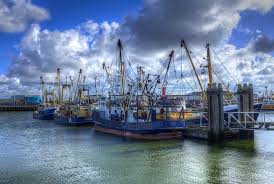
Specifically, by time of close, the contracted organization will have:
1) Developed an investment package, a report outlining a set of well-defined investment project proposals;
2) Completed a series of analysis to validate the technical, legal, and social feasibility of the proposed investments; including estimates of the financial return from undertaking the investments, and appraisal of social and environmental impacts as well as their mitigation measures (using the World Bank’s Environmental and Social Framework);
3) Conducted concrete preparatory actions that increase the chance of success (or reduce the risks) of the proposed fishery investment package, such as capacity-building of stakeholders, strategy development, or certification audits, in preparation for the implementation of activities in the proposed investment package;
4) Have in-principle agreements with potential investors and donors to undertake the financing of the project proposals.
eC2:Renewable Energy Competitive Bidding Strategy
Deadline: 07-Oct-2019 at 11:59:59 PM (Eastern Time – Washington D.C.)
Scope of Work
The assignment has four components:
(i) Develop RE Competitive Bidding Strategy, including volume and timeline recommendations, type of bidding, roles of key agencies, and ensuring maximum economic benefit over the long-term;
(ii) Procurement Framework for Competitive Bidding, including consideration of qualification requirements, winner selection process, and sellers liabilities;
(iii) Stakeholder Consultations and Capacity Building, including regular workshops, briefings, and other engagement to ensure that all key federal and provincial agencies, and private sector developers and investors, are consulted regularly;
(iv) RE Competitive Bidding Action Plan, including a capacity assessment of key agencies, communication strategy, and immediate next steps for implementation.
eC2: SWPN Water Stewardship Project Pipeline
Deadline: 30-Sep-2019 at 11:59:59 PM (Eastern Time – Washington D.C.)
The selected firm will be expected to constitute a multi-disciplinary team to undertake the following key tasks as agreed during a clarification session:
Preparation of a report giving an overview of global water stewardship practices that drive collective action partnerships. Review the publicly available information on corporate water stewardship and other initiatives that are currently being implemented in South Africa or have been implemented over the past 10 years.
Arrange and facilitate a multi-stakeholder process to develop a comprehensive list of corporate water stewardship activities and initiatives relevant to the South African water sector. From the list of projects select a minimum of 10 unique/ novel corporate water stewardship responses applicable to closing the water gap in South Africa.
Better together: Finance and health ministers can deliver a win-win for their countries
This blog is part of a series on Universal Health Coverage (UHC). The series  includes contributions from external bloggers and reflects their view. Follow the conversation on Twitter #HealthForAll
The G-20’s recent call for finance and health ministries to collaborate in pushing toward Universal Health Coverage (UHC) is both overdue and welcome. Without such collaboration, the necessary decisions cannot be made for raising substantial resources and spending them effectively. But it is also a collaboration that holds promise for preventing much of the disease and death that is looming on the horizon, especially in today’s middle- and low-income countries. Everyone wins when countries can generate more health for the money —an effort that demands joint action by the people who raise funds and those who spend it. Countries also get a win-win from raising taxes on harmful products like tobacco, alcohol, and sugary beverages by preventing unnecessary disease and by raising revenues.
You, Me and (Big) Data!
Have you noticed the large number of digital trails that are left behind in your browser  and social media? Have you ever received an offer for a product or service that you were just thinking of? A friend of mine was researching about a critical illness and looking for insurance plans on the internet at the same time, and she started receiving ads to secure “the right spot” in a graveyard! Continue reading
Making farmers better off by tackling the whole of the value chain
There are a fair number of interventions out there that work with an entire value chain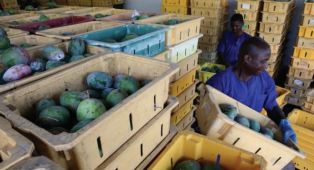 with a set of interventions. The first (and second) time I was asked to evaluate one of these, my response was how hard, even impossible, it might be. I have since been enlightened, first with David’s post on Monday and also from reading an exciting new paper by Macchiavello and Miquel-Florensa.
Turning fecal sludge into a resource: New approaches required to achieve the rural sanitation SDGs
Safely managed sanitation is a focus of the Sustainable Development Goals (SDGs). It is  central to stunting reduction and early childhood survival, both identified by the World Bank’s Human Capital Index as critical for humans to develop their full potential. It is widely known that 4.5 billion people lacked access to safely managed sanitation in 2015, according to the Joint Monitoring Programme. Less well understood is that hundreds of millions more people in densely populated rural areas are exposed to significant health risk due to unsafely managed sanitation.
eC2: Improved Renewable Energy Integration and Electricity Services through Battery Storage in Distribution Network – TPDDL
Deadline: 25-Sep-2019 at 11:59:59 PM (Eastern Time – Washington D.C.)

Battery electric storage systems (BESS) are increasingly being used for power system applications such as grid stabilization, load shifting, grid operational support, power quality improvement, reliability management and enhancing rooftop solar hosting capability. The BESSs could also perform an important role in providing arbitrage and increasing the value of renewable energy resources. The benefits that electric storage systems bring in are, namely: electric energy time shift or energy arbitrage, frequency regulation, voltage and reactive power support, Peak /congestion management, Technical loss reduction and asset life enhancement, distribution upgrade deferral, spinning, non-spinning, and supplemental (black start) reserves, power quality improvement, power reliability improvement and demand charge management. BESS systems at the distribution level may displace diesel gensets which commonly backstop system reliability.
 Netherlands for the World Bank
You must be logged in to post a comment.