
WASHINGTON, Sept. 16, 2020 – The COVID-19 pandemic threatens hard-won gains in 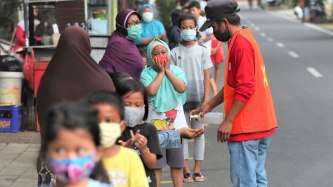 health and education over the past decade, especially in the poorest countries, a new World Bank Group analysis finds. Investments in human capital—the knowledge, skills, and health that people accumulate over their lives—are key to unlocking a child’s potential and to improving economic growth in every country. health and education over the past decade, especially in the poorest countries, a new World Bank Group analysis finds. Investments in human capital—the knowledge, skills, and health that people accumulate over their lives—are key to unlocking a child’s potential and to improving economic growth in every country.
The World Bank Group’s 2020 Human Capital Index includes health and education data for 174 countries – covering 98 percent of the world’s population – up to March 2020, providing a pre-pandemic baseline on the health and education of children. The analysis shows that pre-pandemic, most countries had made steady progress in building human capital of children, with the biggest strides made in low-income countries. Despite this progress, and even before the effects of the pandemic, a child born in a typical country could expect to achieve just 56 percent of their potential human capital, relative to a benchmark of complete education and full health. |
Author Archives: NL4WorldBank

5 Years of Climate Leadership: The World Bank Group’s First Climate Action Plan
Climate Change Action Plan 2.0
Results from the recently concluded Plan make clear the Group’s leadership on climate action. Looking ahead, our next Climate Change Action Plan (2020-2025), already underway, aims to boost support for countries to take ambitious climate action by increasing financing for adaptation and supporting increased systemic climate action at the country level.
Five Things You Need to Know About Social Sustainability and Inclusion
STORY HIGHLIGHTS
|
 Social Development GP, has a new strategic direction that focuses on creating more inclusive societies, enhancing the empowerment of citizens, and fostering more resilient and peaceful communities.
eC2: Climate Assessment of Agricultural Certification Programs
Deadline: 21-Sep-2020 at 11:59:59 PM (Eastern Time – Washington D.C.)

IFCs Strategy is to contribute to CSA by providing investments and advisory operations that contribute to these three pillars of CSA. One possible way of doing this is by using appropriate agribusiness certification programs to ensure that climate-smart standards are being achieved. In order to use crop certifications as a proxy for climate co-benefits, IFC needs to assess whether the referred certification programs and their audit protocols are sufficient to conclude that agribusiness practices contribute to mitigation of, or adaptation to climate change, as defined by the IFCs Definitions and Metrics for Climate-Related Activities. In this context IFC intends to contract with a respected, knowledgeable third-party organization that will review popular crop certification programs and provide a clear assessment and recommendation of which certification programs would also imply positive climate impact (mitigation and/or adaptation)
World Bank Group Exceeds 2020 Climate Finance Target for 3rd Consecutive Year – $21.4 Billion in Funding for Climate Action
STORY HIGHLIGHTS
|
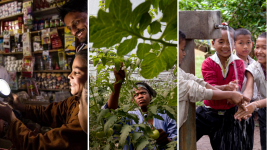 related investments, surpassing its climate-finance target for the third year in a row.
eC2: AGRO-EXTENSION SERVICES TO SMALLHOLDERS IN UGANDA
Deadline: 22-Sep-2020 at 11:59:59 PM (Eastern Time – Washington D.C.) 
The International Finance Corporation is seeking to contract a Firm to provide extension services to smallholder families. This assignment requires a firm with an already existing Agri-Tech digital platform that supports extension services for smallholder families through hand-held mobile devices used by a network of extension agents across the country to train farmers on various aspects of agronomy.
The consulting firm will provide the following services as part of this project;
1.Farmer profiling: The firm will profile 2,250 farmers targeted for this project.
2.Digitization of Content: IFC and Grainpulse are currently developing content on five crops being targeted for extension under this project[Barley, Sorghum, Maize, Beans and Coffee].
3.Extension: Using the content developed for the five crops, the firm will provide end to end extension services to smallholder farmers.
4.Tracking data on project KPIs: The project has defined specific indicators to track project performance.
eC2: PROVISION OF COMPREHENSIVE TRADE EFFLUENT WATER QUALITY ANALYSIS
Deadline: 15-Sep-2020 at 11:59:59 PM (Eastern Time – Washington D.C.) 
The scope of services under this RFP consists of the following:
Collect on-site composite samples from the industrial/commercial clients prioritized for sampling and analysis. Undertake effluent water quality analysis of collected samples covering all the typical pollutants limited and controlled by the utilities and guided by EMCA 1999 standards and regulations.
o The presence, concentrations and levels of contaminates to be analyzed should include but not limited to; toxic Metals (Chromium, Lead, Mercury, Zinc, Copper, etc.), Chemical Oxygen Demand (COD), Biochemical Oxygen Demand (BOD), Organics (Hydrocarbons, Pesticides, Herbicides), Flammable Substances. A tentative list is provided in Annex I. The final list will be concluded during the Inception stage.
o The following sectors have been preliminarily identified as high-risk and would be useful for consideration for sample effluent water analysis;
We must prepare supply chains for future COVID-19 vaccines and therapeutics
|
Nothing would undermine delivery of successful COVID-19 (coronavirus) vaccines and |
 therapeutic treatments faster than the emergence of fake vaccines.
 Beirut Rapid Damage and Needs Assessment (RDNA) — August 2020
Immediately after the massive blast that rocked the port of Beirut on August 4, the World  Bank Group (WBG) in cooperation with the United Nations (UN) and the European Union (EU) launched a Rapid Damage and Needs Assessment (RDNA) to estimate the impact on the population, physical assets, infrastructure and service delivery. The Beirut RDNA uses ground data and cutting-edge remote tools and technology to assess (i) damages to physical assets, (ii) ensuing economic losses, and (iii) recovery and reconstruction needs. Bank Group (WBG) in cooperation with the United Nations (UN) and the European Union (EU) launched a Rapid Damage and Needs Assessment (RDNA) to estimate the impact on the population, physical assets, infrastructure and service delivery. The Beirut RDNA uses ground data and cutting-edge remote tools and technology to assess (i) damages to physical assets, (ii) ensuing economic losses, and (iii) recovery and reconstruction needs.
|
eC2: Capacity building on non-revenue water reduction and control, including through performance-based contracts, for the water and sewerage
Deadline: 10-Sep-2020 at 11:59:59 PM (Eastern Time – Washington D.C.)
The activity consists in capacity building on non-revenue water (NRW) reduction and control, including through performance-based contracts (PBCs), of the water and sewerage utility of the State of Pernambuco, Brazil (Compesa), and is part of the “Recife Smart Urban Water Management” Program, aiming to support the modernization of water supply and sanitation service delivery in the Recife Metropolitan Region (RMR), through the piloting of innovative smart water approaches. The specific objective of this activity is to develop and deliver a training program on NRW reduction and PBCs, comprising four modules, as well as both a distance learning and an in person components. In addition, the Firm will deliver a NRW reduction and PBC toolkit as a reference and guide for Compesa.


You must be logged in to post a comment.