
 Agriculture is critical to some of Africa’s biggest development goals
 . The sector is an engine of job creation: Farming alone currently accounts for about 60 percent of total employment in sub-Saharan Africa, while the share of jobs across the food system is potentially much larger. In Ethiopia, Malawi, Mozambique, Tanzania, Uganda, and Zambia, the food system is projected to add more jobs than the rest of the economy between 2010 and 2025. Agriculture is also a driver of inclusive and sustainable growth, and the foundation of a food system that provides nutritious, safe, and affordable food. At the same time, Africa’s agriculture sector is facing mounting challenges.
Monthly Archives: February 2018
Endline Survey for the Impact Evaluation of Overcoming Barriers to Adoption of Sanitation for the Poor Households in the Philippines
Deadline: 20-Feb-2018 at 11:59:59 PM (Eastern Time – Washington D.C.) 
Objective: The endline survey will be implemented in approximately 15 pre-selected households per barangay (village) across 272 barangays (total of 4,080 households) to collect post-intervention data from 17 selected municipalities in the 5 provinces of Negros Oriental, Cebu, Bohol (Region 7), Leyte and Eastern Samar (Region 8). The endline survey will focus on collecting basic information from households in order to test for balance between treatment and control groups and to understand financial behaviors and practices of participating households. Anticipated modules include: (i) household roster and demographics; (ii) assets, income and labor force participation; (iii) dwelling characteristics; (iv) water sources and drinking water; (v) latrine and sanitation facilities; (vi) program exposure and knowledge of sanitation practices; (vii) credit and savings; (viii) access to finance; (ix) children (under 5) health section and (x) risk aversion behavior. Other key stakeholders of the project will also be interviewed. This includes the participating local government units, regional DSWD staff, and partner MFI and masons.
Using technology to promote youth employment: How to develop digital solutions
 How and when can we use technology to design and implement youth employment programs? We should ask ourselves whether investing in digital solutions is worth the time and money before deciding to include a digital component in our projects, because as much as technology can be transformative and help provide solutions, it is both expensive and time-consuming. Furthermore, we need to make sure we fully understand the problem that we are trying to solve.
eC2:Independent Evaluation of the TerrAfrica Global Partnership Program for Sustainable Land Management in Sub-Saharan Africa TerrAfrica Leveraging Fund (TLF)
Deadline: 15-Feb-2018 at 11:59:59 PM (Eastern Time – Washington D.C.) 
Objective: This third TerrAfrica evaluation is being undertaken following the decision of the November 2017 TAEC in Bonn, which called for a final evaluation of TerrAfrica and the TLF as necessary step before considering further action. The objective of this independent evaluation is to assess the contributions of TLF funded activities specifically, and the TerrAfrica Global Partnership Program in general, to the achievement of the partnerships objectives at the national and regional levels (see attached TORs).
Moving beyond GDP to look at the world through the lens of wealth
STORY HIGHLIGHTS 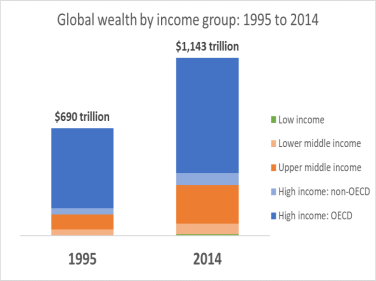
- Global wealth grew significantly over the past two decades with middle-income countries catching up to high-income countries.
- New World Bank report includes estimates of human capital for the first time. Human capital is the largest component of global wealth, pointing to the need to invest in people.
- Natural capital makes up nearly half of the wealth in low income countries. More efficient, long-term management of natural resources is key to sustainable development.
eC2:Develop Early Warning System (EWS) Model for Financial Conglomeration
Deadline: 12-Feb-2018 at 11:59:59 PM (Eastern Time – Washington D.C.) 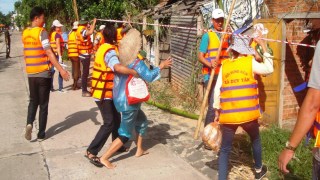
Objective: Conduct diagnostic review of existing prerequisite in developing of an Early Warning System Model FCs Early Warning model and dashboard that incorporate the following: a. Non-financial entities (wider group) b. Identification of institutions and areas within institutions where problems occurs or are likely to emerge
Why investors must take a chance in the world’s most fragile countries
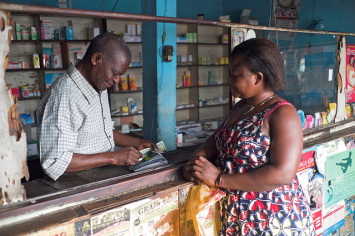 Fragility, conflict and violence affect more than two billion people across the globe. And while poverty on the whole is declining, that’s not the case in countries affected by conflict. It is these countries plagued by near-constant political and economic instability that are often the ones most in need of private investment. Yet they are also the places few private investors are willing to go. The risks seem to outweigh the rewards.
eC2: Jamaica Diagnostics – Early Learning Partnership (ELP) Systems
Deadline: 22-Feb-2018 at 11:59:59 PM (Eastern Time – Washington D.C.)
Objective: 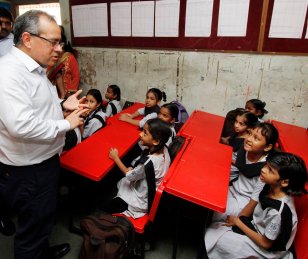
The Early Learning Partnership (ELP) of the World Bank, with the support of the UK Department for International Development (DFID), seeks bidders for Phase 1 of the ELP Systems Research program in Jamaica. The selected research team will produce diagnostic report(s) on the following themes: (1) Early intervention for children identified as at risk through the Jamaica School Readiness Assessment; (2) the effects of violence on early learning; (3) additional theme(s) proposed by the team, provided that they are relevant to the National Strategic Plan (NSP) for Early Childhood in Jamaica and agreed with the World Bank.
3 Big Ideas to Achieve Sustainable Cities and Communities
 Three big ideas, countless solutions
At the World Urban Forum, the World Bank will offer three big ideas that are essential for successfully implementing the New Urban Agenda:
- Financing the New Urban Agenda
- Promoting territorial development
- Enhancing urban resilience to climate change and disaster risks
The Bank will also be showcasing some of the innovative knowledge and transformative actions that have proven to help end extreme poverty and boost shared prosperity in cities around the world.
eC2: Post of Short Term Consultant (STC)- Energy and Water Advisory
 Deadline: 18-Feb-2018 at 11:59:59 PM (Eastern Time – Washington D.C.)
Objective: STC will require to do: Business Development and Client Support: data analysis, industry research, brand engagement of the Textile sectors in India, Sri Lanka and other countries as required and support the IFC business development efforts including negotiations with clients and acting as the client relationship manager; for selected projects/markets, undertake project preparation activities (e.g. feasibility studies) in order to support the development of projects which can be presented to the private sector for investment; Support the team to establish and maintain quality client relationships to ensure responsive client service and enhance new business opportunities; Maintain a good knowledge of IFC work programs to ensure timely delivery of tasks. Track project timetables, provide feedback and help with project team coordination. Perform various project related searches and prepare reports and respond quickly to queries from management and staff.
 Netherlands for the World Bank
You must be logged in to post a comment.