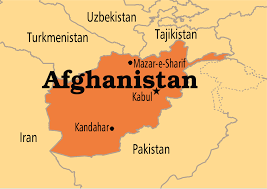
Disaster Risk Management (DRM) Training for Government Counterparts

Deadline: 15-Jan-2018 at 11:59:59 PM (Eastern Time – Washington D.C.)

Objective: Under the auspices of the Citizens’ Charter Afghanistan Project National afganistan1Priority Program, the World Bank Group has been providing training to the Ministry of Rural Rehabilitation and Development (MRRD) and the Independent Directorate of Local Governance (IDLG) on disaster risk management to ensure resilient community infrastructure, greater sustainability in investments as well as more resilient communities. Based on the positive results achieved to date, there is increasing demand to expand these training efforts and train a broader set of key government stakeholders on best disaster risk management practices to increase resilience of public investments in Afghanistan.
Continue reading

Top 7 water blogs of 2017

As a new year of insightful and interesting blogs begins here, we celebrate some of the most popular entries on The Water Blog from 2017.  Thanks to our readers and bloggers, The Water Blog is growing every year. From global, to regional, to national, and local perspectives, and covering key themes that resonate with a diverse community, we strive to ensure our content makes an important contribution to the global dialogue on water issues, and offers readers fresh insights as well as vital resources they otherwise may have not known about.

Continue reading

Equality Means Business: Making the Business Case for Women

Despite women’s active role in Zimbabwe’s informal sector, they are underrepresented in its formal business sector.  When early December was upon us—heralding the start of the month of annual festivities—a group of women executives met to put forward strategies for equality in business. They met against a background of the harsh reality of women’s exclusion from leadership positions in Zimbabwe, brought to the fore in a recently released Confederation of Zimbabwe Industries (CZI) Manufacturing Survey for 2017.

Continue reading

Cities: 12 big moments of building sustainable cities and communities (#7-#12)

At the World Bank, our teams working on social development, urban development, disaster risk management, and land issues have endeavored with countries and cities worldwide throughout the year to achieve a common goal: building inclusive, resilient, and sustainable cities and communities for all. How did they do? From our “Sustainable Communities” newsletter, we have captured 12 moments that mark the major accomplishments and lessons learned in 2017—and inspire our continued work to end extreme poverty and boost shared prosperity in 2018. Below the last 6 moments are described.

Continue reading

When technology meets agriculture in Bhutan

Bhutan is a challenging environment in which to develop commercial agriculture. The country has limited areas for agriculture, and its geography and road conditions make logistics and market access costly. Therefore, commercial agriculture is critical to increase productivity, which will help create jobs and access to more and better food. This can be achieved not only through focusing on high-value products and investing in traditional infrastructure such as irrigation, but also through using information and communication technology (ICT). Based in eastern Bhutan, Mountain Hazelnuts has developed innovative uses of ICT for its commercial agriculture operations.

Continue reading

ec2: LEBANON OFF-GRID AND SOLAR ENERGY MARKET ASSESSMENT (REFUGEES AND HOST COMMUNITIES)

Deadline: 13-Jan-2018 at 11:59:59 PM (Eastern Time – Washington D.C.)

Objective: IFC intends to engage a NGO/INGO or a consulting firm (or a combination thereof which forms a consortium led by one member of the consortium) to undertake a field survey to assess the viability of a potential commercial based market for solar energy solutions for refugees and respective host communities which enables improved access to energy services.

global-warming-climate-change-tree_1big_stock2

Continue reading

Climate change: Without urgent action, climate impacts could push an additional 100 million people into poverty by 2030

Countries and communities around the world are already experiencing stepped-up  climateclimate change impacts – including droughts, floods, more intense and frequent natural disasters, and sea-level rise – and the most vulnerable are being hit the hardest.

Continue reading

Meet & Greet the Dutch at the World Bank Group: Rosa Keizer (28)

In order to gain a better idea of how it is like to work at the World Bank Group and how the organization function itself, several Dutch Young Professionals are interviewed at the bank. After the recent interview with Stefan Peuchen, it is now Rosa Keizer’s turn to tell her story on this blog.Rosa.jpg

What is your role within the World Bank?

”As a Young Professional at the Ministry of Agriculture, Nature and Food Quality I had the opportunity to work for both the Dutch Embassy and the World Bank in Washington D.C. My contribution is part of an agreement signed between The Netherlands and the World Bank, where both parties commit to join efforts for increased food security worldwide. My team at the World Bank, with which I work four days a week, is part of the Global Practice Agriculture and is involved in Food Loss and Waste. I spend the remaining day at the Dutch Embassy, briefing with my colleagues involved in the topic and the Dutch ministries. I feel privileged to have this position; by working with two organizations I see my added value in creating synergies which can benefit both the World Bank and the Netherlands.”

Continue reading

What is so unique about the growth (or decline) of cities in Eastern Europe and Central Asia?

There are the booming megacities such as Tokyo, Mumbai, and Nairobi. Then there are  cities that are declining in population, such as Detroit. In Eastern Europe and Central Asia, where we recently conducted a study on urban growth trends, we found unique demographic patterns affecting the urbanization process in the region. For example, the region has had fertility rates below replacement levels for more than two decades, and most countries in the region have negative net migration rates.

Continue reading

Stronger Investment and Export Growth Continue to Strengthen Indonesia’s Economy

JAKARTA, December 14, 2017 — The Indonesian economy continued to expand at a solid pace during the third quarter of 2017 helped by commodity tailwinds and stronger domestic and external demand, according to the World Bank’s December 2017 Indonesia Economic Quarterly.

untitled

Real GDP growth increased from 5.0 percent in the second quarter to 5.1 percent in the third quarter of 2017. Investment growth rose to its highest level in more than four years and foreign direct investment recorded the largest net inflow in more than seven years. Export and import volumes registered double-digit growth for the first time since 2012.

Continue reading