Annual Meetings: World Bank Events

October 9-15, 2023

GO TO: EVENT REPLAYS | FEATURED SPEAKERS

During the World Bank Group-International Monetary Fund Annual Meetings that took place from October 9-15, we brought you live events that focused on what it would take to end poverty on a livable planet. Speakers included central bankers, ministers, private sector executives, civil society representatives, youth leaders, academics, and others on issues facing our world at that time. Together, we explored the new playbook needed to respond to intertwined global challenges. We discussed solutions that worked on the ground in developing countries, strategies to boost jobs, digital infrastructure, and climate action.

You can revisit these discussions with the hashtag #WBmeetings and watch the event replay in EnglishArabicFrench and Spanish.


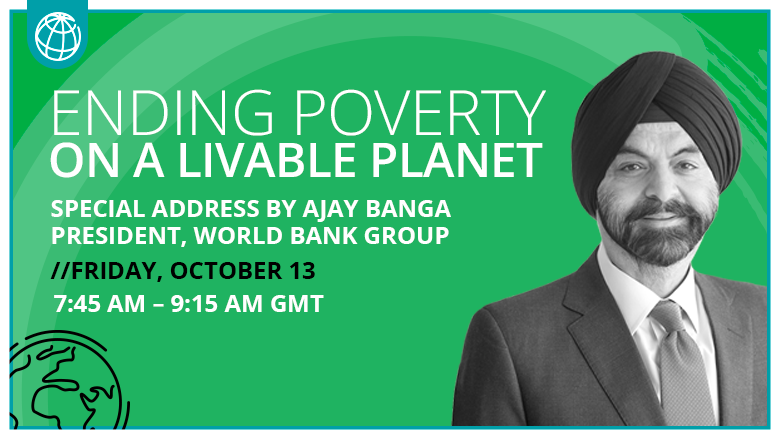
Remarks by World Bank Group President Ajay Banga
at the 2023 Annual Meetings Plenary


Watch the Event Replays


The World Bank’s Bold New Vision

“To create a world free of poverty – on a livable planet.”

This vision and mission will test the sincerity of our ambition – it sets us on a journey that will require reimagined partnerships, a new way of working and thinking, an innovative plan to scale and replicate, additional resources, and optimism for what could be possible.

In all corners of the globe, people are eager to go to work, and to create with their own hands. They want a better life for their children and grandchildren.

We must be the hand on the back – moving people forward. We must be an institution that exports optimism and impact.

The Future of Financial Inclusion


Financial inclusion 2.0. – creating more inclusive, resilient, and green futures

In recent years, the world has faced many unprecedented shocks and stresses that have exacerbated existing development challenges—all of which have disproportionate impacts on the most vulnerable, especially women and girls. People living in poverty constantly juggle an evolving set of risks and crises in their daily lives. However, the additional challenges posed by the COVID-19 pandemic, inflation, climate change, conflicts, and other shocks have intensified poverty and inequality. The World Bank now projects that 7% of the world’s population—more than half a billion people—will remain in extreme poverty in 2030 (Figure 1). The World Economic Forum predicts that the timeline to close the global gender gap1 has increased by a full generation (from 99.5 years to 135.6 years).

figure 1

Continue reading

Annual Meetings: World Bank Events

The World Bank Group-International Monetary Fund Annual Meetings are back this year from 800d55482b8a001430e9bd85208db430e8752f1021f4bcb1d0087a3ce4d82684October 9-15, and we hope you’ll join us! 

Live from Marrakech, Morocco, the 2023 Meetings focus on what it will take to end poverty on a livable planet. Events will explore the new playbook we need to respond to intertwined global challenges. What solutions have worked on the ground in developing countries? How do we boost jobs, digital infrastructure, and climate action?

Mark your calendar and sign up for email reminders to join our public events online. This is your opportunity to interact with central bankers, ministers, private sector executives, civil society representatives, youth leaders, academics, and others on issues facing our world today. Ask questions to our experts and join the conversation with the hashtag #WBmeetings, as we bring you our events in EnglishArabicFrench and Spanish.


How to scale up renewable energy investments

Dependence on fossil fuels in many countries leads to a vicious cycle of increasing costs,virtuous cycle1 higher energy prices for consumers, more pollution that impacts people’s health, and higher greenhouse gas emissions that endanger the planet. In contrast, transitioning to renewable energy can unlock a virtuous cycle that produces lower-cost electricity for consumers, builds resilience, and helps mitigate climate change. 

However, renewable energy projects do not materialize, and countries remain trapped in the vicious cycle. This happens despite the fact that many developing countries have some of the best solar and wind resources in the world. So how can we support governments to break free from fossil fuel dependency and catalyze the virtuous cycle for clean energy?

Continue reading