
We’re living in a time of disruptive technologies evolving at an exponential pace. Today,  you can enjoy an Impossible Burger (meat industry disrupted) delivered by Caviar (food delivery disrupted) to your AirBnB (hotel industry disrupted) while you’re on FaceTime (telecommunication industry disrupted) urging your teenager to get back to lessons on Khan Academy (education industry disrupted). And all the while, you’re leaving a trail of digital data points.
Tag Archives: World Bank Group
eC2: Cold chain energy efficiency in India: Analysis of EE opportunities in pack houses
Deadline: 05-Feb-2019 at 11:59:59 PM (Eastern Time – Washington D.C.) 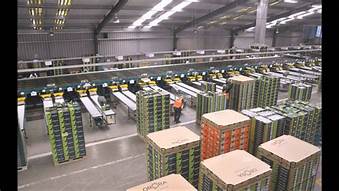
The objective of this assignment is to support the Bureau of Energy Efficiency in developing options for enhancing the energy efficiency of pack-houses in India.
The assignment objective will be achieved through an analysis of current energy consumption trends in different types of pack-houses, assessments of the implications of capacity addition projections, identification of energy efficiency improvement opportunities in pack houses, and drawing lessons from relevant experience in India and internationally. The assignment is expected to result in a set of recommendations for BEE action to promote energy efficiency in the cold chain, pack-houses in particular. Actions that BEE may consider in this area can include specific guidance related to equipment and appliance, insulation, building design, and ancillary equipment that can minimize energy consumption.
eC2: Study on Using the Climate Auction Model to Catalyze Energy and Resource Efficient Buildings in Indonesia
Deadline: 28-Jan-2019 at 11:59:59 PM (Eastern Time – Washington D.C.) 
The World Bank is seeking to hire a firm to conduct an extensive study of the potential to use the Climate Auction Model, as piloted by the Pilot Auction Facility for Methane and Climate Change Mitigation, in the context of green buildings in Indonesia. The study will consist of a Regulatory Assessment, a Market Scoping and an Economic Analysis of the green and affordable housing in Indonesia and enable the World Bank to prepare a pilot in Indonesia.
eC2: Lighting Africa, Nigeria – Consumer Education: Above the Line Phase 3
Deadline: 31-Jan-2019 at 11:59:59 PM (Eastern Time – Washington D.C.) 
Lighting Africa is a joint World Bank/IFC program aimed at helping 250 million people in Sub-Saharan Africa, especially rural, urban, and sub-urban consumers without electricity access to high-quality, safe, and reliable lighting products by the year 2030.
Launched in March 2015 and scheduled to end in April 2019, the Lighting Africa (Nigeria) Program has committed significant resources and worked closely with a range of key stakeholders to develop an off-grid energy market in Nigeria. The market is now in its early growth stage. As the program enters its final quarter, consumer education is focused on addressing the perception, knowledge and purchase barriers encountered by consumers. Accordingly, IFC is soliciting proposals from marketing communications firms to develop and implement a close-out above-the-line consumer education program that builds on previous efforts to drive rapid consumer uptake of quality verified solar lighting products.
eC2: Improved renewable energy integration and electricity services through battery storage in India
Deadline: 20-Feb-2019 at 11:59:59 PM (Eastern Time – Washington D.C.)
II. Objectives of the assignment:
4. The technical, economic and social benefits of battery energy storage solutions (BESS) have not been well examined in India, nor have the business cases for deploying BESS been articulated at different voltage levels.
eC2: Integrated Water and Hydropower Development in the Drina River Basin
Deadline: 07-Feb-2019 at 11:59:59 PM (Eastern Time – Washington D.C.)
Historically, two approaches have been used to assess the options for utilization of the HPP potential in the DRB:
1. Development of the basin-wide studies, followed by
2. Development of the technical design documents and environmental and social impact assessments for identified priority projects.
At this stage, in order to evaluate the options for construction of greenfield and rehabilitation of existing hydropower plants in the wider DRB, the WBG intends to conduct a detailed review of existing river basin studies as well as technical and environmental and social studies, reports and assessments developed for candidate HPP projects.
Bracing for climate change – a matter of survival for the Maldives
For low-lying island states, the impacts of global warming and climate change can be a  matter of survival. The irony is that while these states have not contributed much to greenhouse emissions, as they produce very little, they may face some of the worst consequences. The Maldives is no stranger to the risks from climate change. It is already witnessing an increase in intense rainfall and resultant flooding, cyclonic winds and storm surges. As one of the lowest-lying countries in the world, with all its people living a few meters above sea level and over two thirds of its critical infrastructure lying within 100 meters of the shoreline, a sea level rise of just a few meters will put the nation further at risk, endangering its relative prosperity.
World Bank Group Announces $50 billion over Five Years for Climate Adaptation and Resilience
WASHINGTON, January 15, 2019 – The World Bank Group today launched its Action 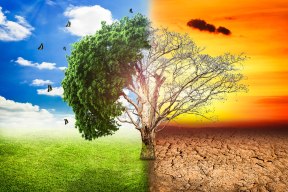 Plan on Climate Change Adaptation and Resilience. Under the plan, the World Bank Group will ramp up direct adaptation climate finance to reach $50 billion over FY21–25. This financing level—an average of $10 billion a year—is more than double what was achieved during FY15-18. The World Bank Group will also pilot new approaches to increasing private finance for adaptation and resilience.
Views from Silicon Valley: Helping client countries keep up with changing technology
It is time to tell you a secret my friends. I am a girl who codes. Before joining the World Bank, I was fluent in ASCII, developing systems and applications to make it easier to get things done.
Nearly 20 years after writing my first lines of code, I stepped onto the Microsoft Campus in Redmond, Washington, representing the World Bank Governance Global Practice and the GovTech Global Partnership task team. Along with a delegation representing leadership across the Bank, we visited Redmond and Silicon Valley to meet with some of the top players in Big Tech.
Competition and the rise of the machines: Should the AI industry be regulated?
A multinational conglomerate uses artificial intelligence (AI) algorithms to gather  intelligence about the news you peruse, social media activity, and shopping preferences. They choose the ads you passively consume on your newsfeed and throughout your social media accounts, your internet searches, and even the music you hear, creating an incrementally increasingly customized version of reality specifically for you. Your days are subtly influenced by marketers, behavioral scientists, and mathematicians armed with cloud supercomputers. All of this is done in the name of maximizing profit to influence what you’re thinking, buying, and whom you will be electing…


You must be logged in to post a comment.