
The COVID-19 pandemic is uncharted territory for every country in the world. It has unleashed both a global health emergency and an unprecedented economic crisis of historic magnitude. That is substantially bigger than South Asia’s entire regional economy (which is about $3.5 trillion), and as if we somehow wiped both Germany and Belgium off the economic map. Worse still, the fall from where we expected to be in 2021 if COVID-19 hadn’t hit is closer to $7.5 trillion dollars—equivalent to 40% of the entire U.S. economy, as well as larger than the combined GDP of Latin America and the Caribbean plus the Middle East and North Africa.
Tag Archives: Wereldbank Groep
Cities, crowding, and the coronavirus: Predicting contagion risk hotspots
Across the globe, well-functioning cities do one thing really well – they bring people  together. Social and economic interactions are the hallmark of city life, making people more productive and often creating a vibrant market for innovations by entrepreneurs and investors. No country can achieve significant economic growth without vibrant cities.
eC2: Advisory Services and Analytics on Forest Smart Mining
Deadline: 14-May-2020 at 11:59:59 PM (Eastern Time – Washington D.C.)
Advisory Services on Forest Smart Mining: Identifying innovative instruments that support the participation of the mining community in Nature Based Climate Solutions. The objective of this study is to identify, analyze case studies that will examine the role specific innovative net emissions mitigation mechanisms could play in incentivizing more robust participation by the large-scale mining community in forest smart mining practices.
World Bank Predicts Sharpest Decline of Remittances in Recent History
WASHINGTON, April 22, 2020 — Global remittances are projected to decline sharply by about 20 percent in 2020 due to the economic crisis induced by the COVID-19 pandemic and shutdown. The projected fall, which would be the sharpest decline in recent history, is largely due to a fall in the wages and employment of migrant workers, who tend to be more vulnerable to loss of employment and wages during an economic crisis in a host country. Remittances to low and middle-income countries (LMICs) are projected to fall by 19.7 percent to $445 billion, representing a loss of a crucial financing lifeline for many vulnerable households.
eC2: Digitizing and building exposure data sets suitable for risk modelling in the Areas of Potential Significant Flood Risk
Deadline: 11-May-2020 at 11:59:59 PM (Eastern Time – Washington D.C.)
Digitizing and building exposure datasets suitable for risk modelling, to be uploaded into OpenStreetMap (OSM) and other public web data portals for the Areas of Potential Significant Flood Risk (APSFR) in Romania. Assess the data availability on OSM and any other available data sources in the country for each relevant feature for risk modelling. Develop an action plan for the data collection, to successfully develop a complete datsets on exposure suitable for accurate flood risk modelling covering the APSFR.
A Shock Like No Other: Coronavirus Rattles Commodity Markets
STORY HIGHLIGHTS 
- The coronavirus (COVID-19) pandemic has impacted both demand for and supply of commodities: direct effects from shutdowns and disruptions to supply chains, indirect effects as economic growth stalls. Effects have already been dramatic, particularly for commodities related to transportation.
- Oil prices have plunged and demand is expected to fall by an unprecedented amount in 2020.
- While most food markets are well supplied, concerns about food security have risen as countries announce trade restrictions and engage in excess buying.
Planning for the economic recovery from COVID-19: A sustainability checklist for policymakers
As the coronavirus (COVID-19) pandemic continues, governments and emergency  services are focusing on immediate needs: boosting capacity in hospitals, addressing hunger, and protecting firms and families from eviction and bankruptcy. The majority of the funds flowing so far from the World Bank, the IMF, other regional development banks, or central banks seek to provide funds for protective gear at hospitals, stabilize financial institutions, pay companies to provide goods and services to essential workers, or provide direct cash support to households.
In India, women’s self-help groups combat the COVID-19 (Coronavirus) pandemic
Meeting the shortfall in masks, sanitizers and protective equipment
Now, more than ever, these women – many of whom escaped poverty through the SHG route and know what it is like to be destitute and poor – are living up to their motto of self-help and solidarity.
Groups across the country are working furiously to make up the shortfall of masks and personal protective equipment (PPE). In Odisha, for instance, poor rural women who were once engaged in stitching school uniforms are sewing masks instead. Over the past couple of weeks, these women have produced more than 1 million cotton masks, helping equip police personnel and health workers, while earning something for themselves.
All told, more than 19 million masks have been produced by some 20,000 SHGs across 27 Indian states, in addition to over 100,000 liters of sanitizer and nearly 50,000 liters of hand wash. Since production is decentralized, these items have reached widely-dispersed populations without the need for complex logistics and transportation.
eC2: UNDERSTANDING AND STRENGTHENING GENDER EQUITY IN LAND AND FOREST TENURE IN REDD+
Deadline: 04-May-2020 at 11:59:59 PM (Eastern Time – Washington D.C.) 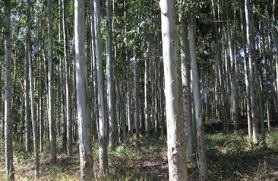
To enable capacity building of FCPF countries to mainstream gender in Emission Reductions Programs and REDD+ strategies, the World Bank Sustainable Climate Change Fund Management (SCCFM) unit is launching a study which is focused on understanding constraints and opportunities in legal and policy environments in each of the seventeen FCPF Carbon Fund countries and jurisdictions that affect womens land and forest tenure and their ability to exercise their rights in existing statutory and customary systems, how these rights can be affected by the Carbon Fund programs (Benefit Sharing Plans, Emission Reductions Programs), and what specifically is needed to protect and even strengthen these rights. The study is expected to provide practical recommendations on approaches for enhancing womens land and forest tenure rights within the REDD+ and FCPF context, at both the country level and project-specific jurisdiction level. It is expected that specific recommendations on required legislative changes and other recommendations, including on tools required to address these issues effectively in Carbon Fund countries and programs will be developed.
The study is expected to be conducted in 17 countries with ‘deep dives’ in at least 8 countries with field work (depending on the COVID 19 cicrcumstances).
World Bank/IMF Spring Meetings 2020: Development Committee Communiqué
1. The Development Committee met virtually today, April 17, 2020. 
2. Our meeting occurred at a time of unprecedented challenges due to the COVID-19 pandemic. Its devastating effects are being felt across the globe as the human and economic toll continues to rise. We express our sympathy to those affected and offer our support and solidarity to those working on the front lines fighting the pandemic.
3. The COVID-19 pandemic underscores that the development community increasingly faces global challenges requiring decisive, collective action and innovation. Multilateral cooperation is needed to contain the pandemic and mitigate its health, social, and economic consequences. The World Bank Group (WBG) is uniquely positioned to tackle these complex issues and to play a leading role via its lending, investments, knowledge, and convening capacity.
 Netherlands for the World Bank
You must be logged in to post a comment.