
The World Bank Group has set a clear mission: ending poverty and boosting shared prosperity on a livable planet. This episode of Expert Answers explores the Poverty, Prosperity and Planet report which offers the first post-pandemic assessment of global progress toward these interlinked goals and how to move forward. Join Luis Felipe Lopez-Calva, Global Director for Poverty and Equity on Expert Answers to find out more.
Tag Archives: WBG
WBG Vendor Forum for Women-Owned and Minority-Owned Businesses in North America and Europe
September 14, 2021 | 8:00 am EDT (12:00 pm GMT) | Zoom 
The World Bank Group (WBG) Corporate Procurement unit will be holding an engaging virtual presentation to help women- and minority-owned businesses in North America and Europe learn how to do business with the WBG, what we purchase, and what we are doing to include women-owned and minority-owned businesses in our own supply chain. Speaker and registration link below.
WBG Vendor Forum for Women-Owned and Minority-Owned Businesses in North America and Europe
September 14, 2021 | 8:00 am EDT (12:00 pm GMT) | Zoom
The World Bank Group (WBG) Corporate Procurement unit will be holding an engaging virtual presentation to help women- and minority-owned businesses in North America and Europe learn how to do business with the WBG, what we purchase, and what we are doing to include women-owned and minority-owned businesses in our own supply chain. Speaker and registration link below.
WBG/IMF Spring Meeting Webinar Recap
Economic Recovery: Toward a Green, Resilient, and Inclusive Future
As countries rebuild their economies after COVID-19, it is fundamental that they see this as a unique opportunity to lay the foundation for a green, resilient, and inclusive future. These efforts were the theme of the event kicking off the Spring Meetings on Tuesday, Economic Recovery: Toward a Green, Resilient, and Inclusive Future.
2021 Spring Meetings Opening Press Conference
World Bank Group President David Malpass will address the press during the World Bank Group/International Monetary Fund 2021 Virtual Spring Meetings. He will share his views on the key outcomes from the Development Committee, as well as the G20 discussions. He will also report on the World Bank Group’s response to the global crisis caused by the COVID-19 pandemic.
This year, due to the coronavirus, the Management of the IMF and World Bank Group and their Executive Boards are adapting the 2021 IMF-World Bank Spring Meetings to a virtual format.
Website: The World Bank Group’s Response to the COVID-19 Pandemic
Rethinking Debt: Financing the Future Amid Crisis
On April 7th, the World Bank invited several leading experts to explore perspectives on a new global financial architecture for debt. Speakers discussed lessons from past restructuring efforts, the private sector’s role, and the increased need for debt transparency.
Pandemic Threatens Human Capital Gains of the Past Decade, New Report Says
WASHINGTON, Sept. 16, 2020 – The COVID-19 pandemic threatens hard-won gains in 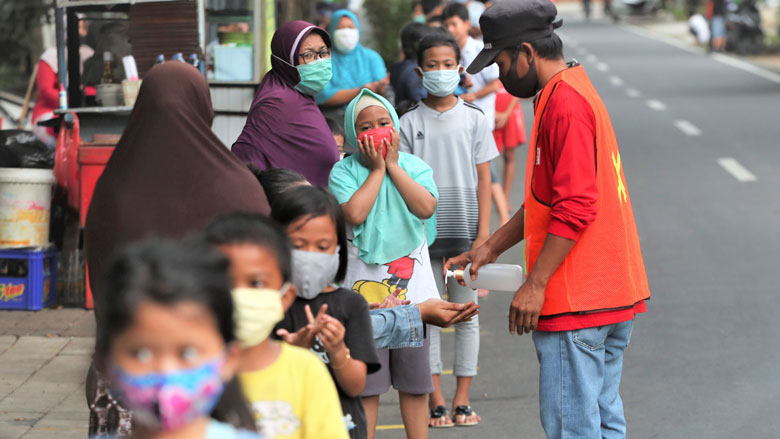 health and education over the past decade, especially in the poorest countries, a new World Bank Group analysis finds. Investments in human capital—the knowledge, skills, and health that people accumulate over their lives—are key to unlocking a child’s potential and to improving economic growth in every country. health and education over the past decade, especially in the poorest countries, a new World Bank Group analysis finds. Investments in human capital—the knowledge, skills, and health that people accumulate over their lives—are key to unlocking a child’s potential and to improving economic growth in every country.
The World Bank Group’s 2020 Human Capital Index includes health and education data for 174 countries – covering 98 percent of the world’s population – up to March 2020, providing a pre-pandemic baseline on the health and education of children. The analysis shows that pre-pandemic, most countries had made steady progress in building human capital of children, with the biggest strides made in low-income countries. Despite this progress, and even before the effects of the pandemic, a child born in a typical country could expect to achieve just 56 percent of their potential human capital, relative to a benchmark of complete education and full health. |
Five Things You Need to Know About Social Sustainability and Inclusion
STORY HIGHLIGHTS
|
 Social Development GP, has a new strategic direction that focuses on creating more inclusive societies, enhancing the empowerment of citizens, and fostering more resilient and peaceful communities.
Beirut Rapid Damage and Needs Assessment (RDNA) — August 2020
Immediately after the massive blast that rocked the port of Beirut on August 4, the World 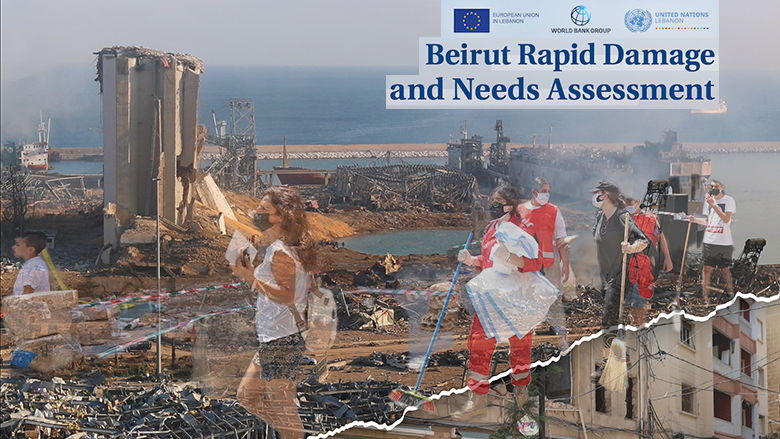 Bank Group (WBG) in cooperation with the United Nations (UN) and the European Union (EU) launched a Rapid Damage and Needs Assessment (RDNA) to estimate the impact on the population, physical assets, infrastructure and service delivery. The Beirut RDNA uses ground data and cutting-edge remote tools and technology to assess (i) damages to physical assets, (ii) ensuing economic losses, and (iii) recovery and reconstruction needs. Bank Group (WBG) in cooperation with the United Nations (UN) and the European Union (EU) launched a Rapid Damage and Needs Assessment (RDNA) to estimate the impact on the population, physical assets, infrastructure and service delivery. The Beirut RDNA uses ground data and cutting-edge remote tools and technology to assess (i) damages to physical assets, (ii) ensuing economic losses, and (iii) recovery and reconstruction needs.
|
Our work on COVID-19 vaccines, Lebanon, debt transparency and more
|
At the G7 meeting last week, World Bank Group President David Malpass highlighted the Bank Group’s work on vaccines and our healthcare response. “We’re committed to financing access to vaccines for our clients,” he said. Read his latest update to learn more about that and other developments on debt transparency and sustainability, among others. |

Automated transport could propel development forward. Can we turn the vision into reality?
|
The next few weeks mark the beginning of the school year across the northern hemisphere. Safety of students and teachers vis-à-vis COVID-19 spread is top priority. Learn how countries are planning for the reopening of schools. This is what they had to say. Violence amid the pandemic: The COVID-19 pandemic has put a spotlight on some of the biggest cracks in societies worldwide. While many governments are still grappling with surging cases, violence is fueling the crisis in some of the world’s most fragile environments. Killer # 2: Millions of women and children may die or endure lifelong health impacts because of disruptions to essential health services and the reluctance by patients to seek care for fear of COVID-19 infection. A recent analysis examined the effects of service disruptions. The results are overwhelming. Power of digital ID: As countries focus on “building back better” after the pandemic, they have a crucial opportunity to leapfrog to a more digital economy – and to do so responsibly. Whichever model they choose, governments can transform the lives of people everywhere by building digital ID systems designed to maximize privacy, inclusion, and trust. Go deeper: Learn how the World Bank Group is responding to the COVID-19 (coronavirus) pandemic. Explore our multilingual portal. Click, bookmark and come back for updates. |
||
|


World Bank/IMF Spring Meetings 2020: Development Committee Communiqué
1. The Development Committee met virtually today, April 17, 2020. 
2. Our meeting occurred at a time of unprecedented challenges due to the COVID-19 pandemic. Its devastating effects are being felt across the globe as the human and economic toll continues to rise. We express our sympathy to those affected and offer our support and solidarity to those working on the front lines fighting the pandemic.
3. The COVID-19 pandemic underscores that the development community increasingly faces global challenges requiring decisive, collective action and innovation. Multilateral cooperation is needed to contain the pandemic and mitigate its health, social, and economic consequences. The World Bank Group (WBG) is uniquely positioned to tackle these complex issues and to play a leading role via its lending, investments, knowledge, and convening capacity.
 Netherlands for the World Bank
You must be logged in to post a comment.