
Achieving the United Nations Sustainable Development Goals will require massive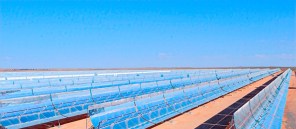 investment in developing countries.
Blended finance has grown in the past decade. In 2021 it represented an aggregated financing of over $160 billion, with annual capital flows averaging approximately $9 billion since 2015. With this small infusion of concessional funding, pioneering investments become attractive to private investors.
Continue reading
 when then President James Wolfensohn made his “
 management. Three months after arriving in Indonesia as the World Bank’s environment coordinator, the Indian Ocean tsunami and related earthquakes struck Aceh and Nias at the end of 2004. I was asked to pull together the economic evaluation of the disaster’s environmental impact as part of what was then known as a damage-and-loss assessment. Subsequently, the World Bank, United Nations and European Union agreed on a joint approach to crisis response in 2008, including a common methodology for post-disaster needs assessment (PDNA).
 experience crisis-levels of food insecurity, and over half of them are in situations affected by conflict. The magnitude of need has grown significantly over the last few years, testing the limits of an already overburdened and underfunded international humanitarian system.
 than 25 million are considered refugees.
 power, storage capacity, and access to knowledge — foreshadowing stunning possibilities.
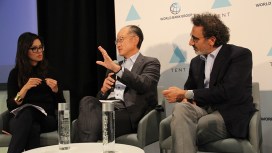
 and World Bank Group President Jim Yong Kim today announced plans to accelerate the flow of finance for climate action through a new platform dedicated to identifying and facilitating transformational investments in developing countries.
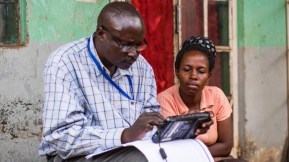 data innovation fund which
  Netherlands for the World Bank
You must be logged in to post a comment.