
Global poverty estimates were updated today on the Poverty and Inequality Platform (PIP). As 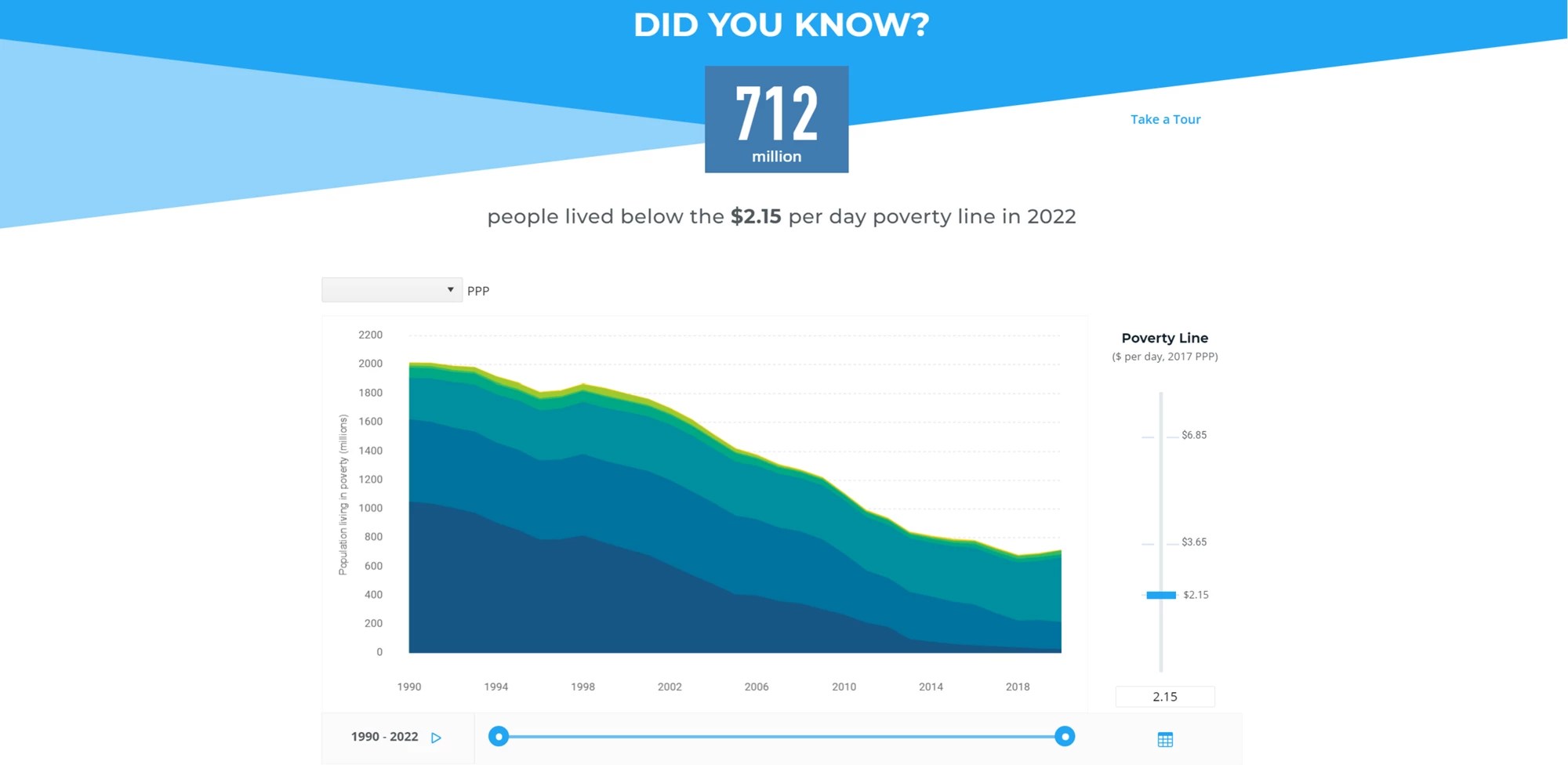 explained in more detail in the What’s New document, more than 100 new surveys were added to the PIP database, bringing the total number of surveys to more than 2,300. With more recent survey data, this March 2024 PIP update is the first to report a global poverty number for 2020-2022, the period of the COVID-19 pandemic. We estimate that COVID-19 increased extreme poverty in the world, as measured by the international poverty line of $2.15, from 8.9 percent in 2019 to 9.7 percent in 2020 (see Figure 1). This is the first increase in global poverty in decades. It is in line with earlier estimates of the COVID-19 impact which used limited survey data and GDP growth projections.
Tag Archives: RVO
Educating for the present and the future: using Artificial Intelligence (AI) to address the learning crisis
Can Artificial Intelligence (IA) help address massive education gaps? The answer is a cautious  and optimistic yes. 1.8 billion students in the world should receive a good education. However, half of them do not achieve basic reading and numeracy skills needed for life.
Investing in rail can help put African cities on a more sustainable track
Africa is home to 11 of the world’s most populous cities, with urban areas growing rapidly.  While urbanization has fueled significant economic expansion across the region, it has also brought a variety of challenges, including a significant rise in the demand for motorized transport. The impact on people’s lives is hard to overstate: for the residents of African cities, more vehicles on the road often translates into chronic traffic congestion, longer commutes, as well as increased traffic fatalities and injuries.
While urbanization has fueled significant economic expansion across the region, it has also brought a variety of challenges, including a significant rise in the demand for motorized transport. The impact on people’s lives is hard to overstate: for the residents of African cities, more vehicles on the road often translates into chronic traffic congestion, longer commutes, as well as increased traffic fatalities and injuries.World Bank Group Ramps Up Fight Against Global Hunger
Expanded ambition and partnership with the G20 Global Alliance Against Hunger and Poverty to reach at least 500 million people in need
Empowering Africa’s Youth: Bridging the Digital Skills Gap
Digitalization is one of the most transformative opportunities of our time and a potent tool to  eradicate poverty on a livable planet. Right before our eyes, digital technologies are constantly evolving, changing societies and our everyday lives. The rapid speed of new technologies, such as Artificial Intelligence (AI) and Machine Learning (ML) is also changing digital capabilities for many countries, although not all.
Income Gap: “The Great Reversal” Facing the World’s Most Vulnerable Countries | World Bank Expert Answers
Getting back on track to meet the first Sustainable Development Goal
Almost 10 years ago, countries worldwide adopted the Sustainable Development Goals  (SDGs), 17 targets for the global community to achieve by 2030 to ensure peace and prosperity for current and future generations. The first of these goals, SDG 1, calls for an end to poverty in all its forms everywhere.
Breakthrough pension reform in Saudi Arabia – A model for the MENA region
Saudi Arabia took a big leap forward in transforming its pension system with the recent  announcement of comprehensive reforms, designed with support from the World Bank, aimed at enhancing income protection during old-age, but also promoting gender equality. Aging populations, caused by increasing life expectancy and falling fertility rates, combined with the changing nature of work and the erosion of informal and traditional family support systems, have created considerable challenges for pension systems worldwide. Many are facing fiscal sustainability pressures and adequacy concerns, including in the Middle East and North Africa (MENA) region. Pension reform is always difficult due to the political economy challenges, which is why this comprehensive pension reform in Saudi Arabia is such a breakthrough. It truly sets a new benchmark for the MENA region, addressing critical issues such as retirement age, maternity leave, and social insurance coverage.
4 things we learned since kicking off our Food Security Updates
Smart health taxes: A win for public health and the economy
Imagine a world where strategic investments in health not only save lives but also drive  economic growth and resilience. This vision was at the heart of the 7th Annual Health Financing Forum, where hundreds of participants and experts recently gathered to explore health financing in the post COVID-19 era.
 Netherlands for the World Bank
You must be logged in to post a comment.