
WASHINGTON, November 22, 2022—The World Bank Group today announced an assistance package for Ukraine of $4.5 billion in additional grant financing provided by the United States government. The grant is mobilized under the World Bank’s Public Expenditures for Administrative Capacity Endurance in Ukraine (PEACE) Project, which aims to help the Government of Ukraine sustain essential services and core government functions at the national and regional levels.
Tag Archives: GDP
Key drivers of COVID-19 vaccine hesitancy in developing countries
As the world is entering the third year of the global COVID-19 pandemic, it is increasingly important to understand why many people are still hesitant to get the COVID-19 vaccine even when it is available . However, little is known about vaccine hesitancy in developing countries, as most studies have focused on high-income countries and the few that have analyzed developing countries were either not comparable across countries or not nationally representative.
Costa Rica’s Forest Conservation Pays Off
STORY HIGHLIGHTS 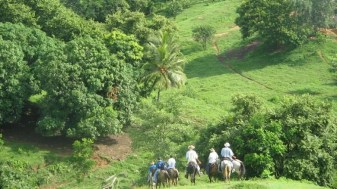
- Costa Rica has become the first country in Latin America and the Caribbean to receive payments from the World Bank’s Forest Carbon Partnership Facility for reducing carbon emissions from deforestation and forest degradation—commonly known as REDD+.
- This first payment – of $16.4 million for independently verified emission reductions — is a milestone for Costa Rica.
- Results-based climate finance such as payments for emission reductions increasingly is being used to incentivize climate action and help countries achieve their Nationally Determined Contributions to the Paris Agreement.
Countries Could Cut Emissions by 70% by 2050 and Boost Resilience with Annual Investments of 1.4% of GDP
Low- and middle-income countries can transition to low-carbon, resilient growth pathways if key conditions are met with international support
WASHINGTON, Nov. 3, 2022—Investing an average of 1.4% of GDP annually could reduce emissions in developing countries by as much as 70% by 2050 and boost resilience, according to a new report from the World Bank Group.
Braving the Storms: The outlook for East Asia and the Pacific, illustrated
The Russian invasion of Ukraine threatens the uneven recovery of developing East Asia and Pacific (EAP) countries. The invasion comes on top of the economic distress caused by the lingering COVID-19 pandemic, the financial tightening in the United States, and the pandemic resurgence and the economic slowdown in China. While commodity producers and fiscally solid countries in the region may weather these shocks with less difficulty, these events will dampen the growth prospects of most economies in the region. Overall economic growth is projected to slow to 5 percent in 2022— 0.4 of a percentage point less than expected in October. If global conditions worsen and national policy responses are weak, growth could ease further.
Continue readingAre we ready for the coming spate of debt crises?
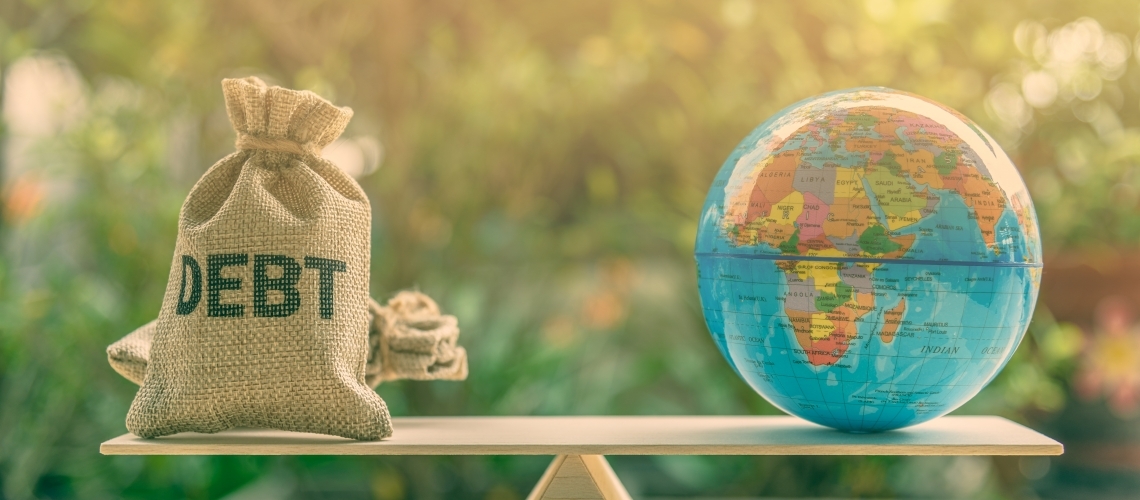
Higher inflation. Slower growth. Tightening financial conditions.
In recent weeks, Russia’s invasion of Ukraine has exacerbated global economic risks. There is a fourth element, however, that could make the mix combustible: the high debt of emerging markets and developing economies.
Continue readingTackling biodiversity loss to achieve green, resilient, and inclusive development
Mari Pangestu represented the World Bank at the International Union for Conservation of  Nature (IUCN) World Conservation Congress in September 2021, speaking at a high-level dialogue on Unlocking a Nature-Smart Recovery from the pandemic and also an event recognizing the progress made on climate and nature through the One Planet Summit. This blog was originally published as an open letter to the IUCN Congress on September 4.
We need healthier air for a healthier planet
Air pollution is a multifaceted problem – representing the world’s leading environmental risk to  health and costing the globe an estimated $8.1 trillion in 2019 , 6.1 percent of global gross domestic product (GDP).
Air pollution is also deadly, causing or contributing to heart attacks, strokes, lung cancer, and respiratory diseases and killing an estimated seven million people every year – with about 95 percent of these deaths occurring in low- and middle- income countries. COVID-19 is only making matters worse, with research finding links between air pollution and COVID-19 hospitalizations and deaths.
The Global Economy: on Track for Strong but Uneven Growth as COVID-19 Still Weighs
A year and a half since the onset of the COVID-19 pandemic, the global economy is poised to stage its most robust post-recession recovery in 80 years in 2021. But the rebound is expected to be uneven across countries, as major economies look set to register strong growth even as many developing economies lag.
Empowering local people to engineer their own futures: a new infrastructure planning approach
Climate change is challenging our status quo as the frequency of extreme weather events  keeps increasing. Water scarcity could cost some regions up to 6% of GDP and floods could force hundreds of millions of people from their homes by 2050. At the same time, we’re facing a $15 trillion infrastructure finance gap.
 Netherlands for the World Bank
You must be logged in to post a comment.