
Caught in the crosshairs of escalating global crises, Small Island Developing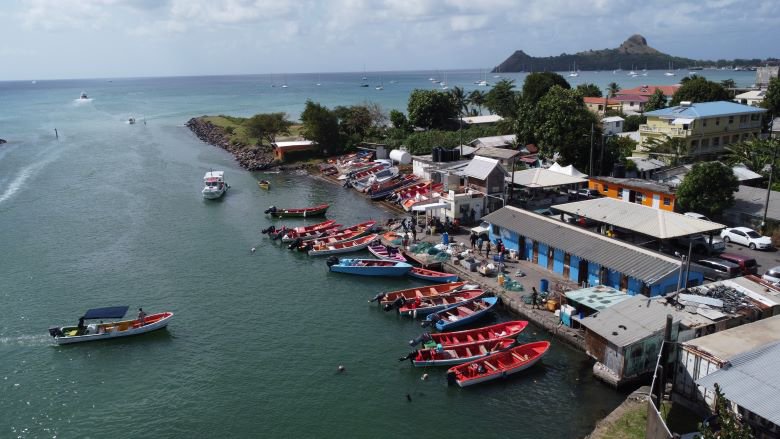 States (SIDS) meet May 27-30, 2024, together with the international community, to discuss ways to tackle issues including their vulnerability to the impacts of climate change, exposure to pollution, and economic headwinds.
Tag Archives: Financing
IFC to Help Financial Institutions Support Small Businesses Through New Global MSME Financing Platform
Washington D.C., May 28, 2024—IFC, a member of the World Bank Group, today launched a new initiative to help financial service providers deliver funds to small businesses in emerging markets, especially those owned by women and those focused on agriculture and climate.
The MSME Finance Platform (the Platform) will include a financing package of up to $4 billion from IFC’s own account to banks, non-bank financial institutions, microfinance institutions, and innovative digital lenders that focus on micro, small, and medium enterprises (MSMEs). It will be available to both new and existing IFC clients.
State and Trends of Carbon Pricing 2024: Positive progress on carbon pricing, but more is needed
Carbon pricing can be one of the most powerful tools available to policymakers to incentivize reducing emissions as part of an integrated policy mix. A decade ago, carbon pricing policies covered only 7% of global emissions. Today, nearly a quarter are covered by these instruments.
Continue readingDigital Opportunities in African Businesses
Tapping Tech to the Full
How much do African firms use digital technology, for what purposes, and how can they be encouraged to use it more? While advances have been made in digitalizing Africa, with mobile payments a success story, firms still face challenges like higher costs of technology. Much more can be done to enable and empower them to reap its full potential, IFC research shows. A new book, Digital Opportunities in African Businesses, outlines the steps to be taken—from investing in digital infrastructure to funding tech startups offering user-friendly, affordable digital solutions. More than 600,000 formally registered firms and 40 million microbusinesses—about 20 percent of businesses in Africa—are potentially ready to benefit from digital upgrades.
Becoming a Knowledge Bank – Delivering solutions at impact and scale

As part of our efforts to become a better Bank, one that’s fit for purpose to meet the needs of the countries we support and to end poverty on a livable planet, the World Bank is transforming its approach to knowledge. We’re putting the client, those living in developing countries, at the heart of our knowledge work.
Continue readingIDA’s Role in an Increasingly Complex Global Aid Architecture

STORY HIGHLIGHTS
- Global aid architecture has transformed significantly in the last two decades, with Official Financial Flows (OFF) increasing and benefiting low-income countries.
- However, this led to a complex and fragmented aid architecture and fewer concessional resources. Multiple donors and channels create obstacles for low-income countries with weak implementation capacity.
- IDA is the partner of choice to tackle challenges caused by complex aid architecture. Its global presence and ability to convene stakeholders facilitate better coordination among various efforts.
Collaboration between the Netherlands and Ivory Coast on Coastal Protection

The governments of Ivory Coast and the Netherlands, represented by Ivory Coast officials, Invest International, and the Dutch Minister of Foreign Trade and Development Cooperation, Liesje Schreinemacher, have initiated a project to strengthen the coastline near Abidjan. The collaboration aims to protect Ivory Coast’s coastline from flooding and erosion using sustainable, nature based solutions. To begin, a feasibility study funded by a one million euros investment will assess the best methods for coastal reinforcement. The subsequent implementation phase, anticipated to cost millions of euros, will safeguard Ivory Coast’s coastal regions and creates substantial opportunities for Dutch companies.
Continue readingWORK WITH USAID
Visit the Work with USAID’s YouTube Channel
Have you taken a look at Work with USAID’s YouTube channel recently? This is a great resource to help you navigate partnering with USAID. The YouTube channel contains playlists where you can find videos specific to your needs. “Resources on WorkwithUSAID.gov” holds demo videos to help you explore the WorkwithUSAID.gov platform. You can also view recordings of webinars like the Business Forecast and Partner Updates webinars to better understand the Agency’s priorities and the How to Work with USAID 101 webinars to learn how USAID approaches funding. Also, check out our video resources in French, Arabic, and Spanish!
Despite High Potential, 75 Vulnerable Economies Face ‘Historic Reversal’
In Half of IDA Countries, Income Gap with Wealthiest Economies is Widening
Continue readingIngredients for Accelerating Universal Electricity Access: Lessons from Rwanda’s Inspirational Approach
In just 15 years, Rwanda has increased its electricity access to 75% from 6% in 2009. This took government ownership, leadership, and commitment, partnership with the private sector, funding from development partners, and dedicated structure and institutional strengthening.
The goal of lighting up every household is not a dream, but an achievable reality. In a remarkable 15-year journey, Rwanda increased access to electricity to households from 6% in 2009 to 75% as of March 2024. The country has connected 100% of health centers and administrative facilities at the sector level and 84% of schools and most productive users (micro, small, and medium-sized enterprises). This electrification expansion was one of the fastest in the world between 2010 and 2020, ranking 11th globally and 3rd in Africa.

Government ownership, leadership, and commitment to universal electrification. Since 2008, the Government of Rwanda (GoR) has been intentional in engraining electrification targets in its development strategies. The Economic Development and Poverty Reduction Strategy 1 (EDPRS1 2008-2012) set out targets for electricity connections from 70,000 to 200,000 households, and for institutions providing social and administrative services from 50% to 80%. Likewise, both the EDPRS2 (2013-2018), and the National Strategy for Transformation 1 (2017-2024) set a universal electrification target by 2024.
Continue reading Netherlands for the World Bank
You must be logged in to post a comment.