
WASHINGTON, D.C., January 7, 2025 – The World Bank (International Bank for Reconstruction and Development, IBRD, Aaa/AAA) today priced a 7-year benchmark bond that matures in January 2032. The Sustainable Development Bond raised USD 6 billion from investors seeking a high-quality liquid investment that supports the World Bank’s work to end extreme poverty and boost prosperity on a livable planet.
Tag Archives: Economy
Despite High Potential, 75 Vulnerable Economies Face ‘Historic Reversal’
In Half of IDA Countries, Income Gap with Wealthiest Economies is Widening
Continue readingWeakening Growth, Financial Risks
Global Economic Prospects
Global growth is projected to slow significantly amid high inflation, tight monetary policy, and  more restrictive credit conditions. The possibility of more widespread bank turmoil and tighter monetary policy could result in even weaker global growth and lead to financial dislocations in the most vulnerable emerging market and developing economies (EMDEs). Comprehensive policy action is needed to foster macroeconomic and financial stability. Among many EMDEs, and especially in low-income countries, bolstering fiscal sustainability will require generating higher revenues, making spending more efficient, and improving debt management practices. Continued international cooperation is also necessary to tackle climate change, support populations affected by crises and hunger, and provide debt relief where needed.
What Does Stagflation Mean for the Global Economy? | The Development Podcast
FEATURING: Franziska Ohnsorge, Manager of the Prospects Group, World Bank; Marcello Estevão, Global Director of the World Bank Group’s Macroeconomics, Trade and Investment Global Practice; and Enrique Cárdenas, Mexican economist and economic historian.
Podcast
Europe and Central Asia Economic Update
 The Russian Federation’s war with Ukraine has triggered a catastrophic humanitarian crisis and threatened the stability of geopolitical relations. Economic output in the Europe and Central Asia region is forecast to contract by more than 4.1% in 2022—the second major shock and regional recession in two years. Moreover, the war has added to mounting concerns of a sharp global growth slowdown. The economic impact of the conflict has reverberated through multiple global channels, including commodity and financial markets, trade and migration links, and confidence. Neighboring countries in the Europe and Central Asia region are likely to suffer considerable economic damage because of their strong trade, financial, and migration links with Ukraine and Russia. Pandemic disruptions amid rising COVID-19 cases in some major economies have contributed to financial and commodity market volatility, and could ultimately weigh on global growth prospects. The war has also raised the likelihood of a destabilizing wave of refugees, widespread financial stresses among some emerging and developing economies, a de-anchoring of inflation expectations, and food insecurity. A protracted conflict is likely to heighten policy uncertainty and fragment global trade and investment networks. Policy makers need to ensure that they are better prepared to handle future crises as part of a commitment to a comprehensive approach to bolster resilient, inclusive, and green development. They should fortify their macroeconomic policy buffers and institutions to strengthen stability; promote an inclusive and more equal recovery by strengthening their social protection systems to protect the most vulnerable, including the refugees; and keep their focus on improving energy efficiency and green transition to secure a sustainable future.
Braving the Storms: The outlook for East Asia and the Pacific, illustrated
The Russian invasion of Ukraine threatens the uneven recovery of developing East Asia and Pacific (EAP) countries. The invasion comes on top of the economic distress caused by the lingering COVID-19 pandemic, the financial tightening in the United States, and the pandemic resurgence and the economic slowdown in China. While commodity producers and fiscally solid countries in the region may weather these shocks with less difficulty, these events will dampen the growth prospects of most economies in the region. Overall economic growth is projected to slow to 5 percent in 2022— 0.4 of a percentage point less than expected in October. If global conditions worsen and national policy responses are weak, growth could ease further.
Continue readingAre we ready for the coming spate of debt crises?
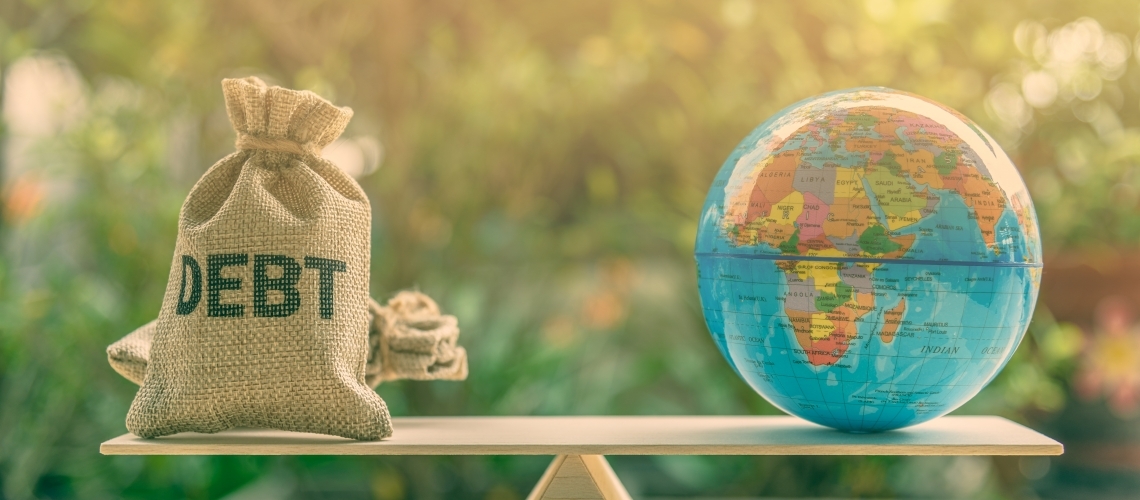
Higher inflation. Slower growth. Tightening financial conditions.
In recent weeks, Russia’s invasion of Ukraine has exacerbated global economic risks. There is a fourth element, however, that could make the mix combustible: the high debt of emerging markets and developing economies.
Continue readingFour paths to respond to the food price crisis
As the devastating war in Ukraine rages on causing untold suffering, its impact is being felt far beyond its borders, battering a world emerging from a pandemic that has hit developing countries hardest. Among the most critical is the food price crisis, calling into question the affordability and availability of wheat and other essential staples.
There is no downplaying the blow that the war has dealt to food systems, already fragile from two years of COVID-19 disruptions, climate extremes, currency devaluations, and worsening fiscal constraints. , not only wheat but barley, maize, and edible oil among others exported by these two countries. Global and domestic food prices were already close to all-time highs before the war, and a large question mark looms over the next seasons’ harvests worldwide due to the sharp increase in fertilizer prices as well.
“Whether we succeed in managing food price volatility and navigating our way out of this new crisis depends on national policies and global cooperation.”
Global Economic Prospects 2022
The global recovery is set to decelerate markedly amid continued COVID-19 flare-ups,  diminished policy support, and lingering supply bottlenecks. In contrast to that in advanced economies, output in emerging market and developing economies (EMDEs) will remain substantially below the pre-pandemic trend over the forecast horizon. The global outlook is clouded by various downside risks, including renewed COVID-19 outbreaks due to Omicron or new virus variants, the possibility of de-anchored inflation expectations, and financial stress in a context of record-high debt levels. If some countries eventually require debt restructuring,
this will be more difficult to achieve than in the past. Climate change may increase commodity price volatility, creating challenges for the almost two-thirds of EMDEs that rely heavily on commodity exports and highlighting the need for asset diversification. Social tensions may heighten as a result of the increase in between-country and within-country inequality caused by the pandemic. Given limited policy space in EMDEs to support activity if needed, these downside risks increase the possibility of a hard landing. These challenges underscore the importance of strengthened global cooperation to foster rapid and equitable vaccine
distribution, proactive measures to enhance debt sustainability in the poorest countries, redoubled efforts to tackle climate change and within-country inequality, and an emphasis on growth-enhancing policy interventions to promote green, resilient, and inclusive development and on reforms that broaden economic activity to decouple from global commodity markets.
diminished policy support, and lingering supply bottlenecks. In contrast to that in advanced economies, output in emerging market and developing economies (EMDEs) will remain substantially below the pre-pandemic trend over the forecast horizon. The global outlook is clouded by various downside risks, including renewed COVID-19 outbreaks due to Omicron or new virus variants, the possibility of de-anchored inflation expectations, and financial stress in a context of record-high debt levels. If some countries eventually require debt restructuring, this will be more difficult to achieve than in the past. Climate change may increase commodity price volatility, creating challenges for the almost two-thirds of EMDEs that rely heavily on commodity exports and highlighting the need for asset diversification. Social tensions may heighten as a result of the increase in between-country and within-country inequality caused by the pandemic. Given limited policy space in EMDEs to support activity if needed, these downside risks increase the possibility of a hard landing. These challenges underscore the importance of strengthened global cooperation to foster rapid and equitable vaccine
distribution, proactive measures to enhance debt sustainability in the poorest countries, redoubled efforts to tackle climate change and within-country inequality, and an emphasis on growth-enhancing policy interventions to promote green, resilient, and inclusive development and on reforms that broaden economic activity to decouple from global commodity markets.
Full Report
World Bank Group Stands with Ukraine and its People
Prepares to support countries in the region affected by the conflict 
WASHINGTON, Feb. 24, 2022—David Malpass, President of the World Bank Group, today released the following statement:
“The World Bank Group is horrified by the shocking violence and loss of life as a result of the events unfolding in Ukraine. We are a long-standing partner of Ukraine and stand with its people at this critical moment.
Today, I discussed the situation with our Board of Directors and have mobilized our Global Crisis Risk Platform to accelerate coordination across the World Bank Group.
The devastating developments in Ukraine will have far-reaching economic and social impacts. We are coordinating closely with the IMF to assess these costs.
When I met with President Zelenskyy in Munich on Saturday, I reaffirmed the World Bank Group’s strong support and commitment to the people of Ukraine and the region.
We stand ready to provide immediate support to Ukraine and are preparing options for such support, including fast-disbursing financing. Alongside development partners, the World Bank Group will use all our financing and technical support tools for rapid response.
The World Bank Group is also in active dialogue to support neighboring countries and people that may be affected by this conflict and will make additional resources available.”
Prepares to support countries in the region affected by the conflict
WASHINGTON, Feb. 24, 2022—David Malpass, President of the World Bank Group, today released the following statement:
“The World Bank Group is horrified by the shocking violence and loss of life as a result of the events unfolding in Ukraine. We are a long-standing partner of Ukraine and stand with its people at this critical moment.
Today, I discussed the situation with our Board of Directors and have mobilized our Global Crisis Risk Platform to accelerate coordination across the World Bank Group.
The devastating developments in Ukraine will have far-reaching economic and social impacts. We are coordinating closely with the IMF to assess these costs.
When I met with President Zelenskyy in Munich on Saturday, I reaffirmed the World Bank Group’s strong support and commitment to the people of Ukraine and the region.
We stand ready to provide immediate support to Ukraine and are preparing options for such support, including fast-disbursing financing. Alongside development partners, the World Bank Group will use all our financing and technical support tools for rapid response.
The World Bank Group is also in active dialogue to support neighboring countries and people that may be affected by this conflict and will make additional resources available.”
 Netherlands for the World Bank
You must be logged in to post a comment.