It’s good to be back at the Peterson Institute. I’m eager to hear your views on the challenging subjects of growth and development. It’s a timely discussion, given the many immediate challenges facing the world, including Brexit, negative interest rates, trade frictions, and rising poverty rates in many developing countries. There’s a range of development issues to tackle, including barriers facing the private sector, full inclusion of women, and severe problems in health, education, the environment and infrastructure, to name several.
Tag Archives: eC2
eC2: Consulting Assignment for a Consulting Firm for the Better Life Farming Alliance Project in India
Deadline: 03-Oct-2019 at 11:59:59 PM (Eastern Time – Washington D.C.)
The Consulting Firm is required to undertake the following activities under the assignment which will be divided into two phases. The second phase of the assignment will be extended to the Consulting Firm contingent on satisfactory delivery and submission of all deliverables outlined under the scope of Phase I.
PHASE I : Under Phase I, the Consulting Firm will provide support in the design of the technical assistance and capacity building strategy of the project.
PHASE II: The second phase of the project will primarily be on the design of the training modules by IFC and delivery of entrepreneur trainings on ground based on TNA.
eC2:Resource Efficiency Benchmarking of Red Meat Abattoirs in South Africa
Deadline: 03-Oct-2019 at 11:59:59 PM (Eastern Time – Washington D.C.) 
International Finance Corporation (IFC), the private sector investment arm of the World Bank Group (WBG), launched the Agri-processing Resource Efficiency (APRE) Project that has two core components:(1) provide advisory and implementation support to agri-processing companies on water efficiency measures, develop and disseminate replicable solutions and best practices together with sector aggregators; and
(2) work with public/private stakeholders in three localities on specific policy/regulatory measures to support water efficiency, convening public-private dialogues to reach consensus on them. Red meat processing is one of the priority subsectors for engaging under the first component of APRE program. IFC is seeking a consulting firm to help with the resource efficiency benchmarking of the red meat abattoirs in South Africa that aims to assess the gaps in the efficiency of the use of resources, with focus on water, and identify areas for improvements in performance and sustainability.
eC2: Update delineation and characterization of the groundwater bodies at risk, including pressure and risks, and perform status assessment
Deadline: 07-Oct-2019 at 11:59:59 PM (Eastern Time – Washington D.C.)

The assignment envisages the following activities with regard to the 93 Ground Water Bodies (GWBs)in Bulgaria identified in the River Basin Management Plans (2016-2021) as not being in good status (63) or to be at risk of not achieving good qualitative or good chemical status (30): the implementation of the updated methodologies/approaches and delineation of the groundwater bodies, updating the characterization of GWB,
determining the background level concentration (BGL) and threshold values (TV) for contaminants in the GWB, evaluating the pressures and risks for the quantitative and chemical status applicable to the GWBs and identifying the trends, and finally evaluating the quantitative and chemical status of the GWB.
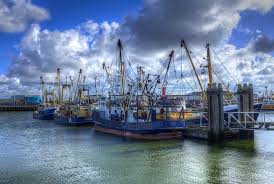
eC2: Indonesia Coastal Fisheries Initiative – Challenge Fund
Deadline: 08-Oct-2019 at 11:59:59 PM (Eastern Time – Washington D.C.) 
Specifically, by time of close, the contracted organization will have:
1) Developed an investment package, a report outlining a set of well-defined investment project proposals;
2) Completed a series of analysis to validate the technical, legal, and social feasibility of the proposed investments; including estimates of the financial return from undertaking the investments, and appraisal of social and environmental impacts as well as their mitigation measures (using the World Bank’s Environmental and Social Framework);
3) Conducted concrete preparatory actions that increase the chance of success (or reduce the risks) of the proposed fishery investment package, such as capacity-building of stakeholders, strategy development, or certification audits, in preparation for the implementation of activities in the proposed investment package;
4) Have in-principle agreements with potential investors and donors to undertake the financing of the project proposals.
eC2:Renewable Energy Competitive Bidding Strategy
Deadline: 07-Oct-2019 at 11:59:59 PM (Eastern Time – Washington D.C.)
Scope of Work
The assignment has four components:
(i) Develop RE Competitive Bidding Strategy, including volume and timeline recommendations, type of bidding, roles of key agencies, and ensuring maximum economic benefit over the long-term;
(ii) Procurement Framework for Competitive Bidding, including consideration of qualification requirements, winner selection process, and sellers liabilities;
(iii) Stakeholder Consultations and Capacity Building, including regular workshops, briefings, and other engagement to ensure that all key federal and provincial agencies, and private sector developers and investors, are consulted regularly;
(iv) RE Competitive Bidding Action Plan, including a capacity assessment of key agencies, communication strategy, and immediate next steps for implementation.
eC2: Improved Renewable Energy Integration and Electricity Services through Battery Storage in Distribution Network – TPDDL
Deadline: 25-Sep-2019 at 11:59:59 PM (Eastern Time – Washington D.C.)

Battery electric storage systems (BESS) are increasingly being used for power system applications such as grid stabilization, load shifting, grid operational support, power quality improvement, reliability management and enhancing rooftop solar hosting capability. The BESSs could also perform an important role in providing arbitrage and increasing the value of renewable energy resources. The benefits that electric storage systems bring in are, namely: electric energy time shift or energy arbitrage, frequency regulation, voltage and reactive power support, Peak /congestion management, Technical loss reduction and asset life enhancement, distribution upgrade deferral, spinning, non-spinning, and supplemental (black start) reserves, power quality improvement, power reliability improvement and demand charge management. BESS systems at the distribution level may displace diesel gensets which commonly backstop system reliability.
eC2: Market Study for Thailand: Private-Sector Plastics Circularity Opportunities
Deadline: 25-Sep-2019 at 11:59:59 PM (Eastern Time – Washington D.C.) 
Engage with targeted plastic value chains and private sector players in Thailand and understand the market drivers and challenges in scaling up circular economy approaches; Review local regulations and benchmark with applicable best practices to identify opportunities as well as gaps that could be limiting broader adoption of plastics circularity; Define the current state-of-play for the local waste plastics recycling industry, including demand and supply volumes, market opportunity, and growth drivers and constraints; and Summarize key findings based on the private-sector focused plastic value chain and recycling market analysis and recommend priority actions.
This in-depth study should analyse current and near-term market opportunities and challenges for private-sector participation in Thailand based on a combination of market analytics, scenario analyses, and reasonable assumptions to address key data gaps.
eC2: Creating an Enabling Environment for Private Sector Investment in Agriculture and Aquaculture in the Mekong Delta
Deadline: 23-Sep-2019 at 11:59:59 PM (Eastern Time – Washington D.C.) 
The aim is to assist with informing efforts to promote greater private sector investment in the Mekong Delta region. The work includes: A: SCOPING:
i. Classifying the domestic private firms operating in the Mekong Delta;
ii. Conduct rapid review of ongoing support for the different groups of domestic private firms; iii. Identify three global value chains (GVCs) that domestic firms could link with;
B. SITUATION ASSESSMENT
Conduct a situation assessment of: i. Opportunities / challenges for the different segments of domestic firms independent of GVCs; ii. Opportunities / challenges for the relevant segments of domestic firms if they aim to join one or more of the three GVCs and rank these; iii. Map opportunities/challenges faced by domestic firms (independent of GVCs) and to join the three GVCs and existing support (domestic and international).
C: PATHWAY FOR STRENGTHENING LINKAGES ACROSS SEGMENTS OF THE VALUE CHAIN D: ROADMAP FOR AN ENABLING ENVIRONMENT (CENTRAL & PROVINCE)
eC2: Climate Smart Agriculture (CSA) Market Studies
Deadline: 07-Oct-2019 at 11:59:59 PM (Eastern Time – Washington D.C.) 
Climate Smart Agriculture (CSA) is an approach aimed at increasing farm productivity sustainably, taking into consideration climate change concerns and impacts. More specifically, the World Bank defines Climate-Smart Agriculture as an approach to managing landscapescropland, livestock, forests and fisheriesthat aims to achieve three wins: (1) Increased productivity to improve food security and boost farmers incomes; (2) Enhanced resilience to drought, pests, disease and other shocks; (3) Reduced GHG emissions. IFCs Strategy is to contribute to CSA by providing investments and advisory operations that contribute to the three pillars of CSA. To adopt climate-smart agricultural practices, farmers need access to sufficient and adequate finance and skills to rightly use finance. In line with the aforementioned, IFC is looking for a consulting firm to conduct agricultural supply chain mapping and market studies of CSA technologies and practices to support financial institutions to increase lending for CSA in three target countries.
International Economics Washington, DC, United States
You must be logged in to post a comment.