
WASHINGTON, Sept. 16, 2020 – The COVID-19 pandemic threatens hard-won gains in 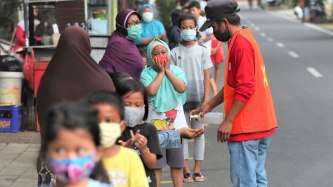 health and education over the past decade, especially in the poorest countries, a new World Bank Group analysis finds. Investments in human capital—the knowledge, skills, and health that people accumulate over their lives—are key to unlocking a child’s potential and to improving economic growth in every country. health and education over the past decade, especially in the poorest countries, a new World Bank Group analysis finds. Investments in human capital—the knowledge, skills, and health that people accumulate over their lives—are key to unlocking a child’s potential and to improving economic growth in every country.
The World Bank Group’s 2020 Human Capital Index includes health and education data for 174 countries – covering 98 percent of the world’s population – up to March 2020, providing a pre-pandemic baseline on the health and education of children. The analysis shows that pre-pandemic, most countries had made steady progress in building human capital of children, with the biggest strides made in low-income countries. Despite this progress, and even before the effects of the pandemic, a child born in a typical country could expect to achieve just 56 percent of their potential human capital, relative to a benchmark of complete education and full health. |
Tag Archives: COVID-19
Five Things You Need to Know About Social Sustainability and Inclusion
STORY HIGHLIGHTS
|
 Social Development GP, has a new strategic direction that focuses on creating more inclusive societies, enhancing the empowerment of citizens, and fostering more resilient and peaceful communities.
World Bank Group Exceeds 2020 Climate Finance Target for 3rd Consecutive Year – $21.4 Billion in Funding for Climate Action
STORY HIGHLIGHTS
|
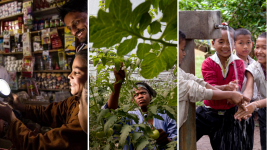 related investments, surpassing its climate-finance target for the third year in a row.
We must prepare supply chains for future COVID-19 vaccines and therapeutics
|
Nothing would undermine delivery of successful COVID-19 (coronavirus) vaccines and |
 therapeutic treatments faster than the emergence of fake vaccines.
 Beirut Rapid Damage and Needs Assessment (RDNA) — August 2020
Immediately after the massive blast that rocked the port of Beirut on August 4, the World  Bank Group (WBG) in cooperation with the United Nations (UN) and the European Union (EU) launched a Rapid Damage and Needs Assessment (RDNA) to estimate the impact on the population, physical assets, infrastructure and service delivery. The Beirut RDNA uses ground data and cutting-edge remote tools and technology to assess (i) damages to physical assets, (ii) ensuing economic losses, and (iii) recovery and reconstruction needs. Bank Group (WBG) in cooperation with the United Nations (UN) and the European Union (EU) launched a Rapid Damage and Needs Assessment (RDNA) to estimate the impact on the population, physical assets, infrastructure and service delivery. The Beirut RDNA uses ground data and cutting-edge remote tools and technology to assess (i) damages to physical assets, (ii) ensuing economic losses, and (iii) recovery and reconstruction needs.
|
As water flows more freely, Sindh’s farmers in Pakistan reap better crops
It took three decades, but now water flows into Mitho’s land.
“People have started calling me the Chacha (uncle) who successfully harvested four different crops in a single year: cotton, corn, apple gourd, and wheat,” says the elderly man with pride. This year, his wheat crops have yielded exceptionally, and he has rotated crops to keep the soil healthy.
Our work on COVID-19 vaccines, Lebanon, debt transparency and more
|
At the G7 meeting last week, World Bank Group President David Malpass highlighted the Bank Group’s work on vaccines and our healthcare response. “We’re committed to financing access to vaccines for our clients,” he said. Read his latest update to learn more about that and other developments on debt transparency and sustainability, among others. |
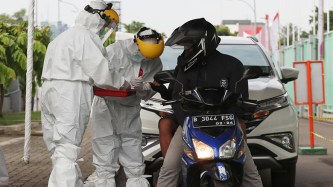
Automated transport could propel development forward. Can we turn the vision into reality?
|
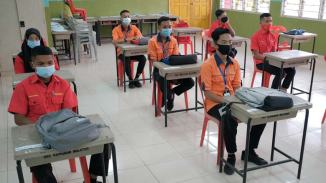
The next few weeks mark the beginning of the school year across the northern hemisphere. Safety of students and teachers vis-à-vis COVID-19 spread is top priority. Learn how countries are planning for the reopening of schools. This is what they had to say. Violence amid the pandemic: The COVID-19 pandemic has put a spotlight on some of the biggest cracks in societies worldwide. While many governments are still grappling with surging cases, violence is fueling the crisis in some of the world’s most fragile environments. Killer # 2: Millions of women and children may die or endure lifelong health impacts because of disruptions to essential health services and the reluctance by patients to seek care for fear of COVID-19 infection. A recent analysis examined the effects of service disruptions. The results are overwhelming. Power of digital ID: As countries focus on “building back better” after the pandemic, they have a crucial opportunity to leapfrog to a more digital economy – and to do so responsibly. Whichever model they choose, governments can transform the lives of people everywhere by building digital ID systems designed to maximize privacy, inclusion, and trust. Go deeper: Learn how the World Bank Group is responding to the COVID-19 (coronavirus) pandemic. Explore our multilingual portal. Click, bookmark and come back for updates. |
||
|


Automated transport could propel development forward. Can we turn the vision into reality?
The transport sector has always unleashed the creativity of engineers, inventors, and  problem solvers of all kinds. But even the greatest innovations don’t always come to life. After the early excitement of the public and investors, the vast majority (70% to 97%) of new ideas do not survive the “trough of disillusionment,” and only a lucky few end up being widely adopted.
Young people’s resilience is the boost we need right now

During this pandemic, the remarkable creativity and innovation of youth-led initiatives in sectors like health, jobs, and food security prove that young people are critical in driving forward ideas and actions on global issues. We launched an online campaign to provide a platform for youth to share their stories on hope and resilience. This is what they had to say.
 Netherlands for the World Bank
You must be logged in to post a comment.