
As COVID-19 (coronavirus) has spread across the world, the World Bank has projected  extreme poverty to increase for the first time since the Asian crisis in 1998, putting at risk the global goal of reducing extreme poverty to 3% of the world’s population by 2030. The duration and scale of impacts are highly uncertain and expected to vary widely within and across countries and over time, which makes it really important to closely monitor the impacts of the crisis on households and firms for designing policy responses. The World Bank’s high-frequency monitoring phone surveys, which are going on in nearly 100 countries, have sought to fill the information gap that traditional in-person surveys are ill-suited to fill during a pandemic. They are a window into how the pandemic is affecting every aspect of the lives of almost every household in the developing world. A similar initiative of Business Pulse Surveys adds to this picture by tracking the pandemic’s impacts on firms in 51 countries.
Tag Archives: COVID-19
IDA and the Private Sector Join Forces to Fight the Pandemic in the Most Fragile Countries
The Adaptation Principles: 6 Ways to Build Resilience to Climate Change
1.47 billion people face flood risk worldwide: for over a third, it could be devastating
Flooding is one of the most common and severe hazards disrupting people’s lives and 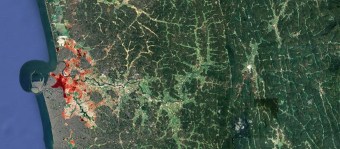 livelihoods around the world. Floods often cause unmitigated damage and suffering, especially in lower income countries where infrastructure systems – including drainage and flood protection – tend to be less developed. While countries at all levels of development face flood risk, the vast majority of the world’s flood exposed people – 89% – live in low- and middle- income countries. Critically, it is not only major, more infrequent floods, but also smaller, frequent events that can reverse years of progress in poverty reduction and development.
Firms struggle to stay afloat after losing half of sales, but still keep workers
Firms and workers in every part of the world have been affected by the COVID-19 shock. The  ILO estimates global labor income has declined nearly 11% or US$3.5 trillion in the first three quarters of 2020. As a result of income losses, our colleagues in the World Bank estimate that as many as 150 million people could be pushed into extreme poverty by 2021. Without timely assistance and swift policy action, otherwise healthy firms will be shuttered permanently, and people will suffer longer.
November 9, 2020 update: My Op-Ed and engagements from last week
I would like to briefly highlight some of my writing and engagements from last week:
Op-Ed: To Cope With Covid, the World’s Poor Need Debt Relief
In last week’s Wall Street Journal, I published an op-ed urging greater transparency and timely and meaningful debt relief for the people of the world’s poorest countries. These are immediate, critical needs as countries work to recover from the global pandemic, and we can no longer afford to kick the debt can down the road – developing countries need relief now.
It’s going to be a long painful ride. #InThisTogether
Instead of a sharp decline in 2020 followed by an increase in 2021 that we predicted in April,  we are now looking at a much more gradual fall extending into 2021. By the end of 2021, we expect remittances to fall by about 14% compared to the pre-Covid-19 record levels of 2019.
Reversing Setbacks to Poverty Reduction Requires Nations to Work Together for a Resilient Recovery
17-year-old M’Balu Tucker was poor even before the pandemic. She lives in Sierra Leone, a 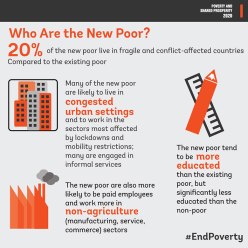 post-conflict country, in a village with only one primary school and a single water tap, not enough to serve all the residents. There is no electricity and the roads are unpaved.
post-conflict country, in a village with only one primary school and a single water tap, not enough to serve all the residents. There is no electricity and the roads are unpaved.She dreams of furthering her education, moving to the city, and someday working in a bank, so that she can help her family, her village, and her country. But her parents, who are farm workers, sometimes don’t have the money to pay her school fees without taking out a loan.
Tackling poor air quality: Lessons from three cities
How can countries grow their economies and keep air pollution in check at the same time? A  new World Bank report explores that tricky question, looking at the kinds of policies and actions three leading cities have taken to tackle poor local air quality, providing lessons for other cities. As we mark World Cities Day on October 31, this research seems more timely than ever.
 Netherlands for the World Bank
You must be logged in to post a comment.