
Can Artificial Intelligence (IA) help address massive education gaps? The answer is a cautious  and optimistic yes. 1.8 billion students in the world should receive a good education. However, half of them do not achieve basic reading and numeracy skills needed for life.
Tag Archives: AI
Tipping the scales: AI’s dual impact on developing nations
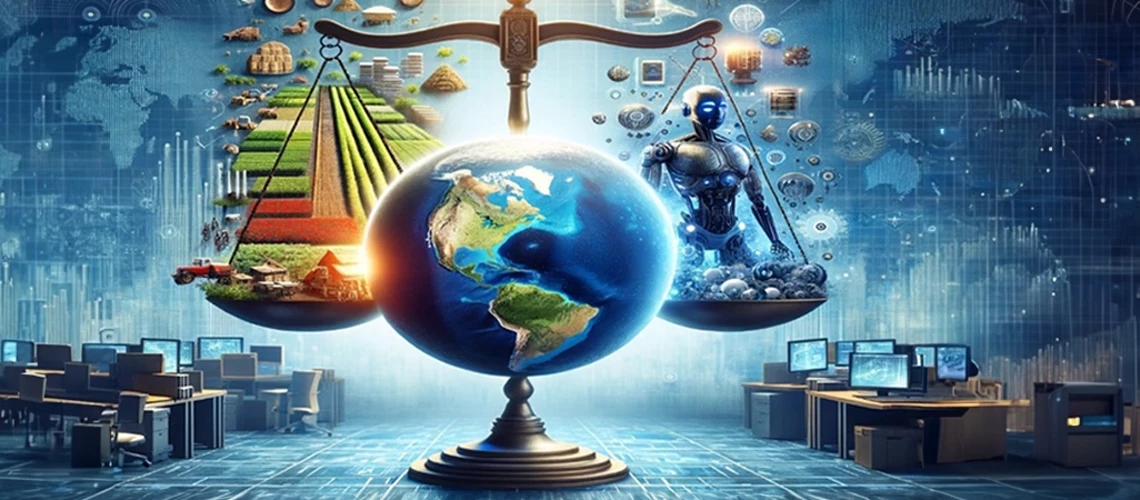
Artificial Intelligence (AI) is transforming our world, and its potential to reshape development, especially in emerging markets and developing economies, is nothing short of revolutionary. But this isn’t just about getting AI to help with scheduling or recipe recommendations, it’s about real change, real challenges, and monumental opportunities.
Continue readingWe need to change the way we support refugees – now !
We are at a pivotal moment in shaping the future of education. The potential for generative AI to improve teaching efficiency and enhance teacher effectiveness is immense. It’s a potential that is in the process of being realized in small classrooms and large educational systems alike.

Teachers are arguably the most important school-based determinant of whether and how much students learn. Given this complex and important job, how can generative AI-driven technologies help teachers, and what policy measures should be prioritized to harness the potential of the technology?
Continue readingAI and climate: Tackling challenges and embracing change with a people-centered approach
In May 2023, a World Bank team visited Secunda, a South African town defined by Sasol’s unique commercial coal-to-liquids facility, to participate in a workshop on just green transition in Mpumalanga’s coal-rich region. During the workshop, diverse voices from community leaders and global experts discussed the monumental challenges of a green transition, a conversation echoing far beyond the borders of this small town.
Investing in Innovation: David Malpass in Conversation With George French
How AI can help developing countries rebuild after the pandemic
Technology has been a lifeline to developing countries during the COVID-19 crisis, helping to 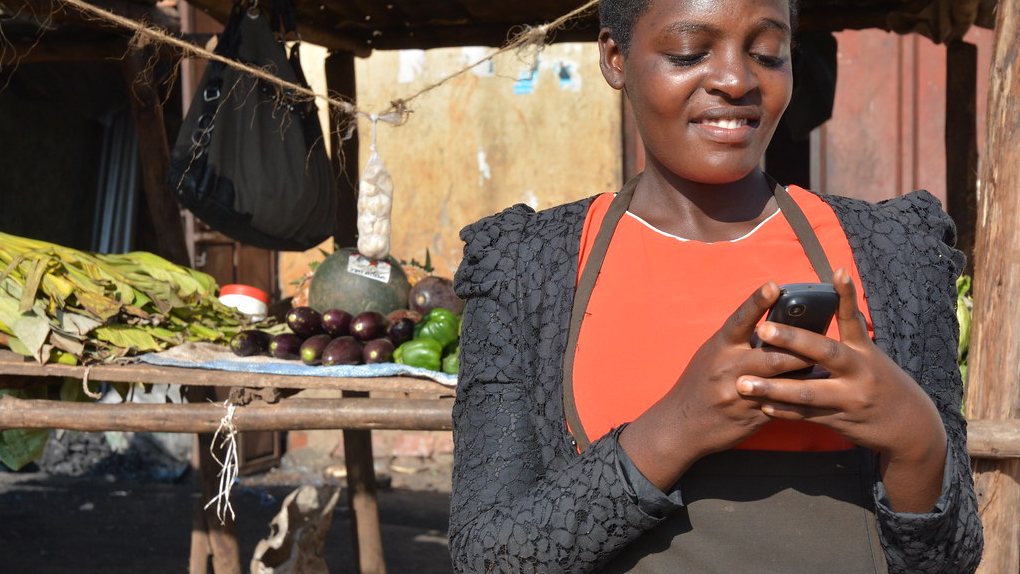 maintain essential services and keep companies in business. It has also offered a glimpse of a brighter future, one in which gains in income and employment are driven by technologies such as artificial intelligence.
Even before the pandemic, commercial uses for AI were expanding rapidly in emerging markets, in fields ranging from manufacturing and energy to education and financial services. The necessary lockdowns and travel restrictions imposed by countries have accelerated that trend. Companies like Clinicas de Azucar in Mexico are using AI to analyze data and improve health outcomes for thousands of at-risk diabetic patients. In India, 1mg uses AI to help customers compare prices for medical services from different labs.
Jobs, Skills, and the Potential of AI in Kenya
One of the advantages of artificial intelligence (AI) is that it can help us carry out tasks  faster and with fewer errors than humans. I wanted to test this on analyzing labor market demand and skills gaps. So, earlier this year, I partnered with Headai, a Finnish company, to apply an AI-enabled labor market assessment tool in Kenya. We used the tool to analyze: (a) online job advertisements from select online job portals in Kenya and (b) computer science curricula from the University of Nairobi and Moi University to identify the gaps between what the labor market is looking for and what the university curriculum is providing.
World Bank blogs
You, Me and (Big) Data!
Have you noticed the large number of digital trails that are left behind in your browser  and social media? Have you ever received an offer for a product or service that you were just thinking of? A friend of mine was researching about a critical illness and looking for insurance plans on the internet at the same time, and she started receiving ads to secure “the right spot” in a graveyard! Continue reading
Competition and the rise of the machines: Should the AI industry be regulated?
A multinational conglomerate uses artificial intelligence (AI) algorithms to gather  intelligence about the news you peruse, social media activity, and shopping preferences. They choose the ads you passively consume on your newsfeed and throughout your social media accounts, your internet searches, and even the music you hear, creating an incrementally increasingly customized version of reality specifically for you. Your days are subtly influenced by marketers, behavioral scientists, and mathematicians armed with cloud supercomputers. All of this is done in the name of maximizing profit to influence what you’re thinking, buying, and whom you will be electing…
Meet the World Bank- Sophie Peeters
 What is your role within the World Bank?
In 2016, I moved from the Netherlands to work as a consultant with the Information & Technology Solutions (ITS) Department, which delivers transformative information technologies to World Bank Group staff. I am a core team member of the newly launched Technology & Innovation Lab that experiments with innovative technologies that have the potential to improve the World Bank Group’s internal operations and operational work in client countries. We are developing use cases and proof of concepts for the use of blockchain technology and artificial intelligence (AI) in areas like health, cross-border payments, agriculture, and land administration, among others. I support the Innovation Leads by meeting with clients and performing business analysis for each use case, but I also lead some external partnerships with experienced leaders in this area, like the Dutch Blockchain Coalition. It has been an exciting journey and incredible experience to work with a close and diverse team in exploring these new technologies together with different units across the World Bank Group.
 Netherlands for the World Bank
You must be logged in to post a comment.