
For too long the narrative surrounding Africa’s agri-food sector has been one of limited  opportunity, flat yields and small farms. It’s true that Africa is still producing too little food and value-added products despite recent efforts to increase investment, and that agricultural productivity has been broadly stagnant since the 1980s as shown in the 2018 African Agriculture Status Report.
Tag Archives: Agriculture
eC2: FIRM CONSULTANT FOR OUTGROWER TRAINING AND COACHING IN FEED AND LIVESTOCK
Deadline: 28-Feb-2019 at 11:59:59 PM (Eastern Time – Washington D.C.) 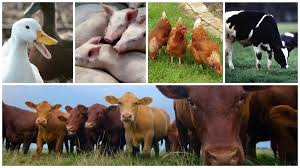
IFC is looking for Out Grower training and coaching firm consultant to start its livestock out grower development project in Raya Azebo District and neighboring woredas in Ethiopia where in the 1st phase of the project, at least 1000 farmers (out growers) (a)adopt good animal husbandary practices, (b) produce proper animal feed for themselves and supply to feedlot, (c) deliver animals that meet export market requirements by end of December 2019.
The Goods, the Bad, and the Ugly: Data and the food system
The business of agriculture and food is driven by data, making it the treasure trove of  today’s agri-food system. Whether it’s today’s soil moisture, tomorrow’s weather forecast, or the price of rice in Riyadh, every bit of data can improve the efficiency with which the world’s 570 million farmers put food into the mouths of its soon-to-be eight billion consumers. Digital technologies are facilitating the flow of data through the food system, shrinking information asymmetries and fashioning new markets along the way. How can we ensure these new markets are appropriately contested, and the treasure does not end up in the hands of a couple of gunslingers? Is there a public sector’s role in generating and disseminating data that on the one hand encourages innovation and competition and on the other reduces opportunities for market capture? One place to look may be at the crossroads of internet and public goods.
A warming world means it’s high time to rethink the composition of agricultural support
From the Old Farmer’s Almanac to cutting edge satellite systems, farmers have always  been in the market for weather forecasts that help them decide when to plant and harvest to mitigate climate risks. Earlier this month, the 48th session of the Intergovernmental Panel on Climate Change delivered sobering news: the Special Report on Global Warming of 1.5°C (SR1.5) concluded that climate impacts are already occurring and will be much worse at 2°C than previously projected.
Introducing the online guide to the World Development Indicators: A new way to discover data on development
The World Development Indicators (WDI) is the World Bank’s premier compilation of international statistics on global development. Drawing from officially recognized sources and including national, regional, and global estimates, the WDI provides access to almost 1,600 indicators for 217 economies, with some time series extending back more than 50 years. The database helps users—analysts, policymakers, academics, and all those curious about the state of the world—to find information related to all aspects of development, both current and historical.
Ending hunger to end poverty, ending poverty to end hunger
Last week we had World Food Day on October 16 and World Poverty Day on October 17. The good news from World Poverty Day is that there is global progress on reducing extreme poverty. Based on the latest available data, it is estimated that in 2015 there were 736 million people living on less than US$1.90/day, which compares very favorably to the 1,895 million people living in extreme poverty in 1990. And while the world’s population grew from 5.3 billion in 1990 to 7.4 billion in 2015, the poverty rate fell from 36 percent to 10 percent or 1 percentage point per year on average over this period.
At the same time, progress in reducing extreme poverty has been uneven. There have been sharp reductions in absolute numbers in East Asia and the Pacific and in South Asia, but the number of people living in extreme poverty in Sub-Saharan Africa has increased significantly.
eC2: Invest Ghana program – Agribusiness opportunities in Ghana
Deadline: 22-Oct-2018 at 11:59:59 PM (Eastern Time – Washington D.C.)
In Ghana, the International Finance Corporation (IFC), member of the World Bank Group, recently begun an Invest Ghana: Agribusiness Competitiveness advisory project, with an objective to create new markets for private investment in the agribusiness sector in Ghana. The project is under the umbrella of the Invest West Africa program, a regional initiative financed by USAID, and implemented by IFC. The project aims to mobilize new private investment in the agribusiness sector, and stimulate targeted regulatory reforms linked to private sector participation. In this context, IFC is seeking to recruit a consulting firm to assist the project team to identify the most promising competitive agribusiness opportunities in Ghana, selected based on a robust assessment of market opportunities and competitive advantages across key value chains. An important aspect of the assignment will be to match the opportunities identified with clearly defined, viable and applicable business models (or business strategies) in the Ghanaian context.
eC2: Developing financial product(s) to address the needs of agri value chain actors, in partnership with a Bank.
Deadline: 15-Oct-2018 at 11:59:59 PM (Eastern Time – Washington D.C.)
Assignment Description: Through this assignment, IFC seeks to create a synergy of all the Banks subsidiary (Banks, Microfinance, Insurance) institutions, to develop an integrated solution for addressing the financing, payment, and insurance needs of value chain actors, especially cooperatives and farmers. The product development firm will be expected to define and lead the entire product(s) development cycle including needs assessment, product(s) concepts design and evaluation, business modelling, actual product(s) development, product(s) documentation, testing, training design, and commercialization strategy framework.
Meet the Dutch at the World Bank: Wijnand van IJssel
Tell us something about yourself.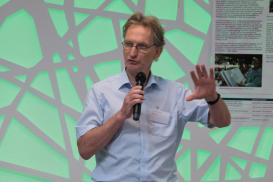
Well, I was born and raised in Rotterdam. I received my Master’s degree in tropical forestry at Wageningen University a long time ago. After that, I spent 20 years in Mauretania, Bhutan, Costa Rica, Kenya, Vietnam, and Mozambique, with FAO, SNV, DHV Consultants, and eventually the Ministry of Foreign Affairs of The Netherlands. I love working in global development, particularly in the domains of rural development, sustainable land use, and environmental management. It has been great to be able to live in all these countries with different cultures and to meet different people – together with my family (my wife and three children, now all 20+). After 10 years at the Ministry of Foreign Affairs in The Hague, I opted for this secondment at the World Bank Group.
eC2: Climate Smart Beef Production in the Oronoquia
Deadline: 20-Sep-2018 at 11:59:59 PM (Eastern Time – Washington D.C.)
Assignment Description: IFC is seeking a firm to support landowners in the rehabilitation of degraded cattle pastures, develop a financial mechanism to finance farm level investments, and identify strategic partnerships between value chain actors to drive long-term professionalization and efficiency. The assignment will include three work streams as follows:
1. Development of innovative business models for climate smart ranching
2. Piloting climate smart beef production systems
3. Development of financial mechanisms for farm level investment
 Netherlands for the World Bank
You must be logged in to post a comment.