Interested in Doing Business with the World Bank Group? Please see selected opportunities below.
Procurement Framework and Regulations for Projects After July 1, 2016 (worldbank.org)

Interested in Doing Business with the World Bank Group? Please see selected opportunities below.
Procurement Framework and Regulations for Projects After July 1, 2016 (worldbank.org)
Interested in Doing Business with the World Bank Group? Please see selected opportunities below.
Procurement Framework and Regulations for Projects After July 1, 2016 (worldbank.org)
Download latest Food Security Update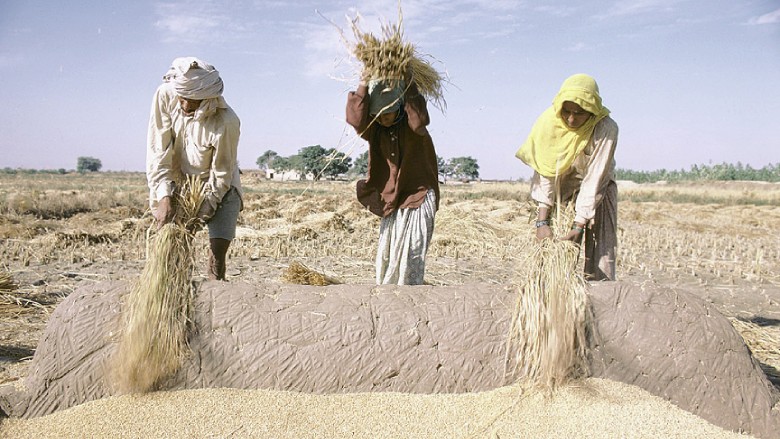
August 15, 2022 – Record high food prices have triggered a global crisis that will drive millions more into extreme poverty, magnifying hunger and malnutrition, while threatening to erase hard-won gains in development. The war in Ukraine, supply chain disruptions, and the continued economic fallout of the COVID-19 pandemic are reversing years of development gains and pushing food prices to all-time highs. Rising food prices have a greater impact on people in low- and middle-income countries, since they spend a larger share of their income on food than people in high-income countries. This brief looks at rising food insecurity and World Bank responses to date.
We already knew climate change would be a major threat to development gains in Africa, but a  recent report by the UN’s Intergovernmental Panel on Climate Change (IPCC) reveals the impacts could be significantly worse. Across the continent, research indicates with greater precision and certainty the future increases in flooding severity and extreme weather events over the coming decades. Among the findings: In West Africa, the number of potentially lethal heat days reaches 50–150 per year at 1.6°C global warming and 100–250 per year at 2.5°C global warming, with the highest increases in coastal regions; In Southern Africa, heavy rainfall events would become more frequent and intense at all levels of global warming, increasing exposure to flooding; and, at 2°C global warming, unprecedented extreme droughts are projected to emerge. These are alarming projections given that the continent is the least responsible for climate change but most vulnerable to its consequences.
Communities still live without reliable and affordable electricity needed to deliver social services and to be more resilient, better prepared, and more responsive when disasters hit.
“Yet even as the climate crisis accelerates, Africa needs to close its huge energy access gap and achieve its development goals.
Indeed, an overwhelming number of major currencies have depreciated against the dollar, with big implications for the developing world. Given the slew of headlines, I wanted to outline some of the key impacts that a strong dollar has on emerging markets (EMs).
WASHINGTON, August 8, 2022—The World Bank Group today announced $4.5 billion in additional financing mobilized for Ukraine under the Public Expenditures for Administrative Capacity Endurance in Ukraine (PEACE) Project, which aims to help the Government of Ukraine meet urgent needs created by the ongoing war. The financing package is comprised of a $4.5 billion grant provided by the United States.
The additional financing will contribute to sustaining the government’s administrative and service delivery capacity to exercise core functions at the national and regional levels. Specifically, the project will help the Government of Ukraine to cover social payments, healthcare services, and pensions, which are essential for the well-being of the country’s citizens in mitigating the social and economic impacts of the war.
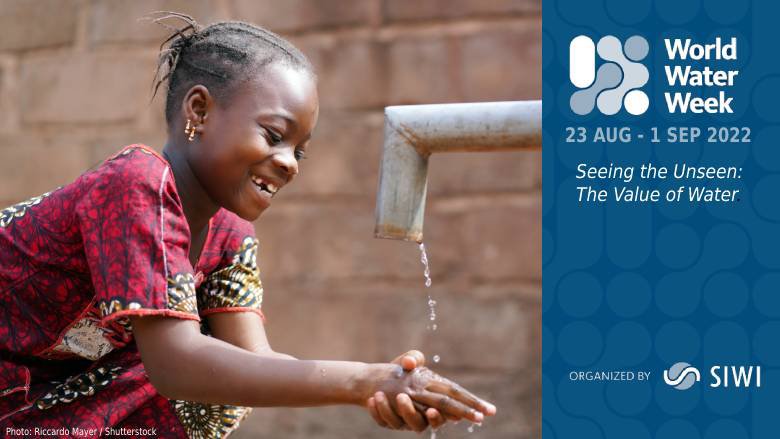
World Water Week, organized each year by the Stockholm International Water Institute (SIWI), brings together experts, professionals, innovators and entrepreneurs from various sectors and countries with the aim of developing solutions for water-related challenges.
The theme of this year’s event is “Seeing the Unseen: The Value of Water,” with a focus on the diverse aspects of water, how others view and value water, and the exploration of water’s full value to society. For the first time, the conference will be hybrid, allowing delegates to join online and/or in-person in Stockholm, Sweden.
The World Bank Group will convene and participate in multiple sessions on topics ranging from transboundary cooperation and financing to agriculture, technology, innovation, and the climate crisis.
You can also follow our sessions along via @WorldBankWater using #wwweek
World Water Week, organized each year by the Stockholm International Water Institute (SIWI), brings together experts, professionals, innovators and entrepreneurs from various sectors and countries with the aim of developing solutions for water-related challenges.
The theme of this year’s event is “Seeing the Unseen: The Value of Water,” with a focus on the diverse aspects of water, how others view and value water, and the exploration of water’s full value to society. For the first time, the conference will be hybrid, allowing delegates to join online and/or in-person in Stockholm, Sweden.
The World Bank Group will convene and participate in multiple sessions on topics ranging from transboundary cooperation and financing to agriculture, technology, innovation, and the climate crisis.
You can also follow our sessions along via @WorldBankWater using #wwweek.
Interested in Doing Business with the World Bank Group? Please see selected opportunities below.
Procurement Framework and Regulations for Projects After July 1, 2016 (worldbank.org)
 first time in two decades – reaching parity with the Euro.
  Netherlands for the World Bank
You must be logged in to post a comment.