
The 2019 edition of International Debt Statistics (IDS) has just been published.
International Debt Statistics 2019 presents statistics and analysis on the external debt and financial flows (debt and equity) for the world’s economies for 2015. This publication provides more than 200 time series indicators from 1970 to 2017 for most reporting countries. To access the report and related products you can:
- Download the full publication (PDF)
- Download or query the database
- Visit the IDS 2019 Products Page
- Access the statistical tables
- Visit the debt portal for a range of related content
- View the “about the data” section for a full description of the concepts and definitions in IDS.
 bring about sustained transformation in public procurement. A more effective and transparent procurement system frees up public money for achieving more and better development outcomes and improving the delivery of public services.
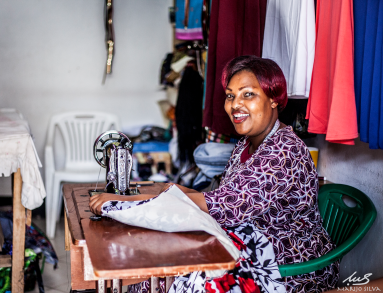 especially when they are poor and run subsistence level firms. In developing countries, 22 percent of


 And how is it applied to real life?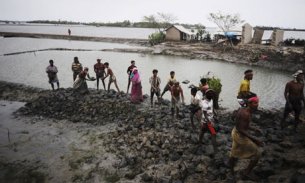
 transformations: building human capacities (health, education, new job skills); decarbonising energy; promoting sustainable agriculture and biodiversity; building smarter cities; implementing the circular economy; and harnessing the digital revolution. As such, sustainable development and the 17 Sustainable Development Goals (SDGs) in particular pose a financing challenge. There are three distinct financing conundrums to solve: financing complex infrastructure, financing public services and amenities, and shifting investments from unsustainable to sustainable technologies. I discuss these in turn.
 management. Three months after arriving in Indonesia as the World Bank’s environment coordinator, the Indian Ocean tsunami and related earthquakes struck Aceh and Nias at the end of 2004. I was asked to pull together the economic evaluation of the disaster’s environmental impact as part of what was then known as a damage-and-loss assessment. Subsequently, the World Bank, United Nations and European Union agreed on a joint approach to crisis response in 2008, including a common methodology for post-disaster needs assessment (PDNA).
 Netherlands for the World Bank
You must be logged in to post a comment.