
A large percentage of workers and firms operate in the informal economy, outside the line of 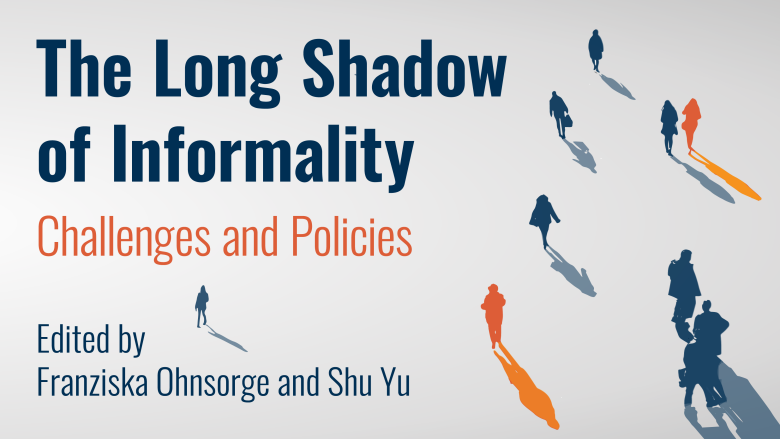 sight of governments in emerging markets and developing economies. This may hold back the recovery in these economies from the deep recessions caused by the COVID-19 pandemic—unless governments adopt a broad set of policies to address the challenges of widespread informality. This study is the first comprehensive analysis of the extent of informality and its implications for a durable economic recovery and for long-term development. It finds that pervasive informality is associated with significantly weaker economic outcomes—including lower government resources to combat recessions, lower per capita incomes, greater poverty, less financial development, and weaker investment and productivity. Continue reading
Defying Predictions, Remittance Flows Remain Strong During COVID-19 Crisis
A green reboot for cities: Strategies for post-COVID growth
Thousands of  municipalities are facing increased pressures to provide essential services while simultaneously coping with dramatic revenue declines. The situation is particularly severe in emerging markets where resources are sparse.
Supporting Pollution Reduction Efforts to Protect the Health of Egyptians and Spur Economic Recovery
Recent studies highlighting the adverse impact of pollution on growth estimate that the annual  economic cost of air pollution on health in the Greater Cairo area alone is about 1.4 percent of Egypt’s Gross Domestic Product.
 economic cost of air pollution on health in the Greater Cairo area alone is about 1.4 percent of Egypt’s Gross Domestic Product.
Healthy citizens are the cornerstone of every country’s development and are integral for sustainable economic growth. Given the many health hazards of pollution—from cancer to respiratory ailments and much more—it is increasingly becoming recognized as an impediment to growth and development. Recent global efforts to minimize pollution, through initiatives such as the Sustainable Development Goals (SDGs) and The Paris Agreement, aim to set global guidelines for countries in order to reduce pollution.
eC2: Market study for third-party logistics and temperature-controlled logistics services in Latin and Central America
Deadline: 24-May-2021 at 11:59:59 PM (Eastern Time – Washington D.C.) 
This assignment comprises market studies on both the development of third-party logistics (3PL) infrastructure and services as well as temperature-controlled logistics (TCL) in Chile and Central America.
The main objectives of this assignment are to:
(i) identify existing suppliers of 3PL and TCL services and their growth plans;
(ii) identify key constraints and growth drivers for the sectors serviced by providers; and
(iii) outline potential private investment opportunities to develop 3PL and TCL solutions in these markets. These assessments should ultimately recommend strategies to invest in existing players to help them scale up their operations, including suggestions of services to be offered, potential partners, assets to be used, clients to be attracted, geographical area and type of goods to be serviced and a high-level roadmap for implementation in a phased manner.
ec2: Study on rural women farmers and agri-WSMEs insurance needs in Nigeria, Zambia and Sri Lanka
Deadline: 24-May-2021 at 11:59:59 PM (Eastern Time – Washington D.C.)
IFC has been actively partnering with insurers in the emerging markets to increase womens access to insurance and boost their employment opportunities in the insurance sector. In order to develop and roll out suitable solutions in partnership with the local insurance industry and strengthen market capacity for sustainability in these three target markets, the Global Index Insurance Program (GIIF) and the IFC Womens Insurance Program, are jointly conducting a diagnostic study to identify the insurance needs of rural women, the existing barriers preventing access to insurance, and potential solutions that can be designed through an IFC advisory project. The study will be conducted in Nigeria, Zambia and Sri Lanka. The diagnostic will be done through surveys and in-depth interviews with i) Rural women farmers, ii) rural agribusiness WSMEs, iii)insurance companies (review and analysis of existing gender approaches and current agricultural/ health/ life schemes).
Food Relief for Poor Afghans Amid COVID-19
Story Highlights:
- 750,000 Afghan households facing food insecurity and hunger have received food and basic necessities packages. Over 5 million households are expected to benefit.
- Two World Bank projects support this relief effort through the Afghan government’s Dastarkhwan-e-Meli program, which aims to alleviate hunger and unemployment for the most vulnerable.
- Local Community Development Councils buy the relief packages from local providers, thus helping create jobs and stimulate local economies.
Global Gas Flaring Tracker Report
Highlights
- Gas flaring, the burning of natural gas associated with oil extraction, takes place due to a range of issues, from market and economic constraints, to a lack of appropriate regulation and political will. The practice results in a range of pollutants released into the atmosphere, including carbon dioxide, methane and black carbon (soot).
- The Global Gas Flaring Tracker finds that oil production declined by 8% (from 82 million barrels per day (b/d) in 2019 to 76 million b/d in 2020), while global gas flaring reduced by 5% (from 150 billion cubic meters (bcm) in 2019 to 142 bcm in 2020).
- Russia, Iraq, Iran, the United States, Algeria, Venezuela and Nigeria remain the top seven gas flaring countries for nine years running. These seven countries produce 40% of the world’s oil each year, but account for roughly two-thirds (65%) of global gas flaring.
eC2: An assessment on preventing leakage of single-use and other forms of plastics into the marine environment in Pacific Island Countries.
Deadline: 31-May-2021 at 11:59:59 PM (Eastern Time – Washington D.C.) 
The objective is to generate knowledge to support PICs to better implement policies for reduction of single-use plastics and strategies for adoption of less environmentally damaging alternatives. To achieve this objective, the consultants will assess the economic, policy, and institutional needs for supporting reduction of plastics pollution through potential policies to limit the import, production, sale and use of single-use plastics and identification and assessment of environmentally sustainable and economically feasible alternatives. This will involve assessing the scale of single-use plastics waste; an analysis of economic, social, and environmental costs of single-use plastics and potential alternatives; and identification of policies, incentives and market-based instruments that can effectively incentivize greener choices and steer economic activity towards less environmentally damaging practices and products; and/or to provide disincentives to discourage the demand for plastics products that have adverse environmental impacts.
India’s Youth Rise Up to Fix Country’s Toxic Air Problem
Seeing bluer skies in India—a nation known for its alarming air pollution levels—remains a major
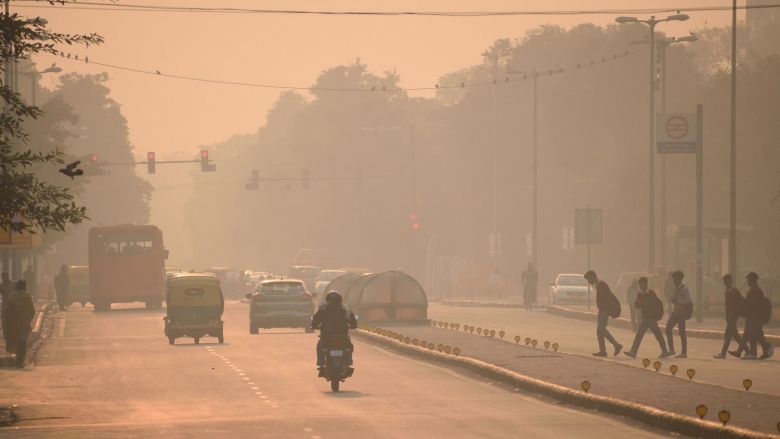
governmental priority. In recent times, the country launched its flagship National Clean Air Program (NCAP) to provide a roadmap to prevent, control, and reduce unhealthy air and mitigate its effects on development. Yet, much remains to be done, and one can still cough up troubling statistics on the lack of clean air in India: On an average, 248 million Indians lose 8 years of their lives due to exposure to poor air quality. And 1.67 million deaths were attributable to air pollution in India in 2019.
 Netherlands for the World Bank
You must be logged in to post a comment.