
WASHINGTON, Sept. 16, 2020 – The COVID-19 pandemic threatens
hard-won gains in health and education over the past decade, especially in the poorest countries, a new World Bank Group analysis finds. Investments in human capital—the knowledge, skills, and health that people accumulate over their lives—are key to unlocking a child’s potential and to improving economic growth in every country.
Category Archives: WBG News & Reports
New child and youth mortality estimates show dramatic reductions, but progress is threatened by impact of COVID-19
This blog is based on new mortality estimates and a report released today by the United 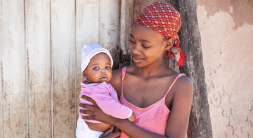 Nations Inter-agency Group for Child Mortality Estimation (UN IGME).
Automated Water Kiosks Provide Continuous Water for Malawians During COVID-19
STORY HIGHLIGHTS 
- Replacing Lilongwe’s manually-operated water kiosks with automated systems helps reduce congestion and contact, lowering COVID-19 risk
- The automated systems have also reduced the cost of water by 65%, allowing for increased hygiene and handwashing for households dependent on water kiosks
- The new kiosks are financed through the World Bank-supported COVID-19 response package, implemented by the Lilongwe Water Board
Top COVID-19 (coronavirus) news this week
Muhammad Ali Pate, Global Director for Health, Nutrition and Population at the World Bank  said “the COVID-19 pandemic has put years of global progress to end preventable child deaths in serious jeopardy,” referencing a new joint UN-World Bank report on child mortality. Meanwhile, this week highlights the World Bank’s support in Angola and Mongolia’s health systems.
Pandemic Threatens Human Capital Gains of the Past Decade, New Report Says
WASHINGTON, Sept. 16, 2020 – The COVID-19 pandemic threatens hard-won gains in 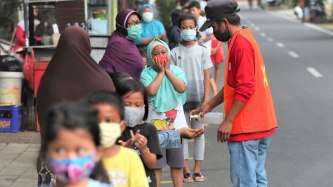 health and education over the past decade, especially in the poorest countries, a new World Bank Group analysis finds. Investments in human capital—the knowledge, skills, and health that people accumulate over their lives—are key to unlocking a child’s potential and to improving economic growth in every country. health and education over the past decade, especially in the poorest countries, a new World Bank Group analysis finds. Investments in human capital—the knowledge, skills, and health that people accumulate over their lives—are key to unlocking a child’s potential and to improving economic growth in every country.
The World Bank Group’s 2020 Human Capital Index includes health and education data for 174 countries – covering 98 percent of the world’s population – up to March 2020, providing a pre-pandemic baseline on the health and education of children. The analysis shows that pre-pandemic, most countries had made steady progress in building human capital of children, with the biggest strides made in low-income countries. Despite this progress, and even before the effects of the pandemic, a child born in a typical country could expect to achieve just 56 percent of their potential human capital, relative to a benchmark of complete education and full health. |
5 Years of Climate Leadership: The World Bank Group’s First Climate Action Plan
Climate Change Action Plan 2.0
Results from the recently concluded Plan make clear the Group’s leadership on climate action. Looking ahead, our next Climate Change Action Plan (2020-2025), already underway, aims to boost support for countries to take ambitious climate action by increasing financing for adaptation and supporting increased systemic climate action at the country level.
Five Things You Need to Know About Social Sustainability and Inclusion
STORY HIGHLIGHTS
|
 Social Development GP, has a new strategic direction that focuses on creating more inclusive societies, enhancing the empowerment of citizens, and fostering more resilient and peaceful communities.
World Bank Group Exceeds 2020 Climate Finance Target for 3rd Consecutive Year – $21.4 Billion in Funding for Climate Action
STORY HIGHLIGHTS
|
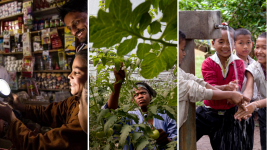 related investments, surpassing its climate-finance target for the third year in a row.
We must prepare supply chains for future COVID-19 vaccines and therapeutics
|
Nothing would undermine delivery of successful COVID-19 (coronavirus) vaccines and |
 therapeutic treatments faster than the emergence of fake vaccines.
 Beirut Rapid Damage and Needs Assessment (RDNA) — August 2020
Immediately after the massive blast that rocked the port of Beirut on August 4, the World  Bank Group (WBG) in cooperation with the United Nations (UN) and the European Union (EU) launched a Rapid Damage and Needs Assessment (RDNA) to estimate the impact on the population, physical assets, infrastructure and service delivery. The Beirut RDNA uses ground data and cutting-edge remote tools and technology to assess (i) damages to physical assets, (ii) ensuing economic losses, and (iii) recovery and reconstruction needs. Bank Group (WBG) in cooperation with the United Nations (UN) and the European Union (EU) launched a Rapid Damage and Needs Assessment (RDNA) to estimate the impact on the population, physical assets, infrastructure and service delivery. The Beirut RDNA uses ground data and cutting-edge remote tools and technology to assess (i) damages to physical assets, (ii) ensuing economic losses, and (iii) recovery and reconstruction needs.
|
 Netherlands for the World Bank
You must be logged in to post a comment.