
WASHINGTON, August 29, 2024 — In almost 60% of banks in Emerging Market and Developing Economies (EMDEs), lending for climate-related investment accounts for less than 5% of their overall portfolios, and more than one-quarter offer no climate financing at all, according to a new World Bank report.
Category Archives: WBG News & Reports
More than 400 Million Students Affected by Climate-Related School Closures since 2022
For less than $20 per student schools can adapt and minimize learning losses
WASHINGTON, Sept. 4, 2024 – A staggering 400 million students globally experienced school closures from extreme weather since 2022, according to a new World Bank report released today. The report examines the detrimental impacts of climate change on education in low- and middle-income countries and offers solutions to harness education to spur climate action. It also estimates that a one-time investment of $18.51 per child can mitigate the impact from climate shocks.
Why land is key to tackling climate change and infrastructure gaps
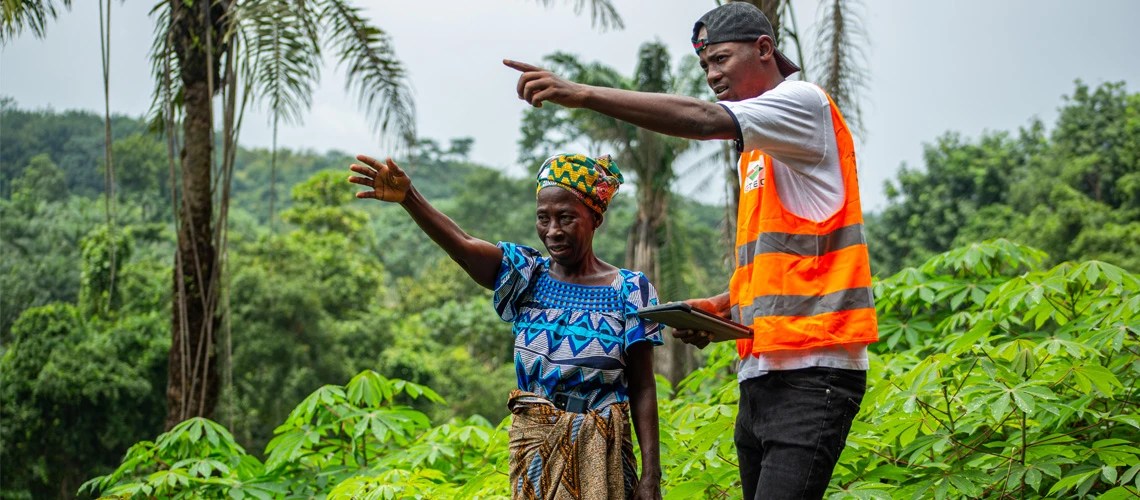 significant gaps remain around the world.
Globally, a billion people live more than two kilometers from an all-weather road, 685 million people are without electricity, and nearly 3 billion people lack internet access. In addition, 2.6 billion people don’t have access to safe drinking water and 3.5 billion people lack safely managed sanitation.
Becoming a Leader in Latin America’s Wastewater Treatment – The Case of Guayaquil
Guayaquil, Ecuador’s largest city and economic hub, has long grappled with a pressing  environmental and public health challenge: inadequate wastewater treatment. With a population of over 2.7 million people, this bustling metropolis has historically struggled to manage its wastewater effectively, mirroring a widespread issue across Latin America.
Education for Climate Action
World Bank Group Launches High Level Council to Tackle Looming Jobs Crisis
Council to be co-chaired by the President of the Republic of Singapore Tharman Shanmugaratnam and former President of the Republic of Chile Michelle Bachelet
WASHINGTON, Aug. 12, 2024—The World Bank Group today announced the launch of the High-Level Advisory Council on Jobs, a new initiative that will identify actionable policies and programs to address the looming jobs crisis in the Global South.
Ingredients for Accelerating Universal Electricity Access: Lessons from Rwanda’s Inspirational Approach
In just 15 years, Rwanda has increased its electricity access to 75% from 6% in 2009. This took government ownership, leadership, and commitment, partnership with the private sector, funding from development partners, and dedicated structure and institutional strengthening.
The goal of lighting up every household is not a dream, but an achievable reality. In a remarkable 15-year journey, Rwanda increased access to electricity to households from 6% in 2009 to 75% as of March 2024. The country has connected 100% of health centers and administrative facilities at the sector level and 84% of schools and most productive users (micro, small, and medium-sized enterprises). This electrification expansion was one of the fastest in the world between 2010 and 2020, ranking 11th globally and 3rd in Africa.

Government ownership, leadership, and commitment to universal electrification. Since 2008, the Government of Rwanda (GoR) has been intentional in engraining electrification targets in its development strategies. The Economic Development and Poverty Reduction Strategy 1 (EDPRS1 2008-2012) set out targets for electricity connections from 70,000 to 200,000 households, and for institutions providing social and administrative services from 50% to 80%. Likewise, both the EDPRS2 (2013-2018), and the National Strategy for Transformation 1 (2017-2024) set a universal electrification target by 2024.
Continue readingNavigating troubled waters: The Red Sea shipping crisis and its global repercussions
The Red Sea, a critical conduit for 30% of the world’s container traffic, is currently facing a shipping crisis of unprecedented scale. The New Brief, first of a new series analyzing recent economic and social developments and special issues in Fragile, Conflict, and Violence (FCV) situations in the Middle East and North Africa (MENA), explores the impact of the Red Sea shipping crisis. The recent conflict in the Middle East has led to attacks on commercial vessels, causing a significant downturn in maritime activity (Figure 1). As of end-March 2024, the volume of traffic through the strategic Suez Canal and Bab El-Mandeb Strait has dropped by half, while the alternative route via the Cape of Good Hope route has witnessed a 100% increase in navigation (Figure 2).
March 2024 global poverty update from the World Bank: first estimates of global poverty until 2022 from survey data
Global poverty estimates were updated today on the Poverty and Inequality Platform (PIP). As 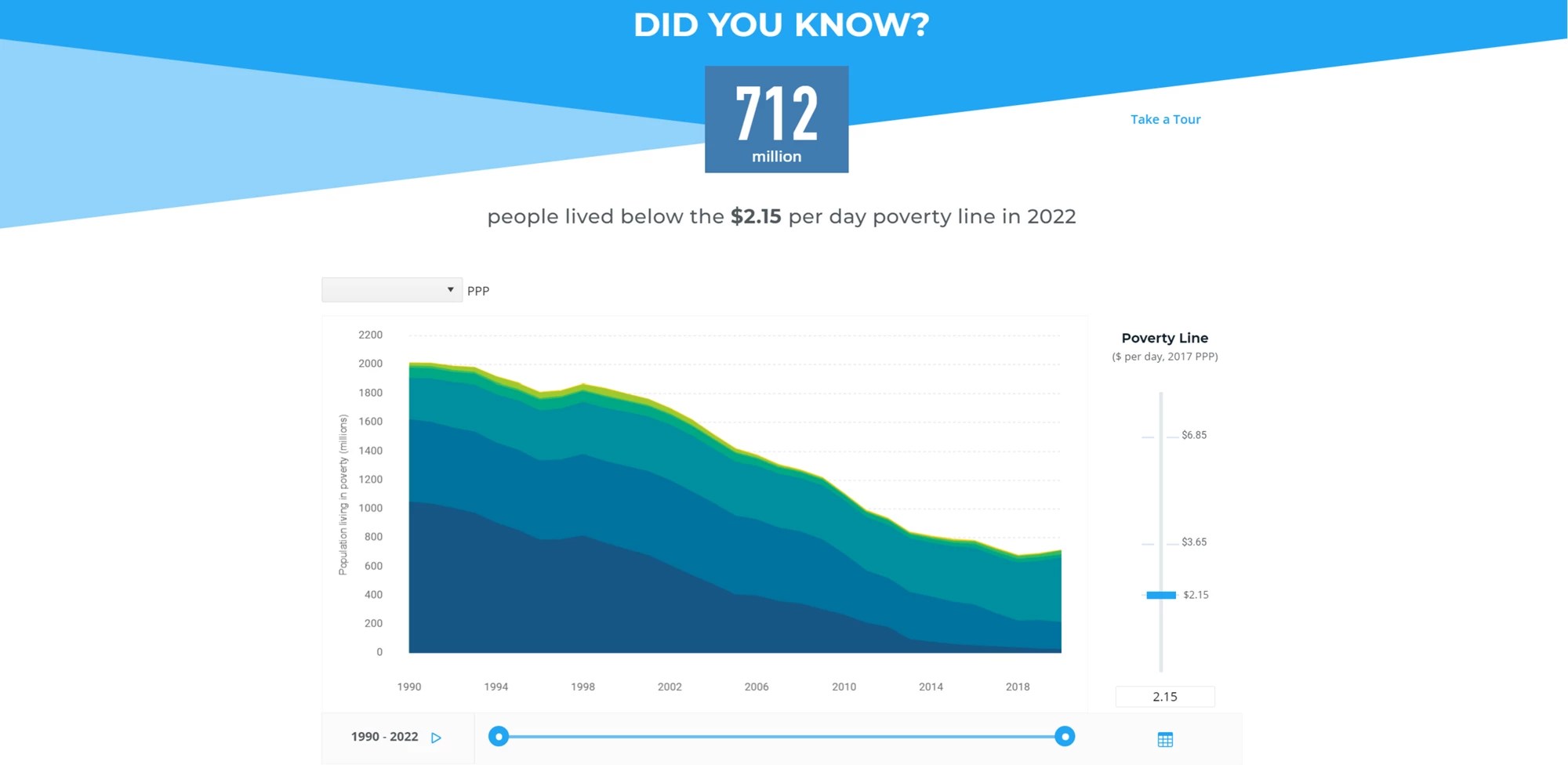 explained in more detail in the What’s New document, more than 100 new surveys were added to the PIP database, bringing the total number of surveys to more than 2,300. With more recent survey data, this March 2024 PIP update is the first to report a global poverty number for 2020-2022, the period of the COVID-19 pandemic. We estimate that COVID-19 increased extreme poverty in the world, as measured by the international poverty line of $2.15, from 8.9 percent in 2019 to 9.7 percent in 2020 (see Figure 1). This is the first increase in global poverty in decades. It is in line with earlier estimates of the COVID-19 impact which used limited survey data and GDP growth projections.
Tackling the pollution crisis to support healthier people and planet
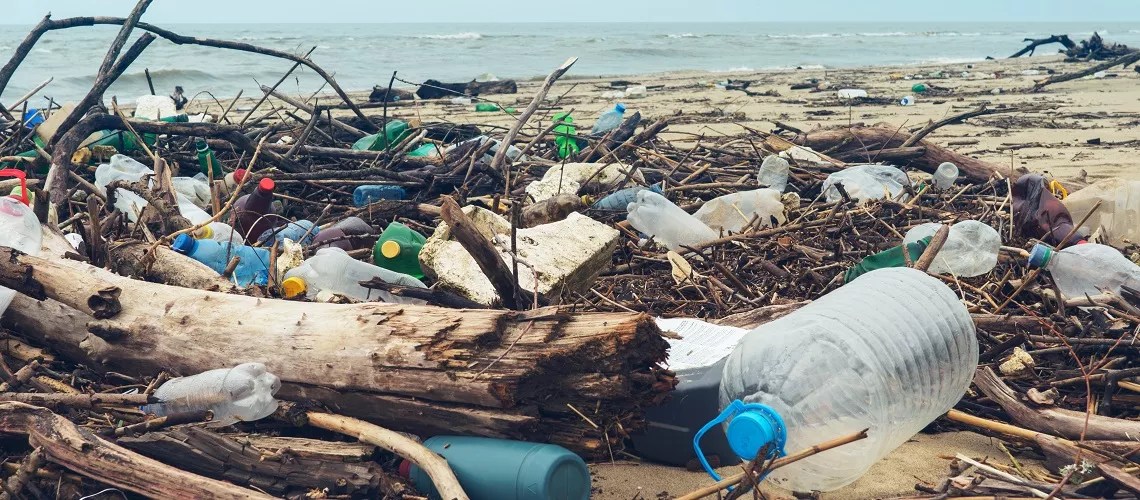
In polluted communities around the world, daily life is mired with challenges.
With nearly 33 million residents, Delhi consistently records one of the world’s highest air pollution levels . The resultant economic consequences on India’s capital city are far-reaching. Families earn less from missed days of work and medical expenses. With reduced worker productivity levels come lower profits for local businesses. In turn, the city and state governments collect less tax, impacting the following year’s budgets for building and maintaining hospitals, public transport and infrastructure, and other essential services. In 2019, this economic loss amounted to 1.08% of Delhi’s state-level GDP.
In addition to these economic effects, pollution causes the premature deaths of more than 9 million people around the world each year. Air pollution alone accounts for 7 million of these deaths – to put this staggering number into perspective, this is equivalent to the number of people that have died from COVID-19 since March 2020 dying each year. The estimated cost of the health damage caused by air pollution amounts to $8.1 trillion a year, equivalent to 6.1% of global GDP. Pollution inhibits our ability to lead productive lives.
Pollution is undermining the competitiveness and growth of economies today and setting economies up to fail tomorrow. UNICEF and Pure Earth estimate that 1 in 3 children – or up to 800 million globally – have blood lead levels at or above 5 micrograms per deciliter when any lead disrupts a child’s neurological development and can cause premature death.
And it’s not just pollution’s impact on economies that is wreaking havoc; pollution is degrading ecosystems on which the wealth of the poor depends, further eroding the ability of communities to get out of poverty. Air and other pollution lead to acid rain, a newly growing scourge across Asia. This pollutes arable lands and impacts crops. Persistent organic pollutants, heavy metals, and other chemical pollutants that reach the environment enter the food supply, impacting both food safety and food security.
On both land and sea, our habitats and ecosystems become less resilient to climate change in the face of high pollution levels. Plastics pollution is perhaps the most visible example. The unmanaged disposal of plastic destroys biodiversity and pollutes the food chain. Every year, 8 million tons of plastic escape into our oceans from coastal nations, impacting the health of our oceans and the species that inhabit them. If that isn’t enough to catalyze action, consider this: 8 million tons worth of plastic is the equivalent of placing five garbage bags full of trash on every foot of coastline around the world, according to National Geographic.
Together, the impacts of pollution spell a global crisis. Current linear economies have for too long disconnected the benefits of trade and industrialization from the degradation they leave behind. The theory behind growing now and cleaning up later has proven vulnerable to the reality of the death, disease, and economic stagnation caused by pollution. Since pollution is a problem for today’s economies and tomorrow’s economic building blocks, inaction is no longer an option. That is why the World Bank is working to clean up pollution today and help cities and countries build a low-pollution, low-emission world in which cleaner air, water, and land build green, resilient, and inclusive economies.
We are supporting countries to:
- Build robust policies, such as through supporting client countries as they negotiate on an international legally binding instrument on plastic pollution. The World Bank Group’s Pathways out of Plastic Pollution report provides good practice guidelines to support countries in their plastic pollution reduction goals.
- Build capacity for credible institutions, including stronger ministries of environment that are better able to address the cumulative environmental challenges, but also able to grasp the new opportunities offered by the circular economy.
- Construct the necessary public infrastructure to scale up circular economy approaches, including by strengthening the country’s digital architecture, “greening” public transportation, and investing in nature-based solutions.
- Unlock finance, both public and private, including by repurposing subsidies, supporting the SME financial sector ecosystem, and mobilizing international public finance and private capital.
Back in India, encouraging work is well underway. In 2019, the government launched the National Clean Air Program, which aims to improve lives and reduce particulate matter pollution by 30% by 2024. Meanwhile, in Egypt, the World Bank has supported the Government in adopting an integrated approach to tackling pollution, waste and climate change. From improving solid waste management to piloting e-buses and removing harmful fuel subsidies, the Government of Egypt is developing the building blocks for a successful circular economy.
In Indonesia, the Bank has supported the government in meeting its ambitious solid waste management goals and reducing plastic pollution. Our Plastics Policy Simulator allows policymakers to estimate the impacts of various government measures to address plastic pollution on businesses and households. These data-driven tools can help the Indonesian government develop better-informed policy interventions to reduce plastic pollution.
As the world takes strong action to reverse the impacts of climate change and biodiversity loss, tackling the pollution crisis remains of equal importance and urgency. Tackling pollution now will bring benefits today as well as tomorrow – a World Bank study found that a 20% decrease in PM2.5, a particularly harmful form of air pollution, is associated with a 16% increase in employment growth rate and a 33% increase in labor productivity.
We can do better.
 Netherlands for the World Bank
You must be logged in to post a comment.