
The ongoing digitization of financial services and money creates opportunities to build more  inclusive and efficient financial services and promote economic development. This digital transformation presents a paradigm shift that has various policy implications, including:
Category Archives: WBG News & Reports
Tech tools help map a future for post-coal communities
Land is scarce in many parts of our fast-urbanizing world. Few communities have the chance  to create something brand-new on a significant piece of land—and even fewer can develop that land in a way that confronts climate change, generates jobs, and attracts investment.
Is a Global Recession Imminent?
Since the beginning of the year, a rapid deterioration of growth prospects coupled with rising  inflation and tightening financing conditions, has ignited a debate about the possibility of a global recession—a contraction in global per capita GDP. Drawing on insights gained from previous global recessions, this study presents a systematic analysis of the recent evolution of economic activity and policies, and a model-based assessment of possible near-term macroeconomic outcomes.
Remarks by World Bank Group President David Malpass at the Launch of IDA20 in Tokyo, Japan
Hello everyone and let me start by expressing my appreciation to you and the Japanese government for hosting us for this launch of the IDA20 replenishment, in which Japan has played such a leadership role. I would like to thank the Finance Minister personally for playing such a crucial part in this process. I would also like to thank and congratulate the colleagues gathered here in Tokyo today, coming from all over the world, for making IDA20 a successful replenishment.
Toward Productive, Inclusive, and Sustainable Farms and Agribusiness Firms : An Evaluation of the World Bank Group’s Support for the Development of Agrifood Economies (2010–20)
The purpose of the evaluation is to assess how relevant and effective the World Bank Group has been in its support for agrifood system development (AFSD) —that is, in developing more productive, inclusive, and sustainable farms and agribusiness firms. The evaluation finds that the Bank Group’s interventions (FY 2010–20) were broadly relevant, although gaps remain in scaling up and better targeting support to countries that need it the most. Bank Group interventions were also effective overall in improving productivity, inclusion, and sustainability, but less so in LICs, particularly in West and Central Africa. World Bank interventions that focused on supporting production were less successful than interventions that combined production and market approaches. World Bank support for improving productivity was insufficiently diversified toward higher-value products that offer multiple benefits. IFC agribusiness investments faced challenges meeting environmental and social (E&S) standards, especially in LICs. IEG offers three recommendations to enhance Bank Group support for AFSD. (i) To enhance its effectiveness in developing agrifood systems, the World Bank Group’s efforts to support production technologies should be complemented by efforts to improve market access, especially in LICs and in countries at the traditional stage of agrifood system development. These can be pursued through synergies in Bank Group interventions or with partners; (ii) To achieve more sustainable agrifood systems, where conditions permit, the World Bank Group should support production diversification to meet the growing demand for undersupplied high-value-added, nutritious products while ensuring that smallholder farmers and SMEs benefit from the diversification; and (iii) To enhance the contribution of IFC support for AFSD, IFC should pilot and adopt more effective ways to support clients to better meet E&S Performance Standards, especially in LICs.
West Africa food insecurity demands climate-smart response amid multiple crises
As crises multiply and the devastating conflict in Ukraine drags on, its global effects are being felt hard in the Sahel and West Africa, a region with more than 38 million people facing acute food insecurity. The war’s impacts risk pushing an additional 7 to 10 million people in the region into food insecurity.
This story was originally published by France 24
World Bank Group Delivers Record $31.7 Billion in Climate Finance in Fiscal Year 2022
Financing focuses on helping countries reduce GHG emissions and adapt to mounting impacts of climate change
WASHINGTON, September 7, 2022 – The World Bank Group delivered a record $31.7 billion in fiscal year 2022 (FY22) to help countries address climate change. This is a 19% increase from the $26.6 billion all-time high in financing reached in the previous fiscal year. The Bank Group continues to be the largest multilateral financier of climate action in developing countries.
Latin America isn’t at risk of a 1980s-style crisis (but an era of missed opportunities looms)
Food lines that stretch across multiple city blocks. Spiraling unemployment. Out-of-control inflation. Unsustainable debt. These issues, which traumatized many economies across Latin American in the 1980s, continue to reverberate today and, given current economic conditions, you could be forgiven for fearing that history is about to repeat itself.
However,
The debt crises of the 1970s and 1980s were searing experiences that find an echo in today’s troubles. Then, as now, Latin American countries had large debt loads. Then, as now, the global economy experienced unique macroeconomic shocks that sent inflation soaring (the Arab oil embargo then; the pandemic and Ukraine war now). And then, as now, central banks around the world – especially the US Federal Reserve – were raising rates to fight inflation.
Global Economic Prospect: GLOBAL STAGFLATION
WASHINGTON, July 29, 2022 – Some additional 2 million people will benefit from a second Global inflation has risen sharply from its lows in mid-2020, on rebounding global demand, supply bottlenecks,
and soaring food and energy prices, especially since the Russian Federation’s invasion of Ukraine. Markets expect inflation to peak in mid-2022 and then decline, but to remain elevated even after these shocks subside and
monetary policies are tightened further. Global growth has been moving in the opposite direction: it has declined sharply since the beginning of the year and, for the remainder of this decade, is expected to remain below the
average of the 2010s. In light of these developments, the risk of stagflation—a combination of high inflation and sluggish growth—has risen. The recovery from the stagflation of the 1970s required steep increases in
interest rates by major advanced-economy central banks to quell inflation, which triggered a global recession and a string of financial crises in emerging market and developing economies (EMDEs). If current
stagflationary pressures intensify, EMDEs would likely face severe challenges again because of their less well anchored inflation expectations, elevated financial vulnerabilities, and weakening growth fundamentals. This
makes it urgent for EMDEs to shore up their fiscal and external buffers, strengthen their monetary policy frameworks, and implement reforms to reinvigorate growth. Phase of the West Africa regional Food Systems Resilience Program (FSRP-2) approved today for a total amount of $315 million in International Development Association (IDA*) financing. FSRP-2 will support Chad, Ghana and Sierra Leone to increase their preparedness against food insecurity and to improve the resilience of their food systems. This comes at a moment where it is projected that approximately 38.3 million people in West Africa are projected to be in food security crisis.
Global Economic Prospects — June 2022 (worldbank.org)
Smarter taxation can help boost government revenue and health outcomes
The shockwaves of the war in Ukraine hit many countries while they were still reeling from the COVID-19 pandemic. For many developing countries, the fiscal challenges have mounted ever since—the result of surging food, fertilizer and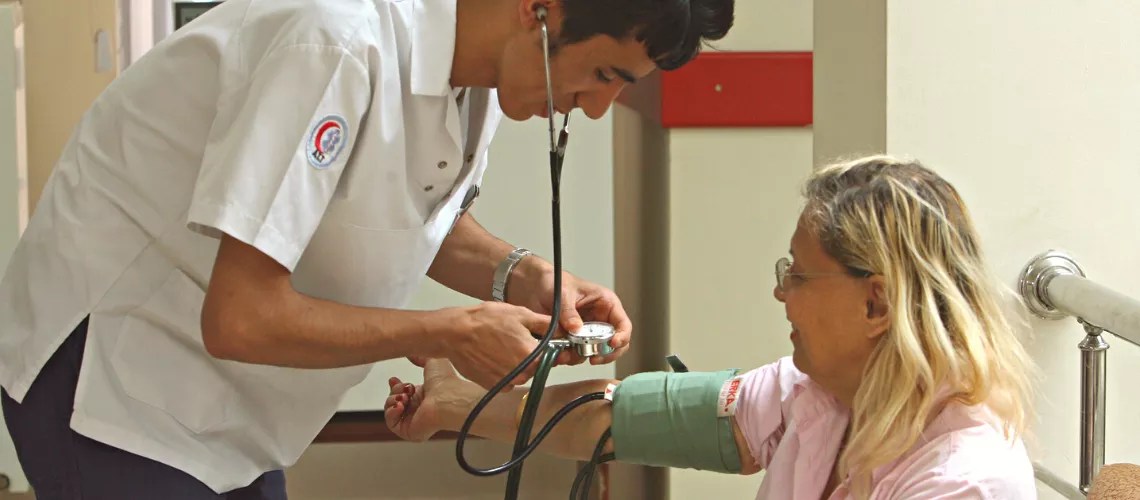 energy prices, rising interest rates, and slowing growth.
In response to the overlapping crises, nearly all countries increased their overall government and health spending. But only a few of them—mostly high-income countries—will be able to sustain these levels in the years ahead. Improving domestic resource mobilization, especially in a way that can sustainably broaden tax bases, will be crucial.
 Netherlands for the World Bank
You must be logged in to post a comment.