
Category Archives: WBG News & Reports
Annual Meetings: World Bank Events
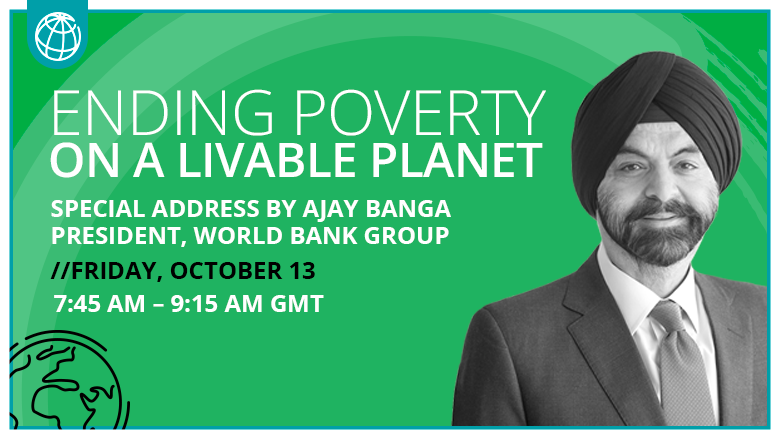
The World Bank Group-International Monetary Fund Annual Meetings are back this year from  October 9-15, and we hope you’ll join us!
Live from Marrakech, Morocco, the 2023 Meetings focus on what it will take to end poverty on a livable planet. Events will explore the new playbook we need to respond to intertwined global challenges. What solutions have worked on the ground in developing countries? How do we boost jobs, digital infrastructure, and climate action?
Mark your calendar and sign up for email reminders to join our public events online. This is your opportunity to interact with central bankers, ministers, private sector executives, civil society representatives, youth leaders, academics, and others on issues facing our world today. Ask questions to our experts and join the conversation with the hashtag #WBmeetings, as we bring you our events in English, Arabic, French and Spanish.
Annual Meeting World Bank Group and IMF

How to scale up renewable energy investments
Dependence on fossil fuels in many countries leads to a vicious cycle of increasing costs, higher energy prices for consumers, more pollution that impacts people’s health, and higher greenhouse gas emissions that endanger the planet. In contrast,
However, renewable energy projects do not materialize, and countries remain trapped in the vicious cycle. This happens despite the fact that many developing countries have some of the best solar and wind resources in the world. So how can we support governments to break free from fossil fuel dependency and catalyze the virtuous cycle for clean energy?
Announcing winners of the fifth World Bank and Financial Times youth blog competition
It’s been a complicated—and often frustrating—few years for students all over the world. Remote classes. Closures. Masks. It was a lot to deal with, and the long-term consequences could be severe.
Reforms could boost World Bank lending to developing countries by nearly $190 bln -study
WASHINGTON, Sept 26 (Reuters) – Reforming the World Bank’s approach to risk could unlock nearly $190 billion in additional urgently needed lending for developing countries without jeopardizing its AAA credit rating, a study commissioned by the Rockefeller Foundation found.
Early Childhood Development: Life Changing Support for Young Families in Marshall Islands
Tackling Food Insecurity
Stories of resilience from Madagascar, the Central African Republic, and Egypt
Are climate change and drought connected? We asked Richard Damania, the World Bank’s Chief Economist for Sustainable Development, and two experts from the Bank’s Sustainable Development unit: Senior Economist Esha Zaveri and Senior Climate Change Specialist Nathan Engle. The three are authors of the paper, Droughts and Deficits: Summary Evidence of the Global Impact on Economic Growth.
Global Trends in Child Monetary Poverty According to International Poverty Lines
Global Trends in Child Monetary Poverty According to International Poverty Lines, published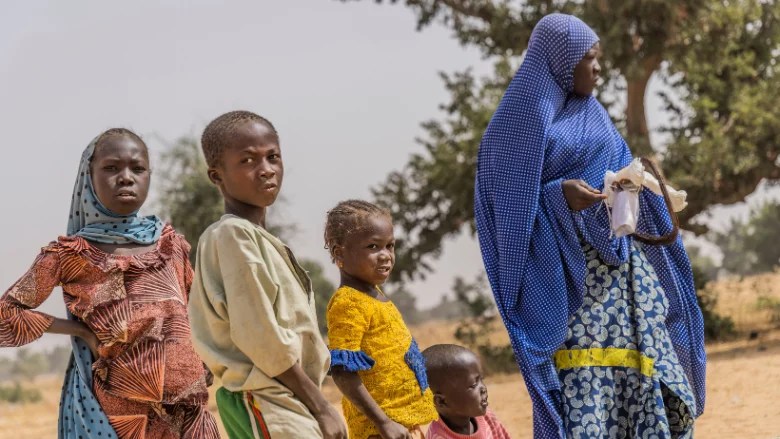 jointly by the World Bank and UNICEF, presents estimated trends in child poverty from 2013 to 2022, based on three international poverty lines: $2.15 (extreme poverty), $3.65 (lower middle income), and $6.85 (upper middle income). The estimates show that:
Statement by World Bank President Ajay Banga, IMF Managing Director Kristalina Georgieva, and Morocco’s Minister of Economy and Finance Nadia Fettah Alaoui on the 2023 World Bank-IMF Annual Meetings
WASHINGTON, September 18, 2023—World Bank President Ajay Banga; International Monetary Fund (IMF) Managing Director Kristalina Georgieva; and Kingdom of Morocco Minister of Economy and Finance Nadia Fettah Alaoui, today issued the following statement:
 Netherlands for the World Bank
You must be logged in to post a comment.