Unknown's avatar

About NL4WorldBank

The World Bank Team at the Royal Netherlands Embassy tweets about news related to Dutch organizations interested in working with the #WorldBank. #NL4WorldBank

An Accessible Future for Persons with Disabilities

120 kilometers south of Kigali, in a remote part of Southern Rwanda’s Huye District, dl1b0245wb-iei-rwanda-1-900x1350 lies the G.S. Kabuga school.  

Warm sunshine—with the occasional drizzle of rain—greets students as they trickle into class on a Monday morning. Led by their class prefect and teacher, the kids assume their seats inside a spacious classroom with two large blackboards on opposing flanks. One learner, a wheelchair user, rolls up alongside a bench and shuffles in alongside a classmate. 

“Children with disabilities are just like other children,” remarks Brother Jovite Sindayigaya, headmaster at the school. “The country needs them and so does the world in general. I get happiness from seeing them succeed.” 

G.S. Kabuga is one of 3,388 schools in Rwanda that have benefitted from reconstruction and refurbishment efforts, funded by the government of Rwanda and the World Bank, with technical assistance provided by the Bank’s Inclusive Education Initiative. In the span of just one year, 22,505 classrooms across all 30 districts of Rwanda were built or refurbished with some accessibility features for learners with disabilities.

FULL ARTICLE

Addressing fragility is critical for development

The outlook for people in developing countries remains grim.  The COVID-19 pandemic anddm_fcv_blog_feb_17_1140 related shutdowns are challenging the effectiveness of civil and institutional structures around the world and adding to fragility and violence, resulting in interrelated crises for foreign policy, development, and economics.

Continue reading

What You Need to Know About Oceans and Climate Change

Oceans play a critical role in regulating the climate, but how healthy are our oceans todayClimate-Explainer-Series-banner and what kind of impact is climate change having? We sat down with Charlotte De Fontaubert, Global Lead for the Blue Economy at the World Bank, to learn about the state of our oceans and what the World Bank is doing to help keep them healthy and productive.

The Fragility Forum 2022 is committed to peace and development in the midst of new and intensifying crisis

Over the last two years the world has been on edge, with serious implications for the mostshutterstock_648806605_blog_resized fragile economies.

Since the last Fragility Forum in 2020 and in a year dominated by the COVID-19 pandemic, peace and development around the world have faced massive setbacks from Asia to Africa to Latin America.  Fragility and conflict risks are also on the rise in middle-income countries. Our most recent economic forecast indicates that, by 2023, the output of fragile and conflict-affected countries will be 7.5 percent below pre-pandemic levels. This is well below prospects in emerging and developing countries at large. For the most vulnerable, this means food insecurity, extreme poverty, loss of human capital and fewer economic opportunities in addition to the threat of violence and forced displacement.

Continue reading

eC2: Analysis of energy efficient cold chains for Agriculture in Guatemala

Deadline: LM2109_F_TBP_ColdChain-800px 28-Feb-2022 at 11:59:59 PM (Eastern Time – Washington D.C.)

The objective of the study is to provide an in-depth analysis and diagnostic to identify gaps (e.g. strategy gaps, types of investments needed and agro-logistics inclusion) and opportunities in cold-chain infrastructure on the agricultural sector in Guatemala, including investment, technology and spatial gaps, energy savings and GHG reduction potential, and refrigerants used in the cold-chain, identifying opportunities to fill these gaps within the recently approved Responding to COVID-19: Modern and Resilient Agri-Food Value Chains projects. The analysis will further assess opportunities for reducing food losses through adopting improved, efficient cooling technologies, as well as for investment in improved cooling technologies, also based on national and regional policies related to cold chain logistics.

Continue reading

Five threats to equitable and inclusive recovery from COVID-19: Evidence from East Asia and Pacific

Nearly two years into the COVID-19 pandemic, the World Bank’s High-Frequency Phone jan2022_covidblog_eap_mainimageSurveys (HFPS) in the East Asia and Pacific (EAP) Region show that poorer households have been disproportionately affected and  have been slower to recover. Findings from the HFPS reported in the recent EAP Economic Update and a new regional study show that inequality has likely been exacerbated in several dimensions.

Continue reading

Solidarity with the poorest countries: A renewed commitment to recovery

axel_socialA few weeks ago, the international community agreed to a record $93 billion financing package for the world’s poorest countries.   This support will be delivered through the World Bank’s International Development Association (IDA) over the next three years, starting in July. 

Continue reading

Climate change and poverty: the perfect storm

We often hear that climate change disproportionately impacts the poor and the scenariosfarming_in_haiti._world_bank_eng are worrisome. For example, climate change will lead to up to a 300 % increase in extreme poverty in Latin America and the Caribbean (LAC) by 2030. 

Beneath this alarming headline, we know that climate-related losses will fluctuate across time and geographies. Impacts on people will be as varied and specific as household income sources and consumption patterns.

Continue reading

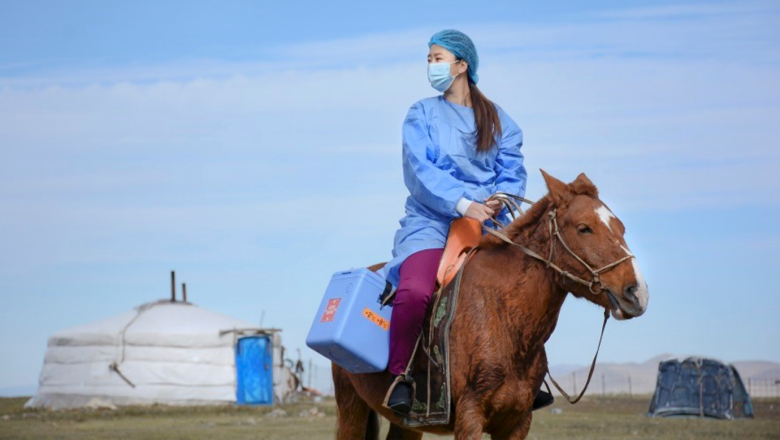
How the World Bank Delivered COVID Vaccines in East Asia and the Pacific


STORY HIGHLIGHTSVaccine-Story-1

  • The World Bank has provided US$1.44 billion to support the purchase and distribution of COVID-19 vaccines, tests, and treatments in the East Asia and the Pacific (EAP) region, especially for the poor and vulnerable.
  • Strong partnerships and flexible financing approaches have helped countries ramp up their vaccination programs while investing in health, education, and social protection to ensure a more resilient future.
  • Based on the current pace of vaccination and availability of vaccines to EAP countries, most will achieve at least 70% coverage by mid-2022.