The World Bank Team at the Royal Netherlands Embassy tweets about news related to Dutch organizations interested in working with the #WorldBank. #NL4WorldBank
Deadline: 31-May-2022 at 11:59:59 PM (Eastern Time – Washington D.C.)
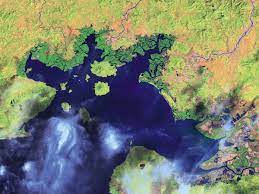
The objective of this assignment is to provide assessments, recommendations and advise to the World Bank Group to carry out dialogue and knowledge sharing support to the SICA in the creation of a blue economy enabling environment in Central America. The deliverables will enable the World Bank to support regional and national capacities and identify investment needs to foster sustainability, contribute to job creation, and to boost value addition in the Central America region and the Gulf of Fonseca in particular.
In fiscal year 2021 The World Bank Group (WBG) disbursed about $3.6 billion dollars ofTrust Fund contributions through development partners, IBRD, IDA and the IFC. Trust fund resources complement World Bank operations, expanding their scope and reach and supporting their quality. They promote increased development effectiveness and enable the World Bank to provide assistance when its ability to lend is limited, including in fragile and emergency situations, and for countries in arrears and to non-member countries. Trust Funds also contribute to the World Bank’s knowledge agenda by financing close to two-thirds of its advisory services and analytics products as well as technical advisory services for clients. Trust Funds attract new sources of finance and promote innovative financial solutions in support of the global public goods agenda, including combating climate change and addressing the challenges of fragility, conflict, violence, forced displacement and pandemics.
Every year, international organizations spend billions of euros on projects in developing countries and emerging markets. This results in tenders and assignments that could be interesting for the Dutch private sector. Team International Organizations (TIO) of the Netherlands Enterprise Agency (RVO) supports Dutch companies whom are interested in knowing more about doing business with the IFIs. TIO is focused solely on organizations the Netherlands is a shareholder or member of: Asian Development Bank, African Development Band, Asian Infrastructure Investment Bank, European Bank for Reconstruction and Development, European Union, European Investment Bank, Inter-American Development Bank, United Nations, and World Bank Group.
TIO functions as the first point of contact for Dutch companies. We can put you in contact with the IFIs, give information on how the different international organizations function, on how to be effective at doing business with these organizations, and the opportunities that could be relevant for your company. Other services that are provided are seminars, webinars, trade missions, individual and group tracks.
Through TIO companies have access to a broad network of contacts and organizations. On a daily basis, we work together with the PSLO liaison network of the World Bank Group, The Netherlands Embassy in Washington D.C. liaison officers Esther Smith and Vincent Kooijman as well as the different Ministries and Dutch embassies worldwide.
Meet the World Bank Group team of TIO:
Interested in TIO’s work? Contact us for more information via tio@rvo.nl.
With co-financing from a World Bank administered multi-donor trust fund (MDTF), the Caribbean Catastrophe Risk Insurance Facility Segregated Portfolio Company (CCRIF SPC) offers sovereign insurance for earthquakes, tropical cyclones, and excess rainfall to Caribbean and Central American countries. Currently, 19 countries in the Caribbean and 3 in Central America have memberships that through the years translated into 54 payouts totaling $245 million benefiting over 3.5 million people.
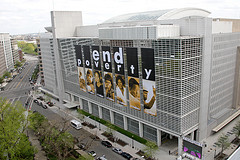
The handbook, “Zakendoen met de Wereldbank Groep” created by The Netherlands Embassy in Washington, D.C. provides interested Dutch companies and organizations with a basic introduction to the World Bank Group. Besides the handbook we also created fact sheets which include information on project cycles as well as bank jargon which will be good to know when working with the World Bank Group.
Money from Sint MaartenTrust Fund used to protect survivors, increase advocacy, and build capacity.
Nearly one in three women worldwide have experienced physical and/or sexual violence by an intimate partner in their lifetime. Alarmingly, the scourge of gender-based violence worsened since the COVID-19 pandemic started, as stay-at-home orders and government lockdowns forced women to stay home with their aggressors. Even after quarantine measures were loosened, heightened emotional and mental stress alongside financial insecurity and unemployment were identified as potential drivers of increased abuse. In the Caribbean region, advocates in Sint Maarten are working to support survivors and mitigate this violence within the country.
Shift to more costly trade patterns has begun; transition to cleaner energy could be delayed
WASHINGTON, April 26, 2022—The war in Ukraine has dealt a major shock to commodity markets, altering global patterns of trade, production, and consumption in ways that will keep prices at historically high levels through the end of 2024, according to the World Bank’s latest Commodity Markets Outlook report.
In his speech at the Warsaw School of Economics ahead of the 2022 Spring Meetings, titled “Addressing Challenges to Growth, Security, and Stability,” World Bank Group President David Malpass discussed the millions who are suffering amid massive reversals in development and outlined actions the global community can take to help address this situation. Read the full speech here, which was broadcast live from Poland, a country that has taken in over 2.3 million Ukrainian refugees fleeing war.
Responding to Global Shocks and Managing Uncertainty
IMF Managing Director Kristalina Georgieva and World Bank Group President David Malpass kicked off the 2022 Spring Meetings, emphasizing the need for increased debt transparency when debt levels are already high, and urged advanced economies to adjust their policies and improve access to markets, especially during the current food crisis. They also highlighted the immediate response both institutions are providing Ukraine and also discussed how to support the rebuilding of the country. #ResilientFuture
World Bank Group President David Malpass addressed the press during the International Monetary Fund and World Bank Group 2022 Spring Meetings. He provided updates on the Bank Group’s efforts to respond to myriad crises around the world, as well as to help developing countries manage uncertainty and deliver green, resilient and inclusive development. #ResilientFuture
As developing countries struggle to recover from the COVID-19 pandemic, digital solutions are enabling economic transformation and putting them on a path toward green, resilient, and inclusive growth. Private and public investment in digital solutions is bringing critical services to the poorest, creating jobs, strengthening small and medium businesses, enabling trade and services, and building resilience to shocks. Catch our replay and learn more. #PowerofDigital
Financing Climate Action lays out the complexities of tackling climate and development objectives together amid a geopolitical landscape characterized by conflict, rising prices, and intensifying climate impacts. Several pressing issues are addressed in a series of conversations, from the cost of phasing out coal and the scale of the climate risk we face, to the need to de-risk investments in low-carbon and energy efficiency projects in developing countries, and the expectations for COP27 in Egypt. #Finance4Climate
Ukraine’s President Volodymyr Zelensky joined this roundtable discussion with the World Bank Group via video link from Ukraine. He spoke about the enormous humanitarian and economic costs of the Russian invasion on Ukraine – including the widespread destruction of schools, nurseries and universities. The World Bank Group estimates the Russian invasion has caused almost $60 billion in physical damage to buildings and infrastructure. The event was hosted by the World Bank Group and the Government of Ukraine.
By 2030, up to two-thirds of the world’s extreme poor could live in fragility, conflict, and violence (FCV) settings, so without addressing the challenges in these economies, we will not succeed in our mission to eradicate extreme poverty and boost shared prosperity. During this event, we heard from David Malpass, President of the World Bank Group, as well as partners and country representatives on how to stay engaged during times of crisis and meet the challenges in new and innovative ways. #RisingFragility
At a time when the global economy is coping with multiple shocks, including the pandemic, the Russian invasion of Ukraine and supply chain disruptions to food and other goods, governments are increasingly turning to subsidies for relief. But the costs can be very high, in terms of public spending and distorted incentives for investment and consumption. In this event, the heads of the four key global economic policy institutions—the World Bank Group, the IMF, the OECD and the WTO—discussed the importance of trade and global cooperation for overcoming current challenges and implications of subsidies for markets and poor countries. #UnleashTrade
Now–more than at any other time in living memory–human capital is being dealt devastating blows by conflict, climate change, and the COVID-19 pandemic. The losses to learning, health outcomes, livelihoods, and gender equality have immediate and long-term impacts on people’s well-being and can undermine economic recovery and prosperity for years. Listen to leaders, innovators and change makers who are taking action to put people at the heart of recovery. #InvestInPeople.


 below.
 Trust Fund
 Embassy in Washington, D.C. provides interested Dutch companies and organizations with a basic introduction to the
  prospects as much of the world struggles to emerge from the COVID-19 pandemic. Among the immediate impacts of the war has been the surge in commodity prices, raising concerns over food and energy security.
  capacity.


 Netherlands for the World Bank
You must be logged in to post a comment.