Interested in Doing Business with the World Bank Group? Please see selected opportunities below.
Procurement Framework and Regulations for Projects After July 1, 2016 (worldbank.org)


Interested in Doing Business with the World Bank Group? Please see selected opportunities below.
Procurement Framework and Regulations for Projects After July 1, 2016 (worldbank.org)
The 77th session of the UN General Assembly (UNGA 77) convened on September 13, 2022  and ran through September 26, 2022. As the world faces broad crises driven by the global slowdown, the war in Ukraine, shortages of energy, fertilizer and food, rising interest rates and debt levels, and climate change, the World Bank Group was proud to join leaders from around the globe to discuss these pressing development issues and work with our global partners to find solutions to these challenges.
Interested in Doing Business with the World Bank Group? Please see selected opportunities below.
Procurement Framework and Regulations for Projects After July 1, 2016 (worldbank.org)
The ongoing digitization of financial services and money creates opportunities to build more  inclusive and efficient financial services and promote economic development. This digital transformation presents a paradigm shift that has various policy implications, including:
Land is scarce in many parts of our fast-urbanizing world. Few communities have the chance 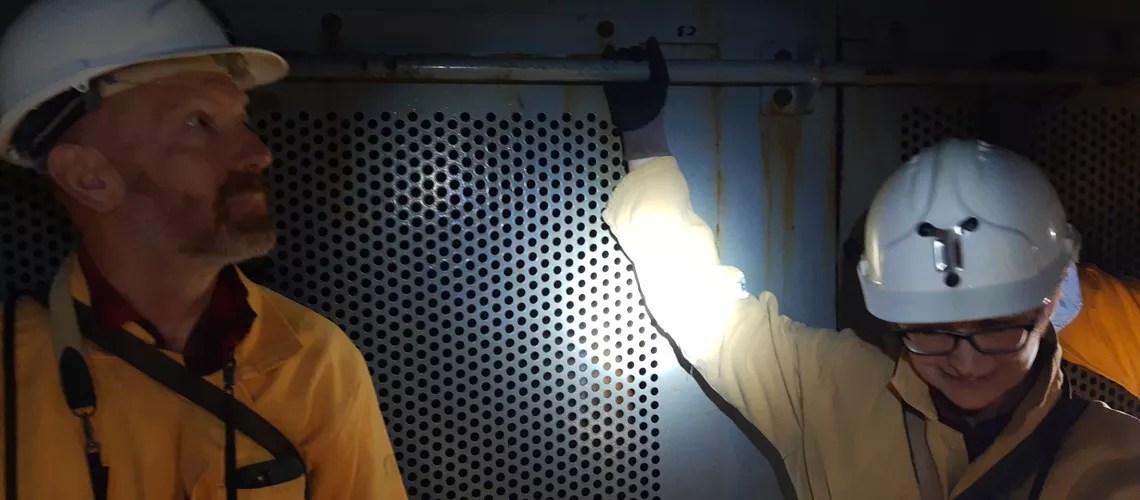 to create something brand-new on a significant piece of land—and even fewer can develop that land in a way that confronts climate change, generates jobs, and attracts investment.
Since the beginning of the year, a rapid deterioration of growth prospects coupled with rising  inflation and tightening financing conditions, has ignited a debate about the possibility of a global recession—a contraction in global per capita GDP. Drawing on insights gained from previous global recessions, this study presents a systematic analysis of the recent evolution of economic activity and policies, and a model-based assessment of possible near-term macroeconomic outcomes.
Hello everyone and let me start by expressing my appreciation to you and the Japanese government for hosting us for this launch of the IDA20 replenishment, in which Japan has played such a leadership role. I would like to thank the Finance Minister personally for playing such a crucial part in this process. I would also like to thank and congratulate the colleagues gathered here in Tokyo today, coming from all over the world, for making IDA20 a successful replenishment.
Interested in Doing Business with the World Bank Group? Please see selected opportunities below.
Procurement Framework and Regulations for Projects After July 1, 2016 (worldbank.org)
The purpose of the evaluation is to assess how relevant and effective the World Bank Group has been in its support for agrifood system development (AFSD) —that is, in developing more productive, inclusive, and sustainable farms and agribusiness firms. The evaluation finds that the Bank Group’s interventions (FY 2010–20) were broadly relevant, although gaps remain in scaling up and better targeting support to countries that need it the most. Bank Group interventions were also effective overall in improving productivity, inclusion, and sustainability, but less so in LICs, particularly in West and Central Africa. World Bank interventions that focused on supporting production were less successful than interventions that combined production and market approaches. World Bank support for improving productivity was insufficiently diversified toward higher-value products that offer multiple benefits. IFC agribusiness investments faced challenges meeting environmental and social (E&S) standards, especially in LICs. IEG offers three recommendations to enhance Bank Group support for AFSD. (i) To enhance its effectiveness in developing agrifood systems, the World Bank Group’s efforts to support production technologies should be complemented by efforts to improve market access, especially in LICs and in countries at the traditional stage of agrifood system development. These can be pursued through synergies in Bank Group interventions or with partners; (ii) To achieve more sustainable agrifood systems, where conditions permit, the World Bank Group should support production diversification to meet the growing demand for undersupplied high-value-added, nutritious products while ensuring that smallholder farmers and SMEs benefit from the diversification; and (iii) To enhance the contribution of IFC support for AFSD, IFC should pilot and adopt more effective ways to support clients to better meet E&S Performance Standards, especially in LICs.
As crises multiply and the devastating conflict in Ukraine drags on, its global effects are being felt hard in the Sahel and West Africa, a region with more than 38 million people facing acute food insecurity. The war’s impacts risk pushing an additional 7 to 10 million people in the region into food insecurity.
This story was originally published by France 24
 Netherlands for the World Bank
You must be logged in to post a comment.