Unknown's avatar

About NL4WorldBank

The World Bank Team at the Royal Netherlands Embassy tweets about news related to Dutch organizations interested in working with the #WorldBank. #NL4WorldBank

eC2: Designing Bankable Standard Agreements (Power Purchase Agreement, the Direct Agreement and the Investment Agreement) for Electricity Offtake and Financing in Belarus

Deadline: 31-Oct-2017 at 11:59:59 PM (Eastern Time – Washington D.C.)

bankingObjective: IFC is seeking to hire a legal consulting firm (the Consultant) to provide services for designing Bankable Standard Agreements, namely, electricity offtake agreement, direct agreement and investment agreement templates. The Bankable Standard Agreements (PPA, DA & IA) templates designed by the Consultant should enhance bankability of renewable energy projects while addressing the interests of main stakeholders: government, private companies, commercial banks, IFIs and electricity consumers. IFC is seeking qualified local/international Belarus legal consulting firm with local presence to design Bankable Standard Agreements, based on global best contractual & investment practices and in accordance with project finance principles for RES projects. To provide applicability of designed Bankable Standard Agreements in Belarus, the Consultant must ensure that designed Bankable Standard Agreements are aligned with the Belarusian legislation and their provisions are consistent with each other.

Continue reading →

eC2:Disaster Risk Reduction Practice Research and Capacity Building Support to ECOWAS

Deadline: 20-Nov-2017 at 11:59:59 PM (Eastern Time – Washington D.C.)

Objective: The overall objective of this assignment is to contribute to disaster risk management related research and policy advice in support of ECOWAS as well as capacity enhancement interventions to benefit ECOWAS member states and key stakeholders like media, academia, civil society organizations, NGOs and the private sector to better contribute in the implementation of DRR activities in West Africa. More specifically, the assignment has three main objectives a) Provide policy research related to flood and disaster management in the ECOWAS region; b) Provide a pre-feasibility study for regional flood forecasting, early warning and open data management c) Facilitate training and capacity enhancement for ECOWAS secretariat and experts from member states related disaster risk management.

RISK

Continue reading →

eC2: Consulting Firm to support the implementation of national Eco-Industrial Park Guideline at a selected industrial park

Deadline: 31-Oct-2017 at 11:59:59 PM (Eastern Time – Washington D.C.) index

Objective: IFC is seeking a consulting firm to support the implementation of national EIP Guideline at one industrial park. This assignment shall examine the requirements that the pilot industrial park fulfill to move towards an EIP and demonstrate the tools, procedures, needs for capacity building, institutional arrangements, and mechanisms that would ensure effective and successful implementation of the EIP Guideline. Requiring a combination on site and desk studies, the results will be translated into a user friendly, practical EIP Implementation Guide. This assignment will be implemented from 20 November 2017 to 30 May 2018. Continue reading →

A Call to Act and Invest for the Future

Global growth has strengthened over the past year, with a recovery in investment, trade, and commodity prices amid supportive global financial conditions. Still, downside risks remain, and prospects for growth vary widely across countries. The World Bank Group is uniquely positioned to help developing countries address the complex challenges that can threaten their gains in an increasingly interconnected global economy.

This was a key message from the Development Committee, a ministerial-level forum of the World Bank Group and the International Monetary Fund, in a communiqué issued at the close of the institutions’ Annual Meetings in Washington.

artikel1.jpg

Continue reading →

World Bank Urges Action to Break the Cycle of Poverty from Generation to Generation

WASHINGTON, October 17, 2017 — The social status of one’s parents is as influential today as it was 50 years ago in determining a person’s future, according to early findings from an upcoming World Bank report, Fair Progress? Educational Mobility Around the World. Marking the 25th anniversary of the International Day to Eradicate Poverty, the institution sounded the alarm on a lack of progress since the 1960s in an area that is crucial for reducing poverty and inequality and promoting growth.

2030-promo-getty

Continue reading →

eC2: Process evaluation of Early Child Development accompanying measures to the Safety Nets Program in Niger

Deadline: 02-Nov-2017 at 11:59:59 PM (Eastern Time – Washington D.C.)maternal-and-child-healthcare-shofco-dec18-4489

Objective: The Government of Niger, with support from the World Bank, is currently implementing a Safety Nets Program that provides cash transfers and promotes behavioral change measures conducive to early child development and nutrition.
A process evaluation will assess the fidelity including quality of implementation of the behavioral change component in the second phase of the program. The evaluation will also seek a better understanding of linkages with health, education and civil registration services that work on early child development and how these can be strengthened. The mixed methods approach of the evaluation will entail observations of program activities, as well as focus group discussions and interviews with program actors and beneficiaries. The process evaluation is tentatively planned to be implemented in January/February 2018, with preparatory activities started in 2017.

Continue reading →

Data for Development: An Evaluation of World Bank Support for Data and Statistical Capacity

Data-for-Development_cover-image_webData and evidence are the foundation of development policy and effective program implementation, and countries need data to formulate policy and evaluate progress.

At the global level, the World Bank has a strong reputation in development data and has been highly effective in data production. It produces influential, widely used data and cross-country indicators that fill important niches, benchmark countries, and stimulate research and policy action.

Continue reading →

How Should Governments and Development Institutions Engage the Private Sector?

TonyElumeluBlog post by Tony Elumelu ( Entrepreneur and philanthropist )

Across the globe, the private sector has an important role to play in the achievement of the SDGs. With slow global growth and the end of the commodity supply cycle, many governments do not have resources required to fully pursue their development goals. And this is where the resources of the private sector become very critical. Through partnerships, the private and public sector can discover areas of alignment, especially in critical areas such as infrastructure, power, and agriculture, to mention but a few.

Continue reading →

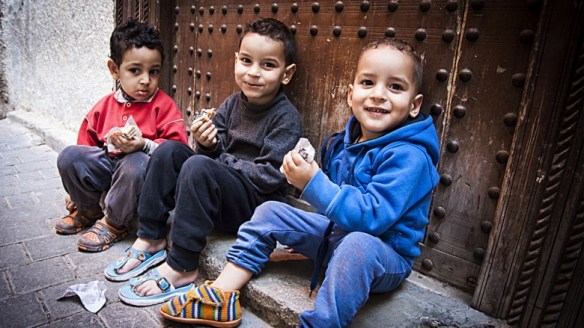
eC2: Health Systems Strengthening for Better Maternal and Child Health Results

Deadline: 06-Nov-2017 at 11:59:59 PM (Eastern Time – Washington D.C.)

Objective: The World Bank Group now invites eligible firms to indicate their interest in providing the services. Interested firms must provide information indicating that they are qualified to perform the services (brochures, description of similar assignments, experience in similar conditions, availability of appropriate skills among staff, etc. for firms; CV and cover letter for individuals). Please note that the total size of all attachments should be less than 5MB. Consultants may associate to enhance their qualifications.

mena_morocco_young_kids

Continue reading →

eC2: Zambia – Off-grid site identification and prioritization

Deadline: 30-Oct-2017 at 11:59:59 PM (Eastern Time – Washington D.C.)

Objective: The proposed activity seeks to first develop new datasets that will enable the identification and prioritization of potential off-grid sites, and faster and more accurate market analysis for public and private stakeholders operating in Zambia. Datasets should include, for example, household locations and indicators on ability to pay, population density and proximity to the national grid, potential for productive uses of electricity and up-to-date data on national electricity grid transmission and distribution line locations. It is expected that these datasets then be used to narrow down geographic areas and priority villages that could be interesting markets for off-grid energy services.

back

Continue reading →