
Commodity markets are integral to the global economy. Understanding what drives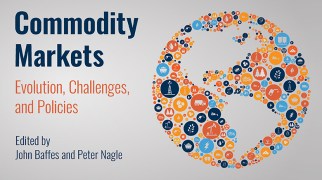 developments of these markets is critical to the design of policy frameworks that facilitate the economic objectives of sustainable growth, inflation stability, poverty reduction, food security, and the mitigation of climate change. This study is the first comprehensive analysis examining market and policy developments for all commodity groups, including energy, metals, and agriculture, over the past century. It finds that, while the quantity of commodities consumed has risen enormously, driven by population and income growth, the relative importance of commodities has shifted over time, as technological innovation created new uses for some materials and facilitated substitution among commodities. The study also shows that commodity markets are heterogeneous in terms of their drivers, price behavior, and macroeconomic impact on emerging markets and developing economies, and that the relationship between economic growth and commodity demand varies widely across countries, depending on their stage of economic development. Policy frameworks that enable countercyclical macroeconomic responses have become increasingly common—and beneficial. Other policy tools have had mixed outcomes.
Monthly Archives: May 2022
Tracking government debt is hard. Banishing secrecy clauses would make it far easier.
With a few taps on a smartphone, I can check the weather, send messages to friends around the world, review my bank account, or even order food. But even in our hyper-connected, data-driven world, it’s exceedingly difficult to pin down government debt – even for researchers with advanced skills and access to big databases. And that’s not for lack of trying.
Such was the case in 2016, when the revelation of previously undisclosed debt derailed Mozambique’s development agenda, tainted its reputation as a growth and investment star, and sent its financial sector into crisis. More recently, Chad and Zambia’s debt restructuring negotiations were delayed when their respective debt offices couldn’t produce current and complete records of what was owed (and to whom).
A Conversation with David Malpass and Masood Ahmed

On May 26th 2022, World Bank Group’s President, David Malpass, and Masood Ahmed, President of the Center for Global Development, will hold a conversation about the array of global shocks, their impact on the most vulnerable communities—and the response they urgently demand.
From conflict to COVID to climate change, overlapping crises have created unprecedented challenges for developing countries. Debt vulnerabilities, rising inflation, higher energy prices and food insecurity are threatening to reverse development gains. These growing challenges require decisive policy action and sustained international cooperation on multiple fronts to ensure economic conditions improve in all countries, especially the poorest. David Malpass and Masood Ahmed will exchange views on macroeconomic and political instability; and what is required for economic transformation.
The Way Forward is an occasional series of in-depth discussions on development challenges and innovative solutions, hosted by World Bank Group David Malpass.
May 26th, 10:00 AM EDT (local time)
Doing Business with the World Bank. Corporate Procurement | Free Webinar
📅 26 May 2022 🕟 4 PM (Brussels)/ 10 AM (Washington DC)
Virtual
DevelopmentAid, in collaboration with the World Bank Group, invites organizations and individual experts working in the development sector to join the webinar on “Doing Business with the World Bank. Corporate Procurement” to learn more about aspects of WB’s corporate procurement and discover ways to achieve successful collaboration.
Register for the webinar!
WBG Procurement Opportunities
Interested in Doing Business with the World Bank Group? Please see selected opportunities below.
Procurement Framework and Regulations for Projects After July 1, 2016 (worldbank.org)
eC2: Climate Change Impact and Adaptation Modeling for Zimbabwe
Deadline: 07-Jun-2022 at 11:59:59 PM (Eastern Time – Washington D.C.) 
Climate change is a major risk to good development outcomes, and the World Bank Group is committed to playing a role in helping countries integrate climate action into their core development agendas. The Country Climate and Development Reports (CCDRs) aim to help countries shift from addressing adaptation as an incremental cost and isolated investment to systematically incorporating climate risks and opportunities at every phase of policy planning, investment design, implementation and evaluation of development outcomes.
World Bank Announces Planned Actions for Global Food Crisis Response
$30 billion available for implementation to address food insecurity over next 15 months
WASHINGTON, May 18, 2022—The World Bank today announced actions it plans to take as part of a comprehensive, global response to the ongoing food security crisis, with up to $30 billion in existing and new projects in areas such as agriculture, nutrition, social protection, water and irrigation. This financing will include efforts to encourage food and fertilizer production, enhance food systems, facilitate greater trade, and support vulnerable households and producers.
“Food price increases are having devastating effects on the poorest and most vulnerable,” said World Bank Group President David Malpass. “To inform and stabilize markets, it is critical that countries make clear statements now of future output increases in response to Russia’s invasion of Ukraine. Countries should make concerted efforts to increase the supply of energy and fertilizer, help farmers increase plantings and crop yields, and remove policies that block exports and imports, divert food to biofuel, or encourage unnecessary storage.”
The World Bank is working with countries on the preparation of $12 billion of new projects for the next 15 months to respond to the food security crisis. These projects are expected to support agriculture, social protection to cushion the effects of higher food prices, and water and irrigation projects, with the majority of resources going to Africa and the Middle East, Eastern Europe and Central Asia, and South Asia. In addition, the World Bank’s existing portfolio includes undisbursed balances of $18.7 billion in projects with direct links to food and nutrition security issues, covering agriculture and natural resources, nutrition, social protection, and other sectors. Altogether, this would amount to over $30 billion available for implementation to address food insecurity over the next 15 months. This response will draw on the full range of Bank financing instruments and be complemented by analytical work.
The World Bank Group’s global response will address four priorities:
- Support production and producers: Take actions to enhance next season’s production by removing input trade barriers, focusing on more efficient use of fertilizers, and repurposing public policies and expenditures to better support farmers and output.
- Facilitate increased trade: Build international consensus (G7, G20, others) and commitment to avoid export restrictions that increase global food prices and import restrictions that discourage production in developing countries.
- Support vulnerable households: Scale up targeted, nutrition-sensitive social protection programs and replenish early-response financing mechanisms.
- Invest in sustainable food and nutrition security: Strengthen food systems to make them more resilient to rising risks (conflict, climate, pests, diseases), trade disruptions and economic shocks – balance immediate/short-term needs with long-term investments.
The World Bank gained extensive experience in response to the 2007-2008 global food price crisis through the temporary Global Food Crisis Response Program (GFRP) that received donor contributions and channeled funds to 49 affected countries through 100 projects. Since then, the Bank had built up new tools dedicated to responding to food security crises, including the IDA Crisis Response Window. The World Bank also hosts the Global Agriculture and Food Security Program (GAFSP), which is an existing financial intermediary fund dedicated to improving food security in low-income countries and could be replenished to help fund the response to the current global food crisis.
Contacts
Washington D.CDavid Theis
202-458-8626
eC2: Consulting Services: Disaster Risk Quantification, Financing and Policy Reforms for Resilience Building in Tonga
Deadline: 15-Jun-2022 at 11:59:59 PM (Eastern Time – Washington D.C.)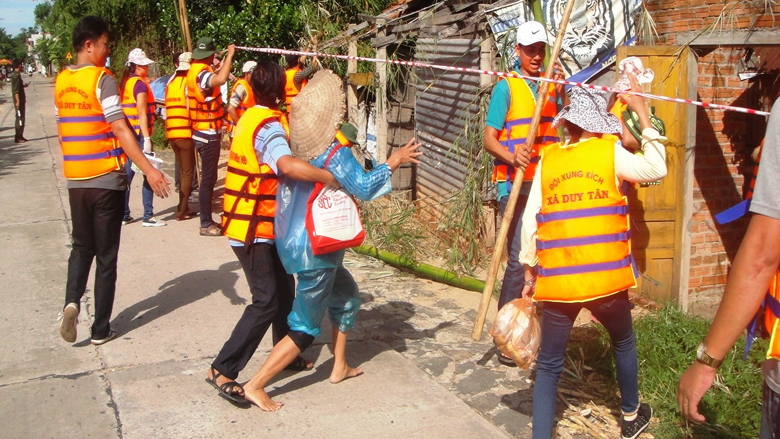
The objectives of this assignment is to conduct Disaster Risk Management (DRM) and risk financing policy reforms at the national and island levels, specifically to assist with technical inputs on the National DRM Policy; support the design of indicators for monitoring of the DRM Act and DRM Policy Implementation; support the design of strengthening activities and reporting procedures for Island and Village Disaster Risk Management Committees; and provide technical advice on establishing stronger coordination mechanisms between DRM stakeholders and the Ministry of Finance. The assignment will also identify risk quantification and investment needs for resilience-building in one select outer island in Tonga (either Vavau or Eua).This will require the: (i) development of detailed multi-hazard risk information for the select outer island, (ii) prioritization of investment needs in line with the DRM Policy framework, and (iii) identification of risk financing strategies and funding mechanisms for investments in disaster risk reduction and climate resilience in outer islands.
eC2: Building Back Better, Greener, Sustainable, and Inclusive Management and Growth in the Development of Coastal and Marine Recreational Areas for supporting Coastal Livelihoods in Balochistan and Sindh
Deadline: 31-May-2022 at 11:59:59 PM (Eastern Time – Washington D.C.) 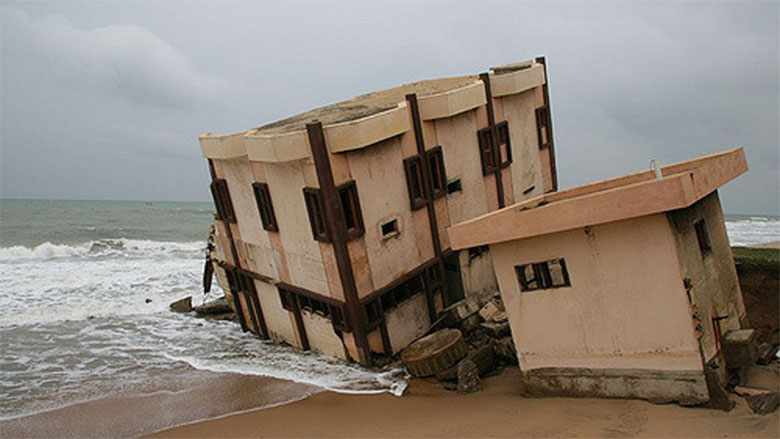
Develop an analytical basis and a set of policy, institutional and investments recommendations in support of a strategic and operational dialogue with the counterparts (national and provincial) in Pakistan to find the coastal blue assets pathway integrated into the broad blue economic development and decision-making
WBG Procurement Opportunities
Interested in Doing Business with the World Bank Group? Please see selected opportunities below.
Procurement Framework and Regulations for Projects After July 1, 2016 (worldbank.org)
 Netherlands for the World Bank
You must be logged in to post a comment.