
The World Bank’s inaugural Data Day had something for everyone and was a huge win 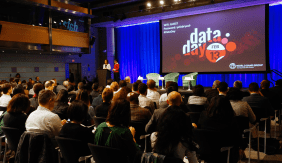 for data: more than 1,000 participants voted with their feet and their time to show their commitment for data—and that’s a commitment we share. Here’s what we learned from our first Data Day:
Yearly Archives: 2019
eC2:Determination of the capacity of water bodies to take nutrient pollution
Deadline: 02-May-2019 at 11:59:59 PM (Eastern Time – Washington D.C.)
The assignment comprises of three main activities:
Activity 1: Identification and quantification of the factors determining the self-purification ability of different types of water bodies of categories river, lake and transitional waters
Activity 2: Identification of the impact of different concentrations of nutrients (nitrogen and phosphorus forms) on the ecological status of the different types of water bodies of categories river, lake and transitional waters
Activity 3: Development, testing and validation of methodology/mathematical models for determining the capacity of different types of water bodies of categories river, lake and transitional waters
eC2: Follow-Up Survey for the Impact Evaluation of DRC Performance-Based Financing Project
Deadline: 02-May-2019 at 11:59:59 PM (Eastern Time – Washington D.C.)![medical-appointment-doctor-healthcare-clinic-health-hospital-medicine[7]](https://nl4worldbank.org/wp-content/uploads/2015/09/medical-appointment-doctor-healthcare-clinic-health-hospital-medicine7.jpg?w=234&h=156)
The assignment will be for the implementation of a follow-up study that includes household and health facility-based surveys. The large-scale surveys will be fielded in the first quarter of 2020 in the provinces of Kwango, Kwilu, Mai-Ndombe, Haut-Katanga, Haut-Lomami, Lualaba and Tanganyika. Preparatory work will start in the third quarter of 2019. The firm will work under the direct supervision of the Principal Investigators on all aspects related the implementation of the survey. The health facility survey will be conducted in health centers and general referral hospitals. It will include facility level assessment, health worker interviews, observations of patient-provider interactions and patient exit interviews. Household surveys will be conducted in the catchment areas of each of the surveyed facilities. They will cover demographic and socio-economic characteristics of the households and behaviors related to reproductive, maternal and child health. During the household visits, the survey teams will also collect anthropometric data on women and children.
eC2: Dairy Farm Engineering Consultant
Deadline: 02-May-2019 at 11:59:59 PM (Eastern Time – Washington D.C.) 
IFC is hiring a Consultant (a firm), which will support the Project team on the evaluation of two existing dairy farm facilities and on providing conceptual designs as well as the drawing and specification for the selected designs of two small-scale dairy farms in Ukraine.
Shedding light on the informal economy: A different methodology and new data
In Mozambique’s three largest cities (Maputo, Beira, and Nampula), informal  businesses—those operating outside formal licensing and registration procedures—outnumber formal firms by a factor of 9 to 1. The World Bank’s Enterprise Analysis Unit recently published surveys of informal businesses in Mozambique, conducted in collaboration with the country management unit and colleagues from the Finance, Competition, and Innovation Global Practice. These surveys were designed to mirror the standard World Bank Enterprise Surveys, which cover the formal sector, but were tailored to better understand the unique conditions in which informal firms operate. Thanks to recent methodological innovation in sampling techniques, these surveys now also provide an estimate of the total number of informal businesses.
eC2: National Electrification Analysis: Assessment of Electrification Options for Angola
Deadline: 02-May-2019 at 11:59:59 PM (Eastern Time – Washington D.C.)

The Government of Angola (GoA) has requested support from the World Bank Group to complete a National Electrification Analysis (NEA), addressing all key aspects of investment planning, institutional and contracting arrangements, and needed financing and regulations for providing reliable electricity service, ultimately achieving the national electricity access targets. Thus, the World Bank Group is seeking to hire a consulting firm or consortium to help complete the NEA. The scope of work encompasses: (a) preparation of a geographic information system (GIS)-based database; (b) identification of least-cost electrification options based on different locations/density levels/electricity needs; and (c) identification of suitable implementation options for scaling up electrification in Angola in line with national electricity access targets.
Our Mission Is More Urgent Than Ever
The global outlook foresees a moderate slowdown in economic activity, with lingering  downside risks. Global trade growth has weakened, while investment prospects have softened; both of these remain important engines of growth, productivity, innovation, job creation and sustainable development. Debt vulnerabilities persist, and policy uncertainty is weighing on confidence. For developing countries, it is important to adopt growth-enhancing policies while containing risks and protecting the most vulnerable. The World Bank Group, in partnership with the International Monetary Fund, is able to help countries in addressing these concerns.
Spring Meeting Recap
Did you the miss the Spring Meeting Events? 
President David Malpass opening remarks.
Each Spring, the Boards of Governors of the World Bank Group and International Monetary Fund (IMF) hold Spring Meetings to discuss a range of issues related to poverty reduction, international economic development and finance. World Bank Live brings #WBGMeetings experience straight to you wherever you are in the world.
World Bank/IMF Spring Meetings 2019: Development Committee Communiqué
eC2: Social Protection Fund Flow Analysis
Deadline: 22-Apr-2019 at 11:59:59 PM (Eastern Time – Washington D.C.) 
The objective of this assignment is to map the process and trace the actual flow of funds for select social safety net programs implemented by the Government of Bangladesh, from the central level to the hands of the beneficiaries.
Paying for development – Governments are sitting on a ‘goldmine’
Four years have passed since the launch of the 2030 Agenda and its 17 Sustainable  Development Goals. Mobilizing the necessary resources remains central to its success.
 Investments in human, social, and physical capital are at the core of sustainable and inclusive growth – and represent an important share of national budgets.
At the World Bank Group we have been at the forefront of the so-called Financing for Development (FfD) agenda to leverage public, private, international, and domestic sources of capital to help reach the global goals. A short primer on our efforts–which builds on the 2015 Development Committee paper Billions to Trillions – Transforming Development Finance–can be found in the brochure entitled Financing for Development at the World Bank Group.
 Netherlands for the World Bank
You must be logged in to post a comment.