
It’s been a complicated—and often frustrating—few years for students all over the world. Remote classes. Closures. Masks. It was a lot to deal with, and the long-term consequences could be severe.
Tag Archives: World Bank
Reforms could boost World Bank lending to developing countries by nearly $190 bln -study
WASHINGTON, Sept 26 (Reuters) – Reforming the World Bank’s approach to risk could unlock nearly $190 billion in additional urgently needed lending for developing countries without jeopardizing its AAA credit rating, a study commissioned by the Rockefeller Foundation found.
Early Childhood Development: Life Changing Support for Young Families in Marshall Islands
Tackling Food Insecurity
Stories of resilience from Madagascar, the Central African Republic, and Egypt
Are climate change and drought connected? We asked Richard Damania, the World Bank’s Chief Economist for Sustainable Development, and two experts from the Bank’s Sustainable Development unit: Senior Economist Esha Zaveri and Senior Climate Change Specialist Nathan Engle. The three are authors of the paper, Droughts and Deficits: Summary Evidence of the Global Impact on Economic Growth.
Global Trends in Child Monetary Poverty According to International Poverty Lines
Global Trends in Child Monetary Poverty According to International Poverty Lines, published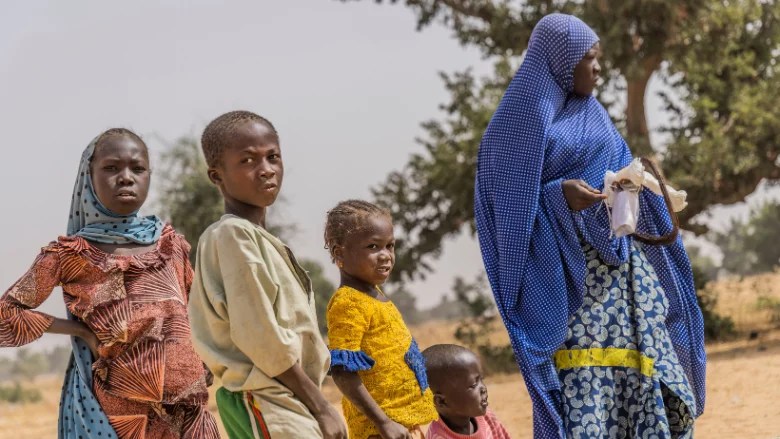 jointly by the World Bank and UNICEF, presents estimated trends in child poverty from 2013 to 2022, based on three international poverty lines: $2.15 (extreme poverty), $3.65 (lower middle income), and $6.85 (upper middle income). The estimates show that:
Statement by World Bank President Ajay Banga, IMF Managing Director Kristalina Georgieva, and Morocco’s Minister of Economy and Finance Nadia Fettah Alaoui on the 2023 World Bank-IMF Annual Meetings
WASHINGTON, September 18, 2023—World Bank President Ajay Banga; International Monetary Fund (IMF) Managing Director Kristalina Georgieva; and Kingdom of Morocco Minister of Economy and Finance Nadia Fettah Alaoui, today issued the following statement:
World Bank Announces New Steps to Add Billions in Financial Capacity
The World Bank is taking bold new steps to increase its lending capacity, a major boost in firepower that will give millions of people a chance to escape poverty and improve their lives. At this critical moment in history, and echoing the calls from the international community, the Bank is doubling down to tackle intertwined challenges – jobs, climate, fragility, and pandemics. These efforts entail decisive action to build a better Bank to achieve a world free of poverty on a livable planet.
The World Bank and the 78th Session of the UN General Assembly (UNGA)
The world is off-track to achieve the Sustainable Development Goals (SDGs), which have devastating implications for people’s lives worldwide. Evidence from the World Bank’s Atlas of the SDGs shows that some 574 million people—nearly seven percent of the world—will be severely restrained by extreme poverty in 2030 unless the poorest countries grow at rates never seen before.
World Bank and IDB Join Forces to Maximize Development Impact
Partnership will boost innovation and unlock opportunities across Latin America and the Caribbean
WASHINGTON, August 31, 2023 ― The World Bank and the Inter-American Development Bank (IDB) today announced a groundbreaking four-year partnership to drive stronger results for people in Latin America and the Caribbean.
How a new financing pact can help climate-vulnerable countries
This blog originally appeared in the Project Syndicate on September 8, 2023
Amid an escalating climate emergency and a global debt crisis, calls for a new “fit for climate” global financial architecture are growing louder throughout the developing world. The urgent need for decisive action has been underscored by Barbadian Prime Minister Mia Mottley’s Bridgetown Initiative, the V20 group of climate-vulnerable countries, and the recent Paris Summit for a New Global Financing Pact. This week’s Africa Climate Summit in Nairobi presented a unique opportunity to promote much-needed measures to support low-income countries in pursuing sustainable growth.


You must be logged in to post a comment.