eC2: Design of strategies to create clusters of economic activity around key Eastern Indonesian primary agriculture products

Deadline:  30-Nov-2016 at 11:59:59 PM (Eastern Time – Washington D.C.)

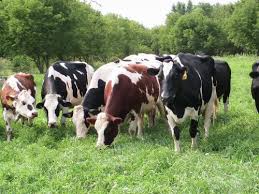
The objective is to assess how logistical costs and bottlenecks constrain the development indexand performance of high value/value adding agro-food value chains in Eastern Indonesia and recommend reforms, investments, capacity building and other measures to increase the competitiveness of those value chains, increase production and finally improve the associated livelihoods in otherwise lagging regions. It is to a large extent about creating sufficient volumes for logistics to work with a focus on short and medium term actions that need to be undertaken to reduce logistics costs for selected products in reaching domestic and/or international markets and stimulate increased production. Continue reading →
eC2: ENHANCING WOMENS MARKET ACCESS IN AGRIBUSINESS IN MOZAMBIQUE

Deadline: 30-Nov-2016 at 11:59:59 PM (Eastern Time – Washington D.C.)gil-improving-social-networks-for-ugandan-farmers-

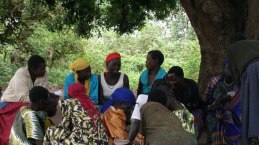
Agriculture is the major source of income for rural households in Mozambique (province of Tete). Market orientation however is strikingly low especially for women with most of the farmers specializing in staple or subsistence crops. The World Bank invites interested parties to submit expressions of interest for implementation of an intervention that will provide women farmers with (i) agricultural extension training, and (ii) noncognitive/behavioural skills training. Continue reading →

Breaking the Link Between Extreme Weather and Extreme Poverty

STORY HIGHLIGHTS
  • Because natural disasters tighten poverty’s grip on communities worldwide, disaster risk reduction goes hand in hand with poverty reduction, and vice versa
  • A new World Bank report finds the impact of extreme weather on poverty is more devastating than previously understood, responsible for annual consumption losses of $520 billion and pushing 26 million people into poverty every year
  • Targeted resilience-building interventions protect poor people from adverse weather events and can help countries and communities save $100 billion a year

Continue reading →

eC2: Future of urban mobility in India

Deadline: 30-Nov-2016 at 11:59:59 PM (Eastern Time – Washington D.C.)Smart-Cities-All-you-need-to-know

The study would include Building the case around Smart interventions in the urban transport sector through use of electric vehicles (public buses as well as two-three wheelers). Along with Eco Cities team, Engaging with key stakeholders including urban transport agencies in the cities, manufacturers, technology providers, etc in the city with focus on Mumbai (Thane), Bangalore, Chennai etc.

Continue reading →

eC2:Indonesia Toll Road PPP Program

Deadline: 06-Dec-2016 at 11:59:59 PM (Eastern Time – Washington D.C.)PPPs

Support the PPP program of the Road Authority of Indonesia with international best practices to:
1. Analyze the viability screening and appraisal of the BPJTs (Road Authority) planned toll road program. Help the client to analyze the potential of a group of toll road segments of attracting private sector investors, via public-private partnership (PPP) models or other approaches involving commercial financing.
2. Assessment on delivery of the Trans Sumatra by PT Hutama Karya
3. Provide high-level recommendations on how BPJT can improve its capacity to design a viable Indonesia PPP Toll Road program including financing schemes such as dedicated Viability Gap Fund (VGF) and Availability Payment options

Continue reading →

5 reasons why big data innovation is critical to address climate resilience

In today’s world of mobile technology, social networks, pervasive satellite and sensor information and machine-to-machine transactions, data is becoming the lifeblood of many economies. Data-informed decision making is more important than ever before. However, the ability to use data in development and decision-making processes has not seen the screen_shot_2016-11-01_at_2_03_44_pmsame progress. Relying on data to inform decisions requires that the appropriate tools and analytical methodologies exist in order to use it effectively.

Continue reading →

Forests: Stabilizing Climate and Supporting Development

STORY HIGHLIGHTSmozambique_cad-productions_-j_capela_resizednew

  • Over 100 countries included actions related to land-use change and forests in their nationally determined contributions to fight climate change
  • Investing in forests has the potential to reduce poverty, drive sustainable development and provide vital local and global environmental services
  • The World Bank Group supports forest initiatives in Ethiopia, Democratic Republic of Congo and Mozambique that can help these countries meet their climate and development goals

Continue reading →

Africa Climate Business Plan: Delivering on Climate Plan Promises

STORY HIGHLIGHTSoriginal

  • A new progress report shows Cote d’Ivoire, Nigeria and several other African countries are successfully implementing climate resilience and low-carbon development recommendations outlined in the World Bank’s Africa Climate Business Plan
  • The plan, unveiled during the COP21 climate change conference in Paris, provides concrete actions to help African countries adapt to climate change and build up resilience to climate shocks
  • As of Nov 7, 2016, 19 countries in Sub-Saharan Africa have ratified the Paris Agreement for carbon offsetting, and $3.6 billion from the International Development Association has been mobilized to help further the plan’s implementation

Continue reading →

2016: World Bank Group Moves Fast to Support Stepped Up Global Climate Ambition

STORY HIGHLIGHTScop22-scene-setter

  • Since the Paris Agreement was adopted at COP21 in December 2015, the world has seen increased ambition on climate change. Almost every country in the world has now set national climate targets, and the Agreement has gone into force much earlier than expected. However, global climate action is still not happening at the scale or speed needed to meet the Paris goal of keeping global temperature rise to below 2 degrees Celsius.
  • The World Bank Group has been moving quickly over the past year to build on the momentum and lay the groundwork for greater ambition, helping countries reduce emissions and increase resilience to climate shocks through action in high-impact areas, such as clean energy, climate-smart agriculture, disaster preparedness, and natural resource management
  • As COP22 starts in Morocco, the Bank Group is aligning its efforts around key focus areas, committing billions to help countries meet their climate goals while leading on critical global issues such as green financing and carbon pricing

Continue reading →