eC2: Baseline Data Collection, Warehousing Receipt Systems IE, Senegal

Deadline: 07-Dec-2017 at 11:59:59 PM (Eastern Time – Washington D.C.)

Objective: This contract covers baseline data collection activities including a household survey with a high frequency module, a market price survey, and some secondary data collection. The objective of this activity is to develop a methodology and implement a data collection protocol to provide the research team with baseline data on key socio economic characteristics and outcomes relevant for the Impact Evaluation of the Senegal Warehousing Receipt System Project. About 1800 households in the Dagana region of the Senegal River Valley are expected to be interviewed.

datawarehousing

Continue reading →

Game-changing water solutions for the Middle East and North Africa

The Middle East and North Africa (MENA) has become a hotspot of unsustainable water use, with more than half of current water withdrawals in some countries exceeding the amount naturally available. This could have serious long-term consequences for the region’s growth and stability. Solutions for narrowing the gap between the supply of and demand for water are an urgent priority.

As the Fourth Arab Water Forum gets underway next week in Cairo, Egypt, much is at stake in the region’s water management. Armed conflict and massive numbers of refugees have put tremendous additional stress on land and water resources in MENA as well as on infrastructure in communities receiving the refugees. In Jordan alone, according to the country’s Ministry of Water and Irrigation, climate change and the refugee crisis have reduced water availability per person to 140 cubic meters, far below the globally recognized threshold of 500 cubic meters for severe water scarcity.

6825583088_f7bec13adf_k.jpg

Continue reading →

eC2: Facilitated Learning on Transformational Change in the Climate Investment Funds

Deadline: 06-Dec-2017 at 11:59:59 PM (Eastern Time – Washington D.C.)

Objective: The overall purpose of the Transformational Change Learning Partnership (TCLP), undertaken within the Evaluation and Learning (E&L) Initiative of the Climate Investment Funds (CIF), is to increase the transformative impact of CIF investments and those of other funds by establishing a more systematic and robust understanding transformational change in the CIF context.

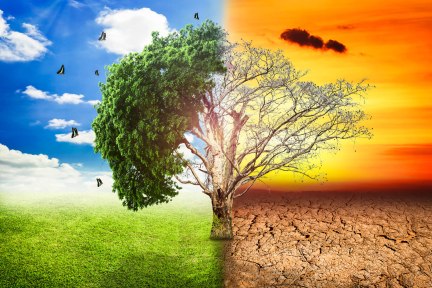
global-warming-climate-change-tree_1big_stock2

Continue reading →

eC2: Informing Partnerships between Government and Ethnic Basic Education Providers

Deadline: 04-Dec-2017 at 11:59:59 PM (Eastern Time – Washington D.C.)

Objective: The World Bank (WB) education team, in collaboration with Myanmar Education Consortium (MEC), is recruiting a consultancy firm/consultant(s) to carry-out a scoping study to inform the development of modalities for engagement and partnership between the Ministry of Education (MOE) and Ethnic Basic Education Providers (EBEP) in the States/Regions and conflict-affected areas.

myanmar

Continue reading →

Climate-Smart Development : Adding Up the Benefits of Actions that Help Build Prosperity, End Poverty and Combat Climate Change

This report describes efforts by the ClimateWorks Foundation and the World Bank to quantify the multiple economic, social, and environmental benefits associated with policies and projects to reduce emissions in select sectors and regions. The report has three objectives: 1) to develop a holistic, adaptable framework to capture and measure the multiple benefits of reducing emissions of several pollutants; 2) to demonstrate how local and national policymakers, members of the international development community, and others can use this framework to design and analyze policies and projects; and 3) to contribute a compelling rationale for effectively combining climate action with sustainable development and green growth worldwide. By using a systems approach to analyze policies and projects, this work illustrates ways to capitalize on synergies between efforts to reduce emissions and spur development, minimize costs, and maximize societal benefits.

climatex.png

Continue reading →

eC2: Capacity Building and Risk Transfer Pilot in Mozambique

Deadline: 30-Nov-2017 at 11:59:59 PM (Eastern Time – Washington D.C.)

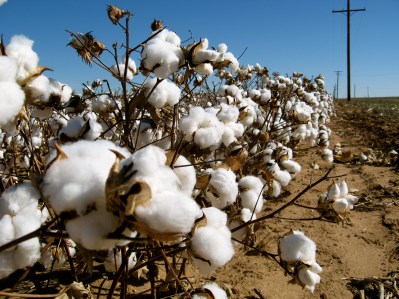
Objective: Applicants may request to apply for a capacity building and implementation of risk transfer pilot support. A Risk Transfer Pilot Project is a project that develops and issues an index-based insurance product for cotton and other crops for one or more clients in Mozambique.
Cotton_field_kv06.jpg

Continue reading →

eC2: Business case assessment for Bonsucro sustainability standard and improvement framework for sugar mills and smallholder value chains in India

Deadline: 04-Dec-2017 at 11:59:59 PM (Eastern Time – Washington D.C.)

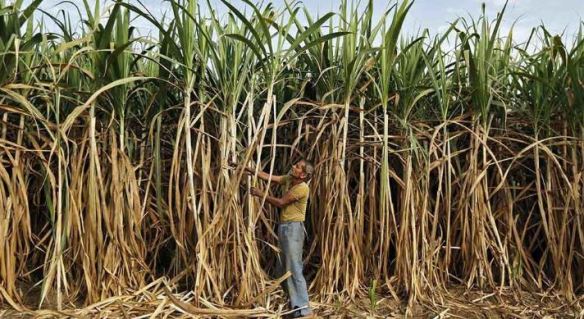
Objective: IFC and Bonsucro are interested to undertake a business case assessment for Bonsucro sustainability standard and improvement framework for sugar mills and smallholder value chains in India.

HARYANA-Top-Most-Famous-Largest-Sugarcane-ProducIng-States-In-India-2018

Continue reading →

eC2: SERBIA NATIONAL DISASTER RISK MANAGEMENT PLAN (NDRMP): FLOOD RISK MAPPING

Deadline: 04-Dec-2017 at 11:59:59 PM (Eastern Time – Washington D.C.) Rural Infra in Cambodia

Objective: The objective of Component 2 on Disaster Risk Identification and Monitoring within the Programmatic Approach is to support the Government of Serbia, in particular the Serbian water sector institutions under the Ministry of Agriculture, in generating actionable flood risk information and to strengthen (flood) risk assessment methodologies. Serbia completed a preliminary flood risk assessment in 2011 and defined 99 flood prone areas throughout the country. Following this, 25 out of those 99 flood prone areas were mapped during the Study of Flood Prone Areas in Serbia (SoFPAS) project finalized in 2012.

Continue reading →

Addressing Climate Change: Why Forests Matter?

boomSTORY HIGHLIGHTS

  • Over 100 countries included actions related to land-use change and forests in their nationally determined contributions to fight climate change
  • The World Bank is supporting countries in their efforts to harness the potential of forests to reduce poverty, better integrate forests into their economies, and protect and strengthen the environmental role they play
  • Forest-focused initiatives in China, Mexico and Mozambique are showing positive results, but more is needed to accelerate climate action and deliver on the Paris Agreement

Continue reading →

Swallowed by the Sea…Where coastal infrastructure and jobs meet climate change

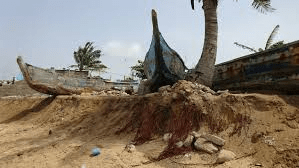
Life is shifting fast for coastal communities in West Africa. In some areas, coastlines are eroding as much as 10 meters per year. Stronger storms and rising seas are wiping out homes, roads and buildings that have served as landmarks for generations.

untitled

I was recently in West Africa to witness the effects of coastal erosion. To understand what’s going on, we took a three-country road trip, traveling from Benin’s capital Cotonou, along the coast to Lomé in Togo and then to Keta and Accra in Ghana. These three countries, among the hardest hit by coastal erosion, offer a snapshot of what is happening along the rest of the coast, from Mauritania, via Senegal to Nigeria. 

Continue reading →