Netherlands for the World Bank

Your guide to the World Bank Group

Netherlands for the World Bank

eC2: Urban Flood Resilience Plans in Select Indonesian Cities: Risk-Informed Urban Design and Investment Options for Protection Measures

Deadline: 31-Jul-2019 at 11:59:59 PM (Eastern Time – Washington D.C.)Bangladeshi villagers repair a vital flood-protecting embankment

The World Bank is supporting Indonesia to address critical disaster resilience needs in Indonesian cities. The conceptual framework for a national urban flood resilience program is being finalized and will outline the institutional, regulatory, financial, and technical needs for urban flood risk investments in selected Indonesian cities. A baseline analysis of urban flood risks and high-priority investment gaps identified 5 potential pilot cities. This technical assignment will support 3 of these cities to develop urban flood resilience strategies and investment options, including innovative structural/non-structural measures and nature-based/green solutions through a risk-informed urban design approach, flood hazard assessment, and stakeholder engagement. The consultant is expected to comprise a multi-disciplinary urban planning and design, flood risk engineering, landscape architecture, environmental and social management, and disaster risk management team; including international and national experts.
Continue reading →

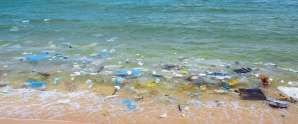
eC2: Diagnostic study on marine litter prevention, especially relating to plastics, in coastal

Deadline: 01-Aug-2019 at 11:59:59 PM (Eastern Time – Washington D.C.) eu-plastic-regels-2019

The World Bank is looking to recruit a consultancy firm to carry out a diagnostic study on marine pollution/plastic debris prevention in coastal Kenya. The consultancy has the following objectives:

Continue reading →

Harnessing the power of data so no child is left behind

Data plays a crucial role in the 2030 agenda set out by the Sustainable Development grid_titleGoals (SDGs). It helps us to focus policies and make better decisions. It is needed to set targets, measure progress towards those targets and to hold governments accountable to their commitments under the SDGs.

Data is also essential for governments to fulfill their pledge to leave no one behind in the SDGs; that the goals should be met for all segments of society and that those furthest behind should be reached first. Despite significant progress over the last few years, we are still far away from being able to systematically identify those at risk of being left behind or to monitor their progress towards the 2030 commitments.

Continue reading →

eC2: Assess the Technical Efficiency of Community-Based Nutrition Interventions in Sierra Leone

Deadline: 21-Jul-2019 at 11:59:59 PM (Eastern Time – Washington D.C.) power-nutrition

The consulting firm will work on the following; (a) mapping of existing community-based delivery platforms across sectors and identify opportunities for better coordination and enhanced synergy, including an in-depth analysis of the existing mapping results; (b) review and analyze the existing multisectoral coordination mechanisms at both national and subnational levels, including the SUN Secretariat; and (c) review the existing behavioral change communication (BCC) study results and analyze the interaction of various delivery platforms which convey messages related to nutrition and identify options for better harmonization and optimization. More specifically, the consulting firm will:

Continue reading →

Financial innovation and additionality: The power of economic analysis and data analytics

As public and private financial institutions innovate and expand the range of financFinancial Educationial products that households and firms use, questions about how these services are affecting consumers, providers, and the economy as a whole have become central. A new policy brief by Abraham, Schmukler, and Tessada explores how evaluating the “additionality” of financial services can help answer such questions.

Continue reading →

Remarks from World Bank Group President David Malpass at the G20 Leaders Summit, Osaka, Japan

Thank you, Prime Minister Abe, for being such a gracious host. index

It is a great pleasure to be here during the new era of Reiwa, “Beautiful Harmony.” And it’s a true pleasure that the World Bank and Japan have maintained harmony since the early 1960s, notably when the World Bank made a loan to help fund the construction of the bullet train ahead of the 1964 Tokyo Olympics. I’ll ride that train tonight as I go to Tokyo. The bullet train and Japan’s many other advances enhanced connectivity and helped lead to Japan’s fast growth and its successful graduation from World Bank lending soon after the Olympics in 1966.

Continue reading →

Healthy people drive strong economies

Dieynaba Nioula Kane remembers vividly when, for the first time in her life, she was kg_blogforced to ask friends and family for money. It was out of desperation after the birth of her fifth child, a little boy with a life-threatening condition that needed specialist treatment in the capital. Dieynaba was forced to leave her job teaching French and hurriedly relocate to Dakar, where she was able to find the health services he needed.

But the expenses quickly piled up. Hospital bills, a tracheostomy, medicines, dressings, fees for nurses and doctors, plus the cost of food and transportation to and from the hospital. As she took a break from paid employment for four years to focus on her son’s health her family’s economic conditions deteriorated. It took the family years to recover.

Continue reading →

eC2: Logistics Market and Business Analysis in Indonesia

Deadline: 16-Jul-2019 at 11:59:59 PM (Eastern Time – Washington D.C.)

Assignment of developing:general-transport-mosaic-main
A) A market overview of the logistics sector in Indonesia (traditional plus e-logistics) including a demand-supply analysis now and in the next 5 years.
B) A market share estimation for the Platform with estimated revenues, which necessarily includes an estimation of fares and Average Order Value (AOV) evolution.
C) An overall assessment of the Platform business plan, including growth assumptions, estimated necessary resources, Capex and Opex to achieve the objectives, like facilities, fleet, human resources and systems.

Continue reading →