Assessing Country Readiness for COVID-19 Vaccines – First Insights from the Assessment Rollout

The global COVID-19 vaccination campaign will be the largest in history. The delivery of

Kuala Lumpur, Malaysia. 03rd Mar, 2021. A healthcare worker holds a vial of the Pfizer-BioNTech Covid-19 vaccine during the first phase of the country nationwide vaccination drive at the Hospital UiTM in Sungai Buloh, outskirts of Kuala Lumpur. Credit: SO

COVID-19 vaccines presents challenges unprecedented in scale, speed and specificities, especially in low- and middleincome countries. In November 2020, anticipating the availability of safe and effective vaccines for COVID-19, the World  Bank together with WHO, UNICEF, the Global Fund, and Gavi rolled out readiness assessments in more than 100 low and middle-income countries.

Continue reading

Unlocking Private Investment in Climate Adaptation and Resilience

STORY HIGHLIGHTS

  • A new joint report by the World Bank and IFC offers a blueprint for action for climate-adaptation-and-private-sector-report-covergovernments to catalyze private investment in climate adaptation and resilience.
  • The blueprint for action lays out a systematic approach to incentivize adaptation financing from the private sector and meet countries’ fast-growing financing needs to achieve climate resilience.
  • The approach will be tested in several pilot countries as part of the World Bank Group’s support towards enabling private investment in adaptation.

Continue reading

eC2: ECA AGRICULTURE DIGITAL SYSTEM

Deadline:    29-Mar-2021 at 11:59:59 PM (Eastern Time – Washington D.C.) agriculture-youth

The International Finance Corporation hereinafter referred to as WBG invites interested parties to respond to a Request for Expression of Interest (REI) for digital platform (comprising a backend decision-making mechanism and a pluggable frontend implementation) that would boost decision making in agriculture finance. This REI is issued for the purpose of obtaining information concerning market conditions and vendor (or consortium of vendors) capability in order to allow the World Bank / IFC to better understand what is currently available on the commercial market place in order to enhance advisory client solutions.

Continue reading

eC2: Vietnam Horticulture Value Chain Competitiveness

Deadline:    25-Mar-2021 at 11:59:59 PM (Eastern Time – Washington D.C.) Horn-Oeun

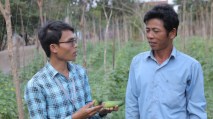
The purpose of the Upstream Seed study is to evaluate the value chain with a commercial focus and identify a pipeline of 3-5 projects with company sponsors. The study intends to assess Vietnam horticulture sectors supply-side and demand-side factors from an investment angle. As the existing market players in the horticulture sector are relatively small and immature, IFC can play an important role in building capacity and enabling these companies to accelerate growth, scale their businesses and become more investment-ready.

Continue reading

Building back better from the crisis: What will it take for the poorest countries?

It is a catchy acronym. An alliterative call to action. It rolls off the tongues of world leaders like 49834557482_5cac8f2747_k_0UK Prime Minister Boris Johnson and US President Joe Biden. Building Back Better—or BBB—is the seeming light at the end of the COVID-19 tunnel. But what does BBB really mean in the world’s poorest countries? And how can these countries—which are supported by the World Bank’s International Development Association (IDA)—secure the resources they need to make it happen?

Continue reading

eC2: Eastern Caribbean Currency Union: Renewable Energy Market sounding and barriers diagnostics

Deadline:    22-Mar-2021 at 11:59:59 PM (Eastern Time – Washington D.C.) Renewable-energy

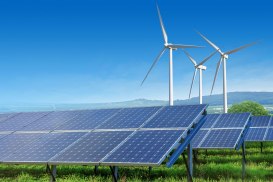
The objective of this assignment is to provide consulting services to conduct diagnostics assessment for market barrier for renewable energy (RE) development and private sector investments in RE. The work will entail assessing RE investment readiness in the Eastern Caribbean Currency Union (ECCU) countries and develop a market report.

Continue reading

We can end routine gas flaring by 2030. Here’s how

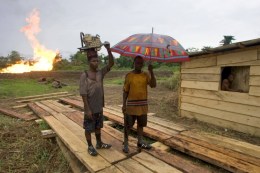
We are now less than a decade away from the goal of Zero Routine Flaring by 2030, an nigerian-flaring-updated-minambition that sits at the nexus of climate change mitigation and energy policy. Developed by the World Bank and launched in 2015 by the UN, World Bank and several governments, along with oil companies and development institutions, the Zero Routine Flaring initiative is designed to end an oil industry practice that has existed since oil production first began more than 150 years ago.

Continue reading

eC2: Green hydrogen investment opportunities in developing countries

Deadline:   18-Mar-2021 at 11:59:59 PM (Eastern Time – Washington D.C.) Hydrogenfuelcell

This assignment will support ESMAP and IFC to develop a market report identifying investment opportunities in green hydrogen in developing countries. It will produce an analytical framework to assess green hydrogen investments in different economic sectors that could use green hydrogen or derived fuels as feedstock or energy supply. The Consultant will apply the framework to systematically assess green hydrogen investment opportunities across the full value chain in the industry, agriculture, electric power, heating, and transport sectors. This framework will be based on a straightforward scorecard system, and will be used to identify viable applications, business models, and local players that could benefit from private and public sector support. For each relevant sector, the report will also identify and develop case studies from developing countries.

Continue reading

eC2: Climate-Smart Urban Development and Urban Resilience in Ethiopia

Deadline:   15-Mar-2021 at 11:59:59 PM (Eastern Time – Washington D.C.)

World Bank Group's Business Opportunities Fair: Climate-Smart En

The objective of the proposed activity is to support climate smart urban development in AA by (i) integrating Climate Smart Capital Investment Plans (CsCIP) into urban development planning, and (ii) preparing an integrated action plan, including policy actions, prioritized investments and institutional building towards green, climate-resilient urban development. In alignment with other ongoing WB engagements and based on international experiences in adapting to Covid-19, a locally attuned CS-CIP and action plan will be developed in coordination with AA City Administration.

Continue reading