
In many countries, women walk over six kilometers to collect water. Between 2006 and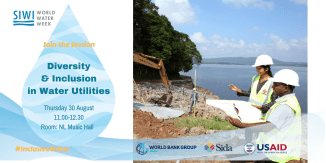 2012 in Niger, women traveled an hour, on average, to fetch water. Worldwide, 4.5 billion people lack access to safely managed sanitation services and 2.1 billion people lack access to safe drinking water services.
Tag Archives: Wereldbank Groep
What lessons for social protection from universal health coverage?
It’s not so long since the days when speaking of ‘universal health coverage’ used to ![medical-appointment-doctor-healthcare-clinic-health-hospital-medicine[7]](https://nl4worldbank.org/wp-content/uploads/2015/09/medical-appointment-doctor-healthcare-clinic-health-hospital-medicine7.jpg?w=180&h=120) provoke shockwaves. Happily, the principle that “… everyone having access to the health care they need without suffering financial hardship” is now widely recognized and documented. And although few countries have achieved this goal in practice, it is clearly within reach, including in low-income countries like Rwanda.
provoke shockwaves. Happily, the principle that “… everyone having access to the health care they need without suffering financial hardship” is now widely recognized and documented. And although few countries have achieved this goal in practice, it is clearly within reach, including in low-income countries like Rwanda.
Social protection seems to be on a similar trajectory, with universality now enshrined in commitments and declarations. Yet the provision of universal social protection (USP) is hotly contested — take the debates around Universal Basic Income and Employment Guarantee Programs.
eC2: Child Health Nutrition in four provinces of Lao PDR between August and mid-January 2019
Deadline: 30-Aug-2018 at 11:59:59 PM (Eastern Time – Washington D.C.)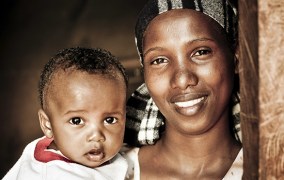
Assignment Description:
Firm/Consortium to conduct a formative research on WASH in 4 provinces of Lao PDR Xiengkhouang, Houaphan, Phongsaly and Oudomxay. Eligible firms kindly submit their required documents through provided link no later than August 31, 2018.
eC2: Building Energy Resilient Power Systems in the Caribbean
Deadline: 04-Sep-2018 at 11:59:59 PM (Eastern Time – Washington D.C.)
Assignment Description:
The World Bank is currently working with Saint Lucia (SLU) and Saint Vincent and the Grenadines (SVG) in the Caribbean to help improve the resilience of the power systems of these two countries to extreme weather events that will become more severe due to climate change. The World Bank will offer similar support to three other OECS countries afterwards. These Terms of Reference (TOR) are for a Power System Engineering Consulting Firm to support the World Bank energy team by conducting an assessment of the impacts of past storms (2 -3) on the power systems of SLU, SVG, St. Kitts and Nevis (SKN), and Antigua and Barbuda (A&B), identifying key risks and vulnerabilities, and offering energy resilience enhancement recommendations associated with utility power generation assets as well as transmission and distribution systems. The consulting firm will also develop an investment plan with the estimated cost of these recommended measures.
From Parts to Products: Why Trade Logistics Matter
STORY HIGHLIGHTS
- The sixth edition of Connecting to Compete reveals a persistent gap between high-income and low-income countries on logistics performance. High-income countries score, on average, 48% better on logistics than low-income countries.
- Logistics relates to how efficiently countries can move physical goods across and within borders. A country’s performance in this area can determine how it participates in international markets.
- Emerging trends in logistics include eco-friendly logistics options, labor shortages in both developed and developing countries, and preparedness for cyber threats.
The ripple effects of war: How violence can persist after formal peace is declared
When I first visited the Democratic Republic of the Congo in 2007 as a public health 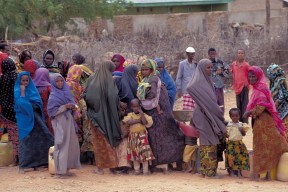 researcher, I was trying to understand the complex issue of how young men get recruited into rebel groups in war-torn regions of central Africa. What I learned was both surprising and heartbreaking: a person who experienced war violence as a child could be more likely to engage in conflict as a young adult. Young men who had experienced extreme war violence in their past would often state this as a reason to take up arms. Even more tragically, these same young men would often struggle to reintegrate peacefully into their communities when hostilities ended. The violence they had experienced their whole lives through war persisted within their homes and communities even when formal peace was declared.
4 education trends countries everywhere should know about
Recently, we reached out to education experts around the world to hear what they  considered the most pressing issues facing our sector today. Surprisingly, they all said that little has changed in terms of our most common challenges. What was changing, they agreed, were the innovative ways that the global community has begun tackling them.
Our discussions frequently came back to advances in neuroscience, Massive Open Online Courses (MOOCs), Blockchain, and the consequences of negative population growth — as well as the ways that these phenomena are changing and challenging the way we think about education. Some of these changes have received more attention than others, but we are convinced of their importance — and education stakeholders around the world should be paying attention.
World Water Week 2018
World Water Week in Stockholm is the annual focal point for the globe’s water issues.  Experts, practitioners, decision-makers, business innovators and young professionals from a range of sectors and countries come to Stockholm to network, exchange ideas, foster new thinking and develop solutions to the most pressing water-related challenges of today.
The World Bank Group will convene and participate in several sessions of World Water Week 2018, taking place from August 26-31. Below are a list of World Bank Group (co)-convened sessions and sessions with World Bank Group participating speakers. You can also follow along via Twitter using #wwweek.
Please also find a list of World Bank Group participants.
eC2: Diagnostic of Inclusive Education Resource Center Pilots in Ethiopia.
Deadline: 23-Aug-2018 at 11:59:59 PM (Eastern Time – Washington D.C.)
Assignment Description: The objective of this Consultancy is to conduct a diagnostic of existing inclusive education resource centers in cluster centre mainstream schools of Ethiopia. The specific objectives of this Consultancy include the following: Make a diagnostic of existing IERCs and identify cost-effective, scalable and sustainable options for transformation of cluster center schools into inclusive education resource centers; Based on the findings, map out implementation plan for scale-up of IERCs under Ethiopia General Education Quality Improvement Program for Equity [i.e. creation of 700 IERCs in cluster center mainstream schools which are to serve about 3,400 mainstream schools in the clusters]; Design M&E arrangements to help track investments and assess performance of resource centers in relation to provision of inclusive education in mainstream schools.
eC2:Implementation of Innovative and Efficient Bridge Technologies
Deadline: 22-Aug-2018 at 11:59:59 PM (Eastern Time – Washington D.C.)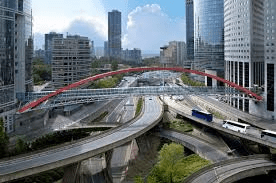
Assignment Description:
The World Bank is seeking a consulting firm to undertake an assessment and pilot program to support implementation of two types of innovative bridge construction technologies: (i) modular bridges; and, (ii) geo-synthetic reinforced soil (GRS) abutments. This assignment will be funded through the Quality Infrastructure Investment (QII) Partnership, which is sponsored by the Government of Japan.


You must be logged in to post a comment.