
At 2 a.m. in the quiet streets of Balykchy, a small town in the Kyrgyz Republic, most people are deep in the embrace of their dreams.
But for Altynai Arzymatova, a 34-year-old single mother of three, the day is already getting started.

Switching to greener technologies in construction and operation of buildings and materials, combined with more climate-friendly capital markets, could reduce the construction value chain’s carbon footprint 23 percent by 2035, while creating investment opportunities in emerging markets, according to a major report from the International Finance Corporation.

The Law, Justice and Development (LJD) Week is an annual conference organized by the Legal Vice Presidency of the World Bank in collaboration with partners within and outside the World Bank Group (WBG). It convenes participants from across the globe to meet and share knowledge, as well as to network and strengthen relationships for collaboration and collective action in the sphere of law, justice and development. The mission of WBG is to end extreme poverty and boost shared prosperity on a livable planet. To achieve sustainable, durable and inclusive development, WBG works in partnership with other development finance institutions (DFIs), international organizations, the public and private sectors, academia and civil society.
The theme of this year’s conference is Partnering for Impact: Enabling and Mobilizing the Private Sector for Sustainable Development. DFIs have an indispensable role to play in addressing global polycrises that undermine many of the development gains made to date and threaten most of the urgent priorities going forward. The scale of these challenges is beyond the capacity of the public sector alone and requires both private finance for private sector investments and private finance for public sector spending. LJD Week 2023 will examine how the various development partners can optimize their collaboration with particular emphasis on enabling and mobilizing the private sector. Please join us in person at the WBG Headquarters in Washington, DC or online on November 13-15, 2023.
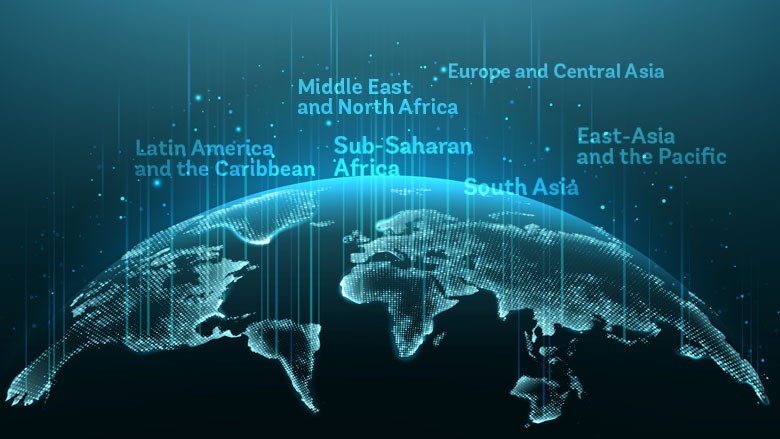 trends in Africa, East Asia and the Pacific, Europe and Central Asia, Latin America and the Caribbean, the Middle East and North Africa, and South Asia.
 These reports are issued the week before the World Bank-International Monetary Fund Annual Meetings in Morocco, October 9-15.
In the 1990s, I embarked on a journey that took me from the classrooms of Paris to the dusty countryside of Paraguay. Little did I know then that my diverse experiences, from peddling goods door-to-door to advising governments, would shape my role as an economist specializing in infrastructure and development. Now, as the Chief Economist for Infrastructure at the World Bank, I stand at the intersection of a complex global landscape.
Your commute to work, the family gathering, the food on your table, and the goods you buy – all rely on transport and our lives are unthinkable without it. But transport also represents a growing threat to our planet. Buses, cars, planes, ships, and trucks burn fossil fuels, and this causes climate change.
 Netherlands for the World Bank
You must be logged in to post a comment.