
Today’s intertwined crises have brought new challenges for the health of women, children,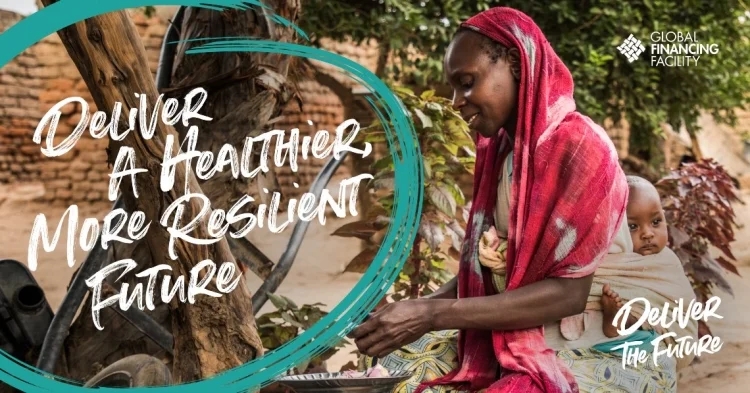 and adolescents, particularly those in the hardest to reach communities. The tepid post COVID-19 recovery in developing countries, along with shocks such as climate change, fragility, debt distress, food shortages and energy price increases, are constraining fiscal space and burdening already stretched health systems. This has meant stalled or even the reversal of progress.
Tag Archives: Reduce poverty
Drones Deliver Medicines to Distant Health Centers in Rural Meghalaya
HIGHLIGHTS
- Supplying inexpensive quality healthcare to hard-to-reach areas has long been a
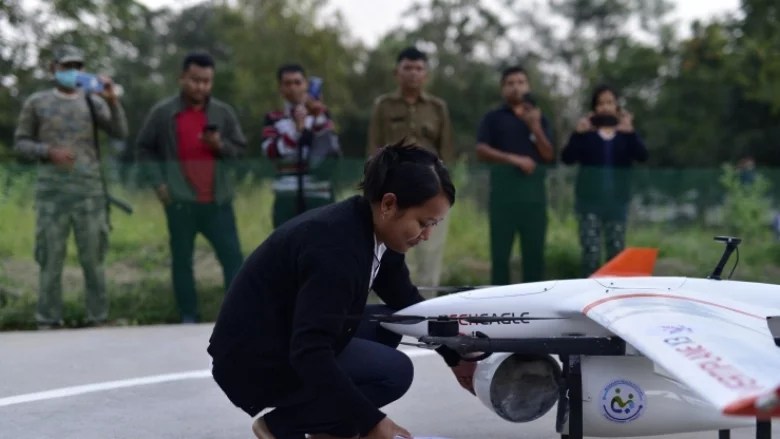 challenge for Meghalaya. People living in rural areas find it difficult to access health services, especially during the rainy season between June and September.
 - A new drone service was introduced by the Government of Meghalaya under the World Bank financed Meghalaya Health Systems Development Project, essential injections and medicines are brought over once a week by a drone from Jengjal District Hospital over 100 kilometres away.
- Since 2021, the Meghalya Health Systems Strengthening Project with World Bank support of $40 million has been helping the north-eastern state of Meghalaya strengthen its public health system where access to quality health services remains a challenge, particularly in rural areas. More than 3 million people across all 11 districts of the Meghalaya are expected to benefit from the project.
Water knows no borders: Transboundary cooperation is key to water security and avoiding conflict
As pressure mounts on the world’s freshwater resources, closer international cooperation is  needed to manage the world’s shared rivers, aquifers, and lakes. For decades, the World Bank Group has supported programs to foster cooperation over water as part of ensuring water security for all in support of sustainable development and job creation.
The Interlocking Challenges of Climate Change and Poverty | The Development Podcast
FEATURING: Richard Damania, Chief Economist for Sustainable Development, World  Bank / Roselyn Fosuah Adjei, Director of Climate Change for the Ghana Forestry Co
The World Bank Group is aligning its financing with the Paris Agreement goals on climate change. This is important, as it keeps us focused on containing the warming of the earth to well below 2 degrees, and preferably 1.5 degrees Celsius, while achieving sustainable development and ending poverty. What does this mean and what will it take to achieve it? We asked Jennifer Sara, Global Director of the World Bank’s Climate Change Group; and Stephane Guimbert, Director of Operations Policy & Country Services to explain.
Take-Aways from the Anticorruption for Development Global Forum
Esther Smith – Embassy of the Kingdom of the Netherlands, U.S.A.
In June, the Anticorruption for Development (AC4D) Global Forum was held at the World Bank Group’s headquarters in Washington D.C. Aware of corruption’s high societal and environmental costs, the World Bank has reaffirmed its commitment to anticorruption as a development priority and seeks to foster partnerships with other stakeholders working towards better governance and integrity. Equally important to the Netherlands, the event was co-hosted by the Netherlands Ministry of Foreign Affairs, and well-attended by an audience from all over the world and various organizations.
The Interlocking Challenges of Climate Change and Poverty | The Development Podcast
FEATURING: Richard Damania, Chief Economist for Sustainable Development, World Bank / Roselyn Fosuah Adjei, Director of Climate Change for the Ghana Forestry Commission / Professor Denis Aheto, Director of the Centre for Coastal Management, World Bank Africa Centre of Excellence in Coastal Resilience / Cathy Kamanu, farmer from Kenya.
How do we address climate change, reduce poverty, and boost shared prosperity on a livable planet? Climate change is one of the defining issues of our time, and no country is immune.
On this episode of The Development Podcast, we hone in on voices across Africa about the experience of climate change and how it intersects with poverty, and we hear from the World Bank’s Chief Economist for Sustainable Development in Washington, DC. Tune in as we speak with Cathy Kamamu, a farmer from Kenya, Professor Denis Aheto, Director of the Centre for Coastal Management, World Bank Africa Centre of Excellence in Coastal Resilience, Roselyn Fosuah Adjei, Director of Climate Change for the Ghana Forestry Commission, and Richard Damania, Chief Economist for Sustainable Development at the World Bank.
Tell us what you think of our podcast here >>>. We would love to hear from you!
 Netherlands for the World Bank
You must be logged in to post a comment.