
How the World Bank is standing with a region at climate risk
There is a saying in the Pacific that when it comes to climate change, ‘we are not drowning; we are fighting’. This could also sum up the wider East Asia and Pacific region as a whole in the face of climate change; a region that, despite being exposed to some of the worst climate impacts in the world, is responding with innovation, strength and immense resilience.
The World Bank is standing with the countries in the region in these efforts. In East Asia and the Pacific, 46% of new World Bank commitments in fiscal year 2022 contributed to climate action. Three countries across the region – Indonesia, the Marshall Islands, and Vietnam – highlight how the Bank is supporting their fight to adapt to climate change while securing resources and safeguarding important conservation gains far into the future.
 half of 2022, but China lost momentum. In much of the region, domestic demand revived after the distress of the COVID-19 Delta wave. In China, the public health measures to contain outbreaks of the highly infectious Omicron variant inhibited consumption. Most of the region is projected to grow faster and have lower inflation in 2022 than other regions. Beyond the end of 2022, three factors could be a drag on growth: global deceleration, rising debt, and policy distortions. Current measures to contain inflation and debt are adding to existing distortions in the markets for food, fuel and finance in ways that could hurt growth. In each case, more efficient measures could address current difficulties without undermining longer-term objectives.
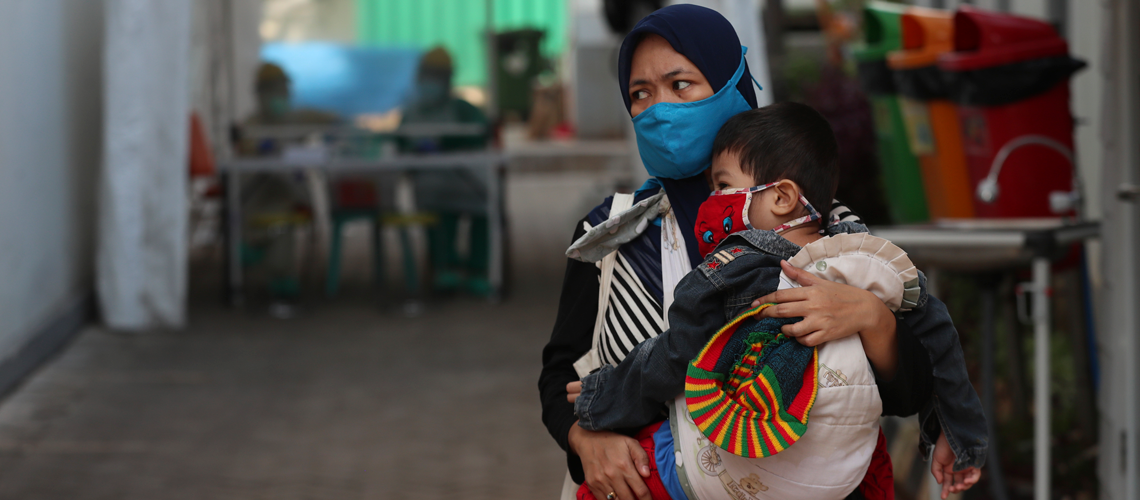 Surveys (HFPS) in the East Asia and Pacific (EAP) Region show that poorer households have been disproportionately affected and have been slower to recover. Findings from the HFPS reported in the recent
  The East Asia and Pacific region is vital to global pandemic preparedness. The region has been the epicenter of emerging and re-emerging infectious diseases. China and Southeast Asia alone accounted for approximately 90 percent of SARS cases and two-thirds of the human cases of avian influenza in the world. These outbreaks are driven by several socio-economic, demographic, environmental, and ecological factors, including close contact between humans and animals, encroachment with wildlife, high population density, rapid urbanization, high growth rates, and climate change.
 Netherlands for the World Bank
You must be logged in to post a comment.